Norris Michael H, Schweizer Herbert P, Tuanyok Apichai
Department of Infectious Diseases and Pathology, College of Veterinary Medicine, University of Florida, Gainesville, Florida, United States of America.
Emerging Pathogens Institute, University of Florida, Gainesville, Florida, United States of America.
PLoS Negl Trop Dis. 2017 Apr 28;11(4):e0005571. doi: 10.1371/journal.pntd.0005571. eCollection 2017 Apr.
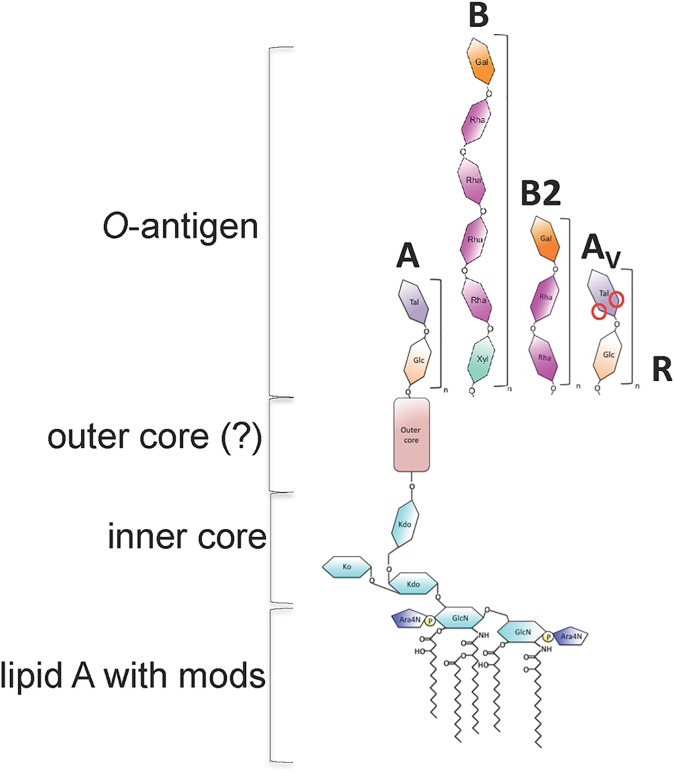
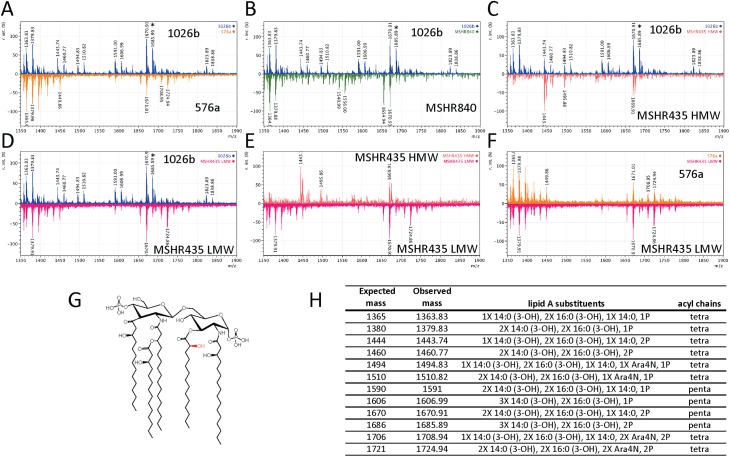
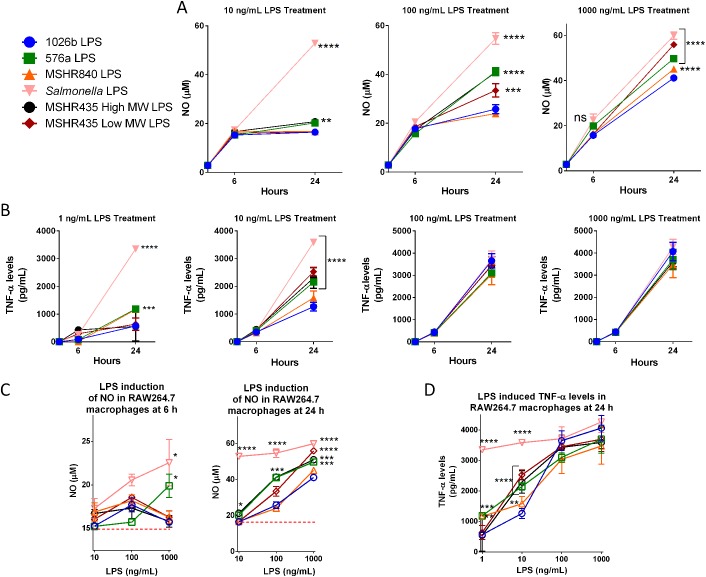
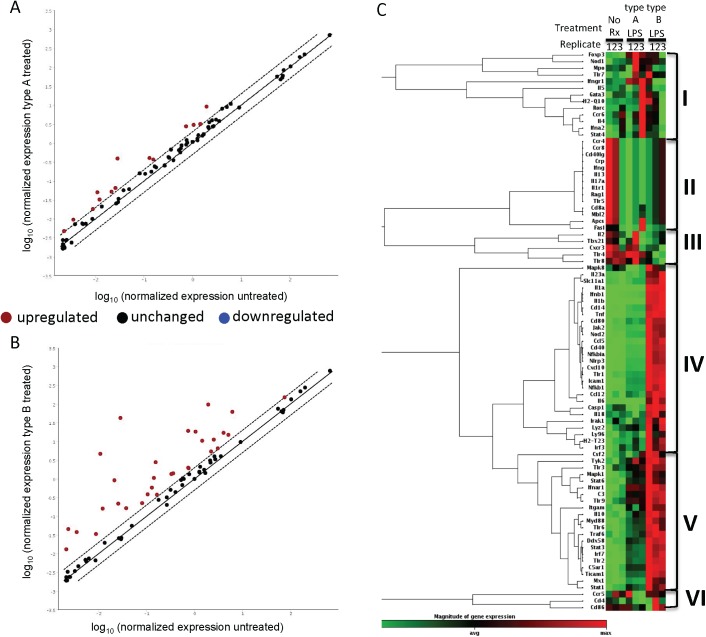
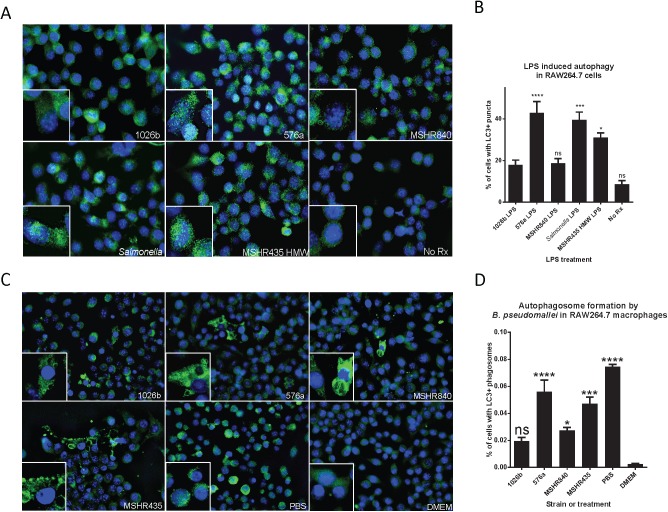
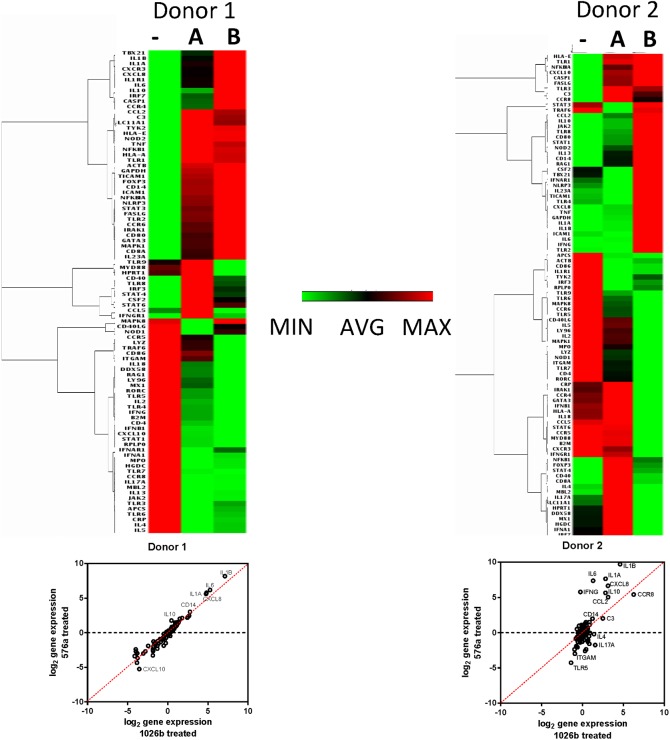
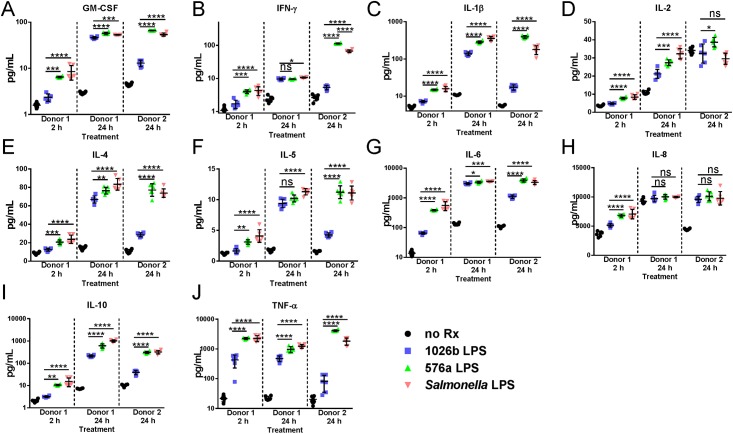
Burkholderia pseudomallei (Bp) causes the disease melioidosis. The main cause of mortality in this disease is septic shock triggered by the host responding to lipopolysaccharide (LPS) components of the Gram-negative outer membrane. Bp LPS is thought to be a weak inducer of the host immune system. LPS from several strains of Bp were purified and their ability to induce the inflammatory mediators TNF-α and iNOS in murine macrophages at low concentrations was investigated. Innate and adaptive immunity qPCR arrays were used to profile expression patterns of 84 gene targets in response to the different LPS types. Additional qPCR validation confirmed large differences in macrophage response. LPS from a high-virulence serotype B strain 576a and a virulent rough central nervous system tropic strain MSHR435 greatly induced the innate immune response indicating that the immunopathogenesis of these strains is different than in infections with strains similar to the prototype strain 1026b. The accumulation of autophagic vesicles was also increased in macrophages challenged with highly immunogenic Bp LPS. Gene induction and concomitant cytokine secretion profiles of human PBMCs in response to the various LPS were also investigated. MALDI-TOF/TOF was used to probe the lipid A portions of the LPS, indicating substantial structural differences that likely play a role in host response to LPS. These findings add to the evolving knowledge of host-response to bacterial LPS, which can be used to better understand septic shock in melioidosis patients and in the rational design of vaccines.
类鼻疽伯克霍尔德菌(Bp)可引发类鼻疽病。该疾病致死的主要原因是宿主对革兰氏阴性菌外膜脂多糖(LPS)成分作出反应而引发的感染性休克。Bp LPS被认为是宿主免疫系统的弱诱导剂。对几株Bp的LPS进行了纯化,并研究了它们在低浓度下诱导小鼠巨噬细胞中炎症介质肿瘤坏死因子-α(TNF-α)和诱导型一氧化氮合酶(iNOS)的能力。利用先天性和适应性免疫定量聚合酶链反应(qPCR)芯片分析了84个基因靶点对不同类型LPS的反应表达模式。额外的qPCR验证证实了巨噬细胞反应存在很大差异。来自高毒力B血清型菌株576a和有毒粗糙型中枢神经系统嗜性菌株MSHR435的LPS极大地诱导了先天性免疫反应,这表明这些菌株的免疫发病机制与原型菌株1026b类似菌株感染时不同。在用高免疫原性Bp LPS攻击的巨噬细胞中,自噬小泡的积累也增加了。还研究了人外周血单核细胞(PBMC)对各种LPS的基因诱导和伴随的细胞因子分泌情况。基质辅助激光解吸电离飞行时间串联质谱(MALDI-TOF/TOF)用于探测LPS的脂质A部分,表明存在可能在宿主对LPS反应中起作用的显著结构差异。这些发现增加了对宿主对细菌LPS反应的不断发展的认识,可用于更好地理解类鼻疽病患者的感染性休克以及合理设计疫苗。