Lee Ying Ping, Fujii Manabu, Kikuchi Tetsuro, Terao Koumei, Yoshimura Chihiro
Department of Civil and Environmental Engineering, School of Environment and Society, Tokyo Institute of Technology, Ookayama, Meguro-ku, Tokyo, Japan.
Ibaraki Kasumigaura Environmental Science Center, Okijyuku-machi, Tsuchiura, Ibaraki, Japan.
PLoS One. 2017 Apr 28;12(4):e0176484. doi: 10.1371/journal.pone.0176484. eCollection 2017.
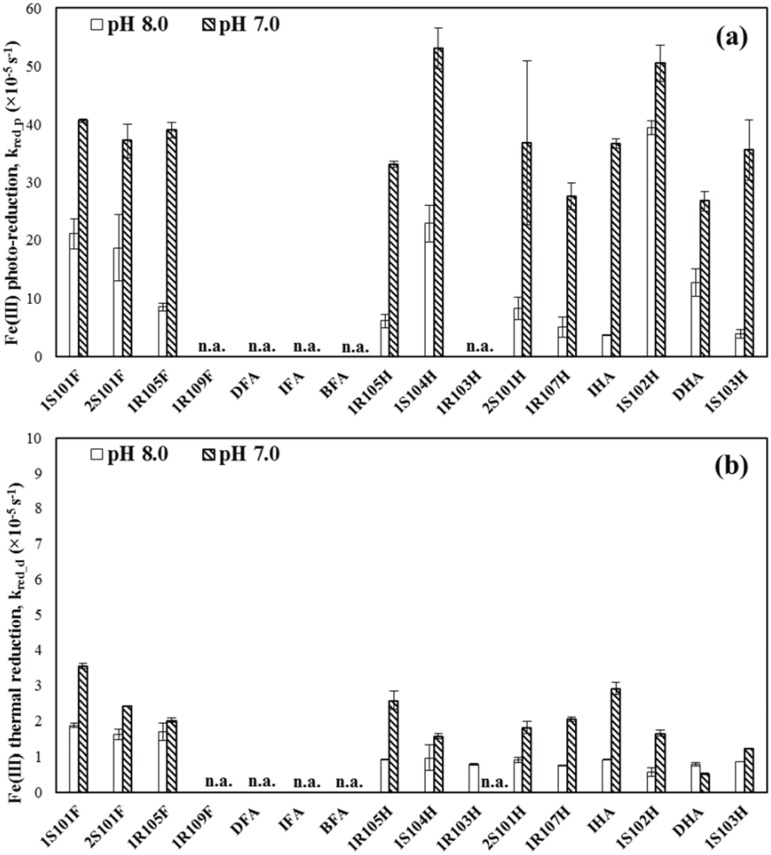
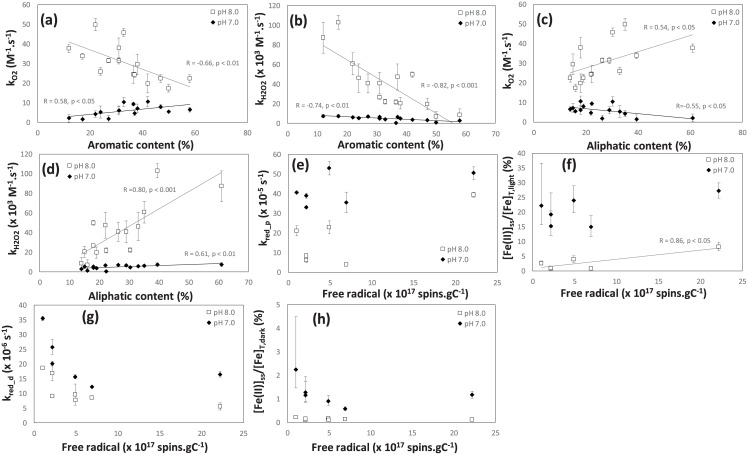
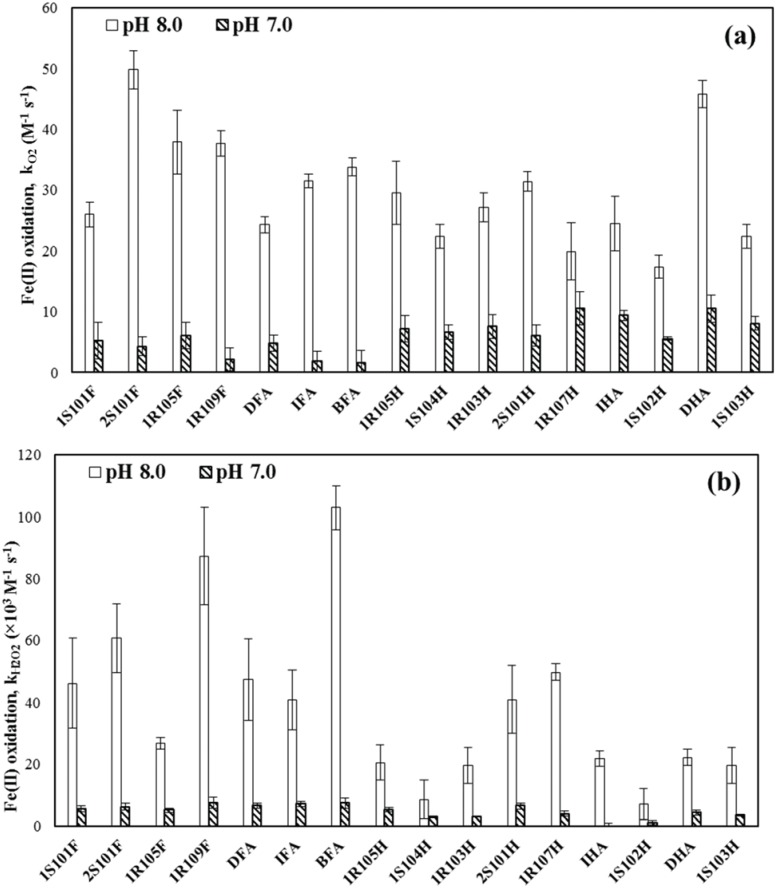
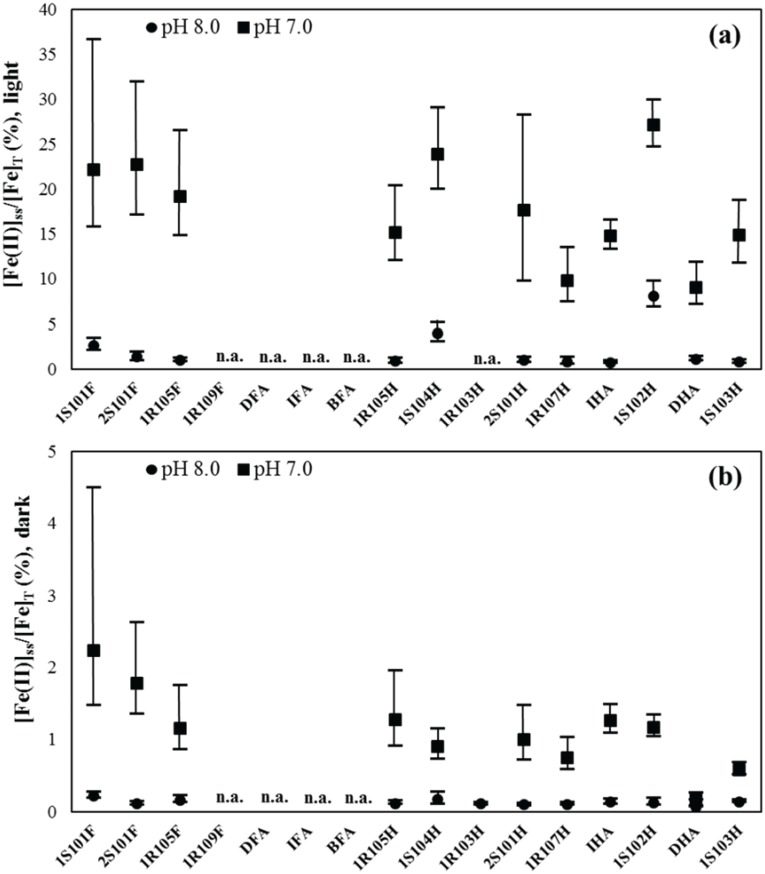
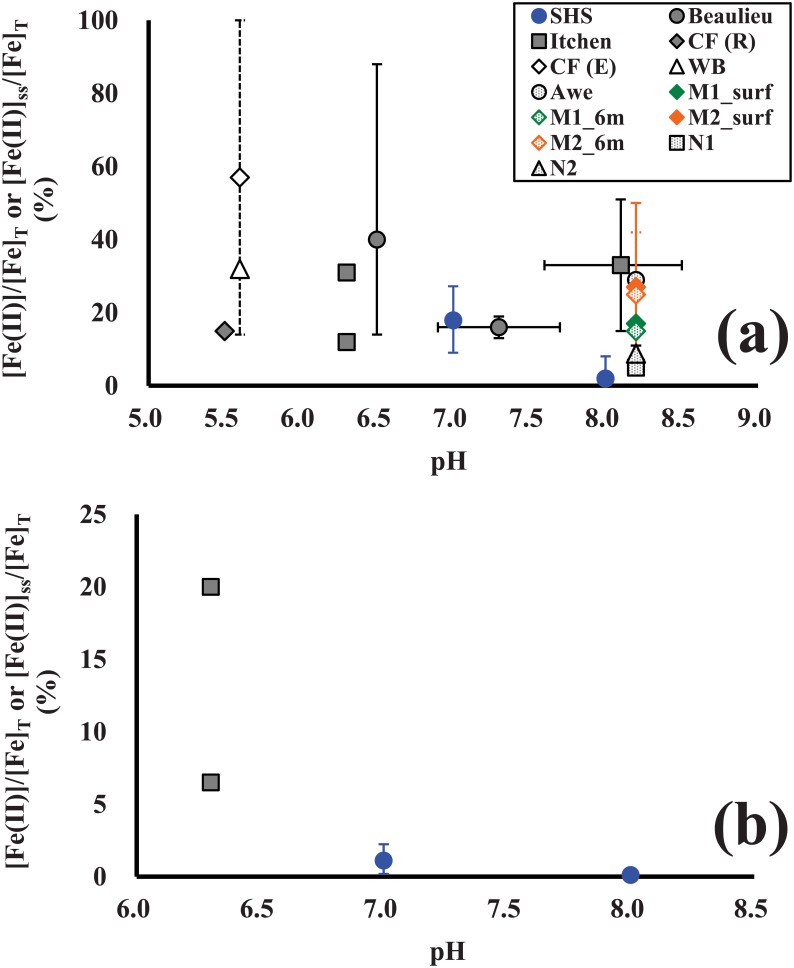
Oxidation and reduction kinetics of iron (Fe) and proportion of steady-state Fe(II) concentration relative to total dissolved Fe (steady-state Fe(II) fraction) were investigated in the presence of various types of standard humic substances (HS) with particular emphasis on the photochemical and thermal reduction of Fe(III) and oxidation of Fe(II) by dissolved oxygen (O2) and hydrogen peroxide (H2O2) at circumneutral pH (pH 7-8). Rates of Fe(III) reduction were spectrophotometrically determined by a ferrozine method under the simulated sunlight and dark conditions, whereas rates of Fe(II) oxidation were examined in air-saturated solution using luminol chemiluminescence technique. The reduction and oxidation rate constants were determined to substantially vary depending on the type of HS. For example, the first-order rate constants varied by up to 10-fold for photochemical reduction and 7-fold for thermal reduction. The degree of variation in Fe(II) oxidation was larger for the H2O2-mediated reaction compared to the O2-mediated reaction (e.g., 15- and 3-fold changes for the former and latter reactions, respectively, at pH 8). The steady-state Fe(II) fraction under the simulated sunlight indicated that the Fe(II) fraction varies by up to 12-fold. The correlation analysis indicated that variation of Fe(II) oxidation is significantly associated with aliphatic content of HS, suggesting that Fe(II) complexation by aliphatic components accelerates Fe(II) oxidation. The reduction rate constant and steady-state Fe(II) fractions in the presence of sunlight had relatively strong positive relations with free radical content of HS, possibly due to the reductive property of radical semiquinone in HS. Overall, the findings in this study indicated that the Fe reduction and oxidation kinetics and resultant Fe(II) formation are substantially influenced by chemical properties of HS.
在各种标准腐殖质(HS)存在的情况下,研究了铁(Fe)的氧化还原动力学以及稳态Fe(II)浓度相对于总溶解铁的比例(稳态Fe(II)分数),特别强调了在环境中性pH值(pH 7 - 8)下,Fe(III)的光化学和热还原以及溶解氧(O₂)和过氧化氢(H₂O₂)对Fe(II)的氧化作用。通过亚铁嗪法在模拟阳光和黑暗条件下分光光度法测定Fe(III)的还原速率,而使用鲁米诺化学发光技术在空气饱和溶液中检测Fe(II)的氧化速率。结果表明,还原和氧化速率常数会因HS的类型而有很大差异。例如,光化学还原的一级速率常数变化高达10倍,热还原变化高达7倍。与O₂介导的反应相比,H₂O₂介导的反应中Fe(II)氧化的变化程度更大(例如,在pH 8时,前者和后者反应分别变化15倍和3倍)。模拟阳光下的稳态Fe(II)分数表明Fe(II)分数变化高达12倍。相关性分析表明,Fe(II)氧化的变化与HS的脂肪族含量显著相关,这表明脂肪族成分对Fe(II)的络合作用加速了Fe(II)的氧化。在阳光存在下,还原速率常数和稳态Fe(II)分数与HS的自由基含量具有相对较强的正相关关系,这可能是由于HS中自由基半醌的还原性质所致。总体而言,本研究结果表明,Fe的还原和氧化动力学以及由此产生的Fe(II)形成受到HS化学性质的显著影响。