Institute of Cellular Medicine, Newcastle University, Newcastle upon Tyne NE2 4HH, UK.
Department of Gastroenterology, Newcastle upon Tyne Hospitals NHS Foundation Trust, Newcastle upon Tyne NE1 4LP, UK.
J Crohns Colitis. 2017 May 1;11(5):610-620. doi: 10.1093/ecco-jcc/jjw189.
The αEβ7 integrin is crucial for retention of T lymphocytes at mucosal surfaces through its interaction with E-cadherin. Pathogenic or protective functions of these cells during human intestinal inflammation, such as ulcerative colitis [UC], have not previously been defined, with understanding largely derived from animal model data. Defining this phenotype in human samples is important for understanding UC pathogenesis and is of translational importance for therapeutic targeting of αEβ7-E-cadherin interactions.
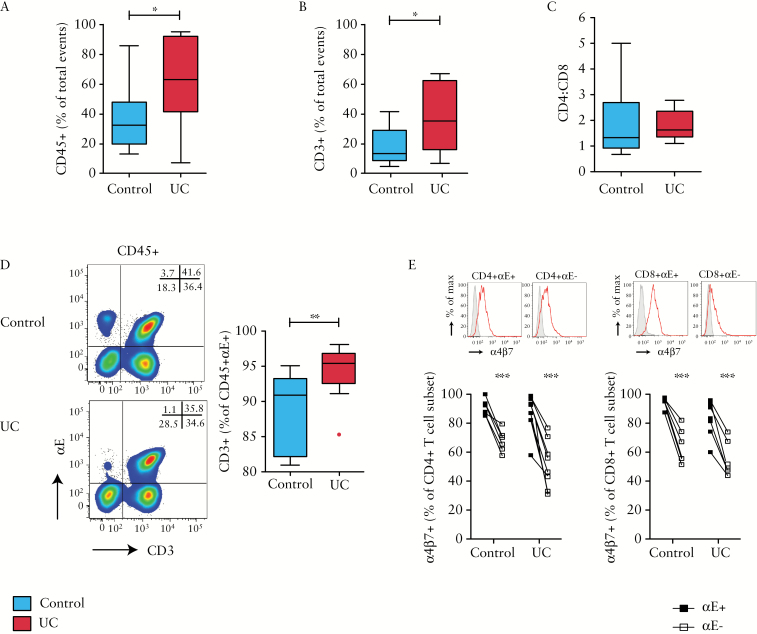
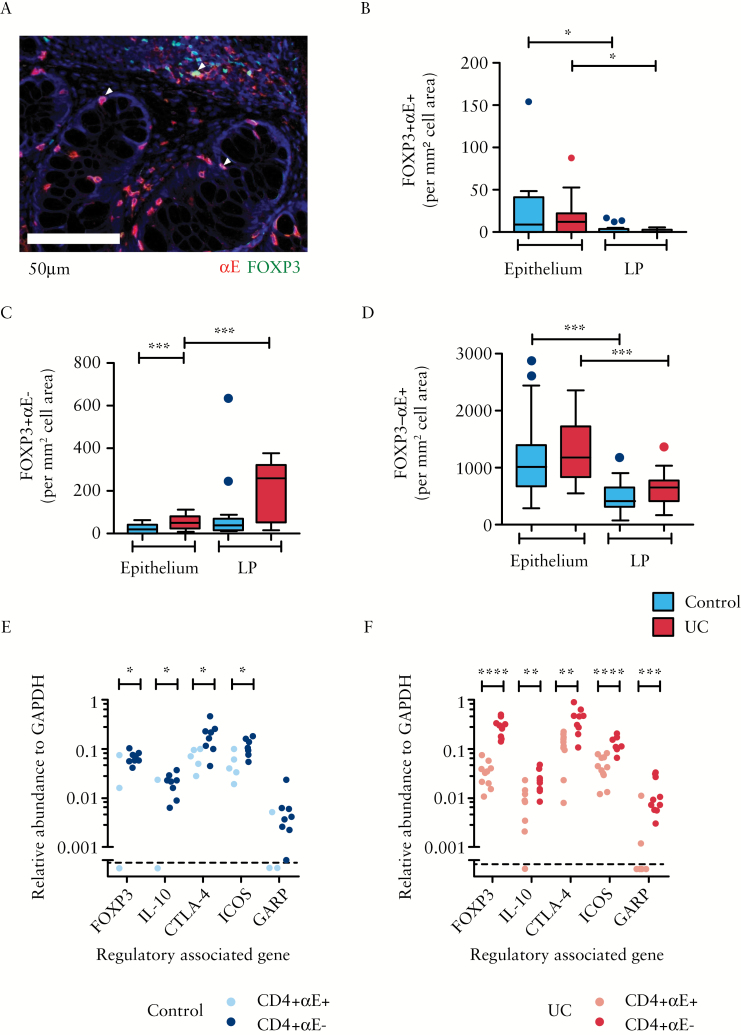
αEβ7+ and αEβ7- colonic T cell localization, inflammatory cytokine production and expression of regulatory T cell-associated markers were evaluated in cohorts of control subjects and patients with active UC by immunohistochemistry, flow cytometry and real-time PCR of FACS-purified cell populations.
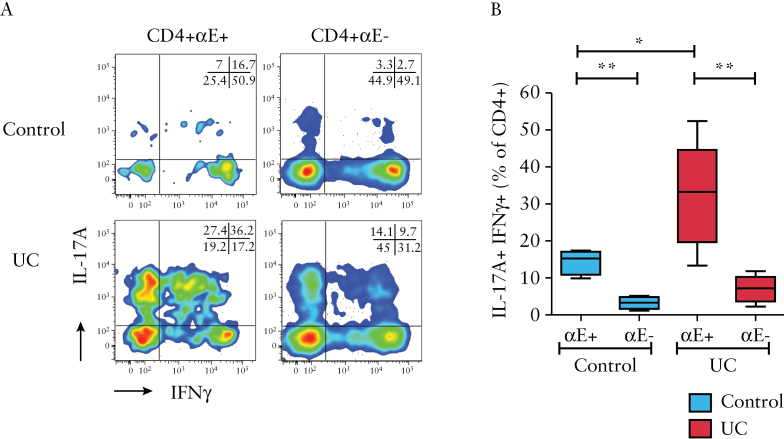
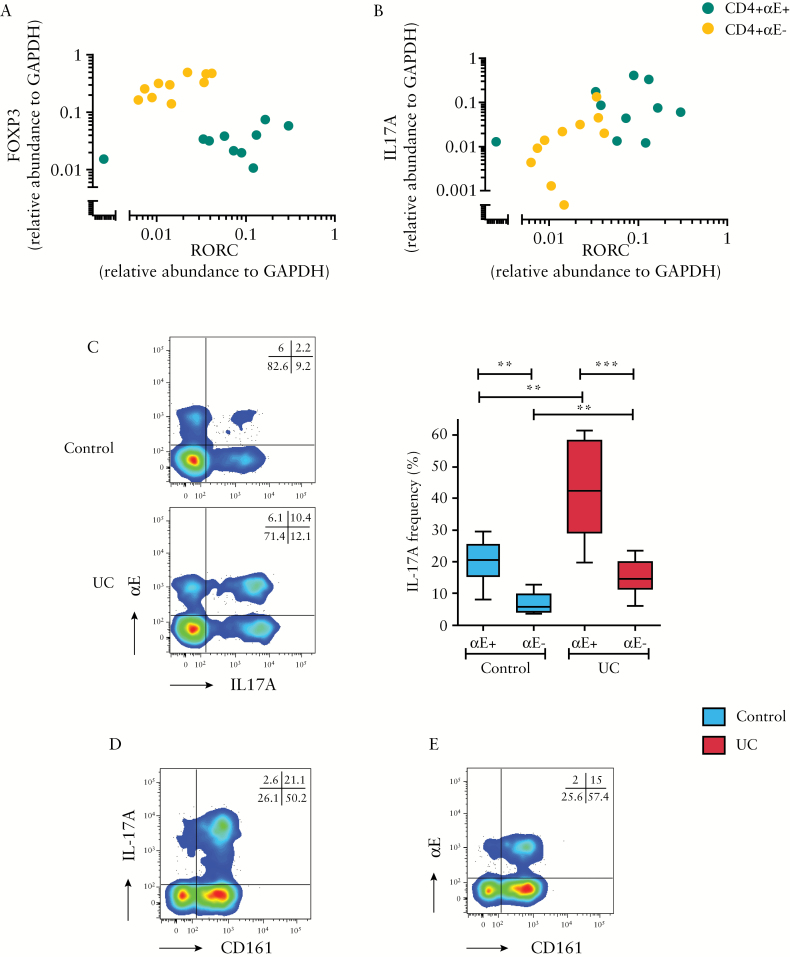
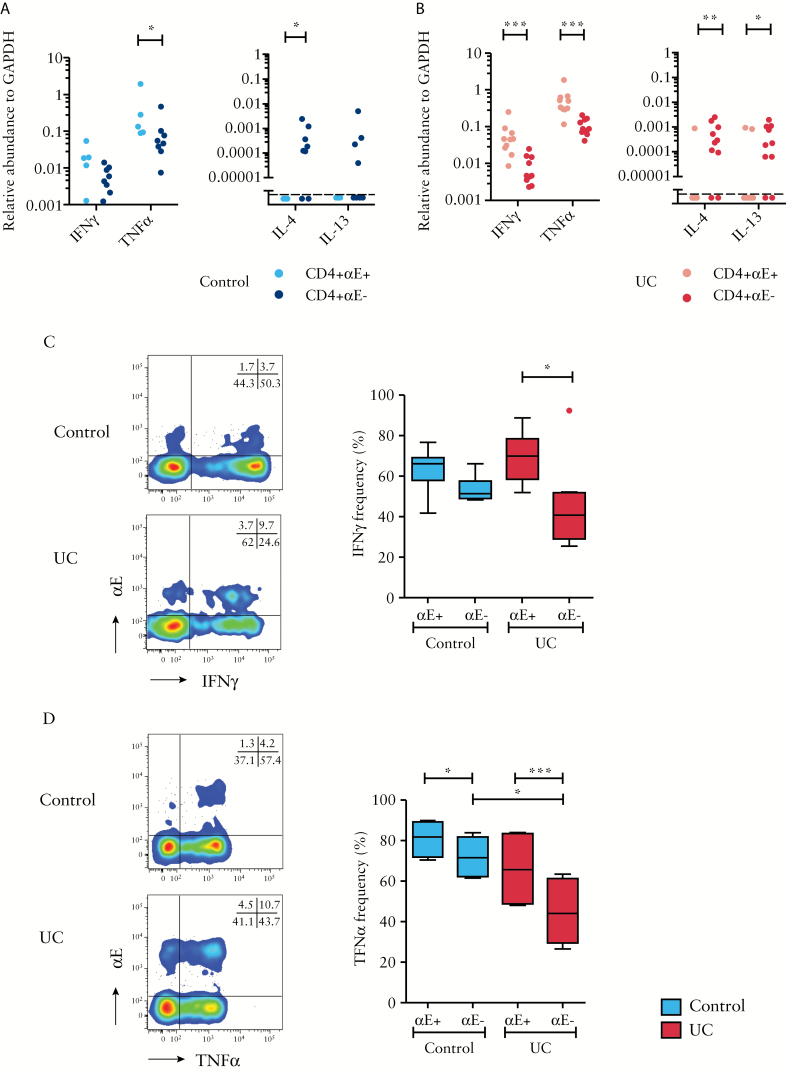
CD4+αEβ7+ T lymphocytes from both healthy controls and UC patients had lower expression of regulatory T cell-associated genes, including FOXP3, IL-10, CTLA-4 and ICOS in comparison with CD4+αEβ7- T lymphocytes. In UC, CD4+αEβ7+ lymphocytes expressed higher levels of IFNγ and TNFα in comparison with CD4+αEβ7- lymphocytes. Additionally the CD4+αEβ7+ subset was enriched for Th17 cells and the recently described Th17/Th1 subset co-expressing both IL-17A and IFNγ, both of which were found at higher frequencies in UC compared to control.
αEβ7 integrin expression on human colonic CD4+ T cells was associated with increased production of pro-inflammatory Th1, Th17 and Th17/Th1 cytokines, with reduced expression of regulatory T cell-associated markers. These data suggest colonic CD4+αEβ7+ T cells are pro-inflammatory and may play a role in UC pathobiology.
αEβ7 整合素通过与 E-钙黏蛋白相互作用,对于淋巴细胞在黏膜表面的保留至关重要。在人类肠道炎症(如溃疡性结肠炎[UC])期间,这些细胞的致病或保护功能以前没有被定义,对其的理解在很大程度上来自于动物模型数据。在人类样本中定义这种表型对于理解 UC 的发病机制非常重要,对于靶向 αEβ7-E-钙黏蛋白相互作用的治疗具有转化意义。
通过免疫组织化学、流式细胞术和 FACS 纯化细胞群的实时 PCR,评估了来自活动期 UC 患者和对照受试者的αEβ7+和αEβ7-结肠 T 细胞的定位、炎症细胞因子产生和调节性 T 细胞相关标志物的表达。
与 CD4+αEβ7- T 淋巴细胞相比,来自健康对照者和 UC 患者的 CD4+αEβ7+T 淋巴细胞的调节性 T 细胞相关基因(包括 FOXP3、IL-10、CTLA-4 和 ICOS)表达水平较低。在 UC 中,与 CD4+αEβ7-淋巴细胞相比,CD4+αEβ7+淋巴细胞表达更高水平的 IFNγ和 TNFα。此外,CD4+αEβ7+亚群富含 Th17 细胞,以及最近描述的共表达两种细胞因子(IL-17A 和 IFNγ)的 Th17/Th1 亚群,这两者在 UC 中均比对照更常见。
αEβ7 整合素在人类结肠 CD4+T 细胞上的表达与促炎 Th1、Th17 和 Th17/Th1 细胞因子的产生增加有关,同时与调节性 T 细胞相关标志物的表达减少有关。这些数据表明,结肠 CD4+αEβ7+T 细胞具有促炎作用,可能在 UC 发病机制中发挥作用。