Zhang Fan, Tongo Nosakhare Douglas, Hastings Victoria, Kanzali Parisa, Zhu Ziqiang, Chadow Hal, Rafii Shahrokh E
Department of Internal Medicine, Brookdale University Hospital and Medical Center, Brooklyn, NY, USA.
New York Institute of Technology, College of Osteopathic Medicine, Old Westbury, NY, USA.
Am J Case Rep. 2017 Apr 29;18:467-471. doi: 10.12659/ajcr.903345.
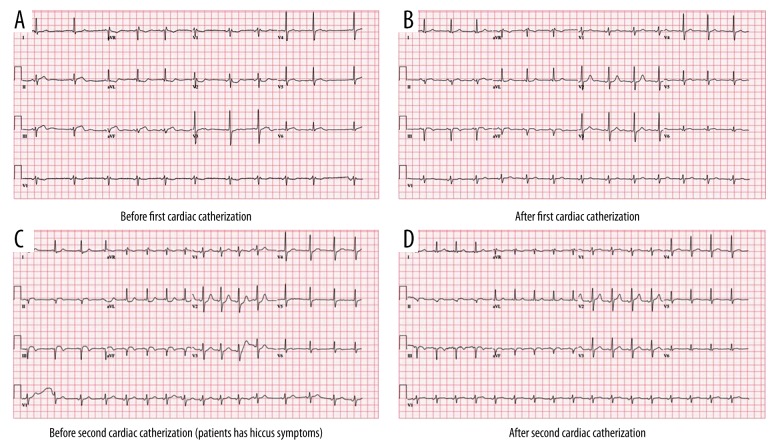
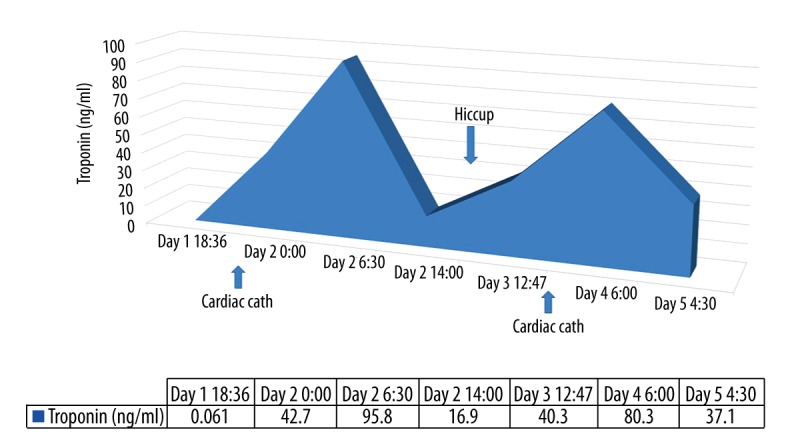
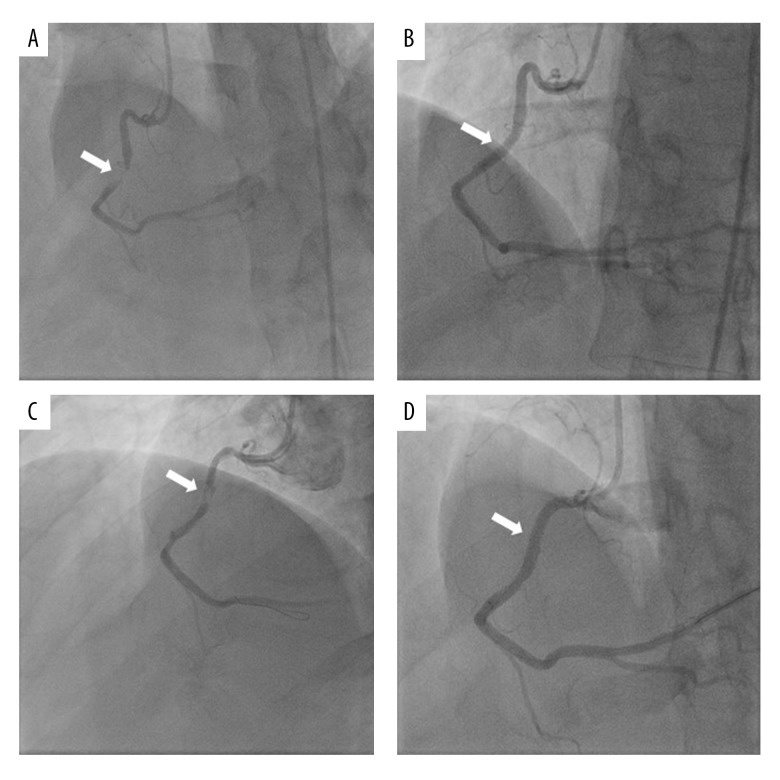
BACKGROUND Acute coronary syndrome (ACS) can present with atypical chest pain or symptoms not attributed to heart disease, such as indigestion. Hiccups, a benign and self-limited condition, can become persistent or intractable with overlooked underlying etiology. There are various causes of protracted hiccups, including metabolic abnormalities, psychogenic disorders, malignancy, central nervous system pathology, medications, pulmonary disorders, or gastrointestinal etiologies. It is rarely attributed to cardiac disease. CASE REPORT We report a case of intractable hiccups in a 51-year-old male with cocaine related myocardial infarction (MI) before and after stent placement. Coronary angiogram showed in-stent thrombosis of the initial intervention. Following thrombectomy, balloon angioplasty, and stent, the patient recovered well without additional episodes of hiccups. Although hiccups are not known to present with a predilection for a particular cause of myocardial ischemia, this case may additionally be explained by the sympathomimetic effects of cocaine, which lead to vasoconstriction of coronary arteries. CONCLUSIONS Hiccups associated with cardiac enzyme elevation and EKG ST-segment elevation before and after percutaneous coronary intervention (PCI) maybe a manifestation of acute MI with or without stent. The fact that this patient was a cocaine user may have contributed to the unique presentation.
急性冠状动脉综合征(ACS)可能表现为非典型胸痛或非心脏病所致症状,如消化不良。打嗝是一种良性自限性疾病,若潜在病因被忽视,可能会持续或变得难治。持续性打嗝有多种原因,包括代谢异常、精神障碍、恶性肿瘤、中枢神经系统病变、药物、肺部疾病或胃肠道病因。很少将其归因于心脏病。病例报告:我们报告一例51岁男性在支架置入前后出现与可卡因相关心肌梗死(MI)后顽固性打嗝的病例。冠状动脉造影显示初次干预时有支架内血栓形成。在进行血栓切除术、球囊血管成形术和置入支架后,患者恢复良好,未再出现打嗝发作。虽然打嗝并非特别倾向于由特定心肌缺血原因引起,但该病例可能还可由可卡因的拟交感神经作用导致冠状动脉血管收缩来解释。结论:经皮冠状动脉介入治疗(PCI)前后与心肌酶升高和心电图ST段抬高相关的打嗝可能是急性心肌梗死的一种表现,无论有无支架置入。该患者为可卡因使用者这一事实可能导致了这种独特的表现。