Polish Academy of Sciences, Smetna 12, 31-343, Kraków, Poland.
Mol Neurobiol. 2018 Apr;55(4):2897-2910. doi: 10.1007/s12035-017-0536-0. Epub 2017 Apr 28.
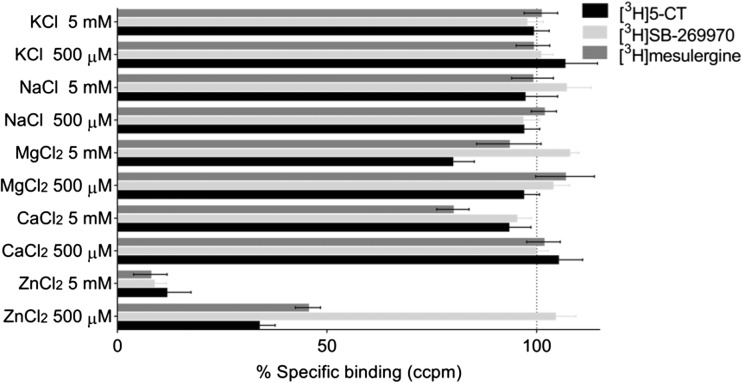
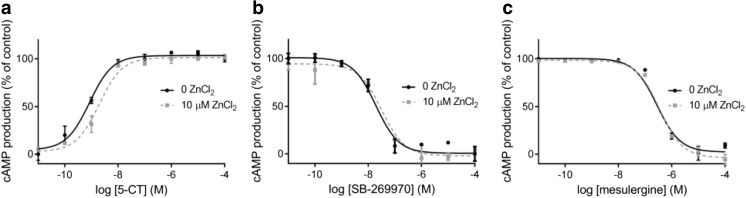
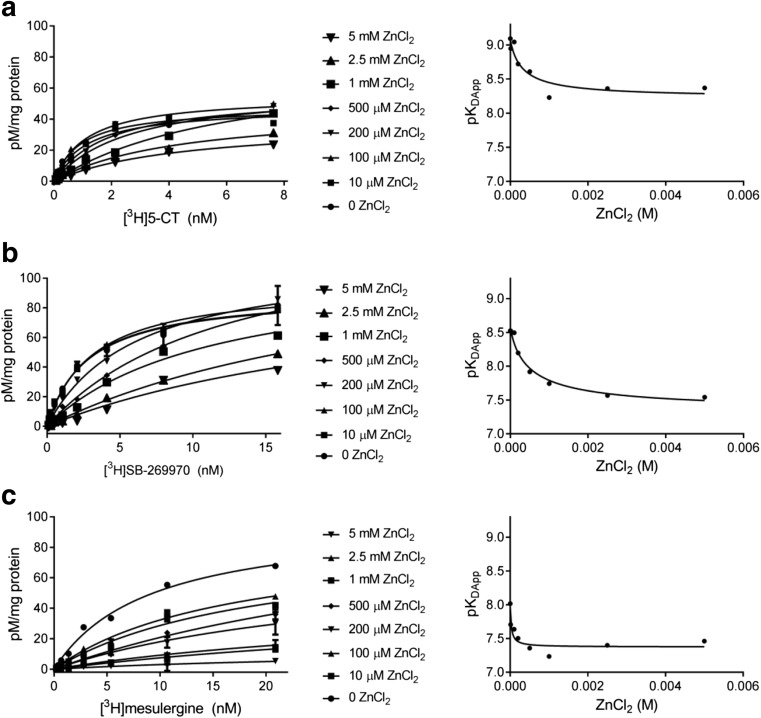
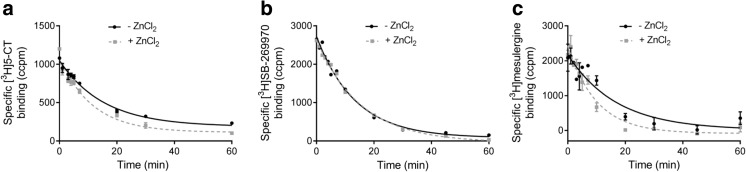
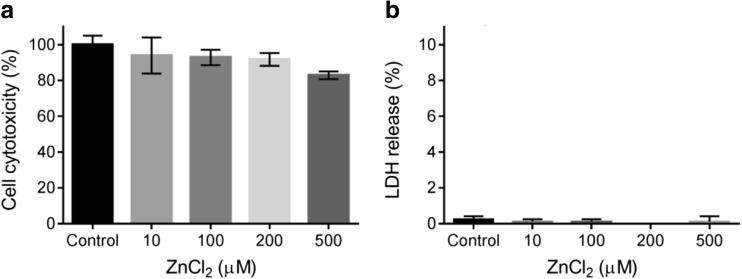
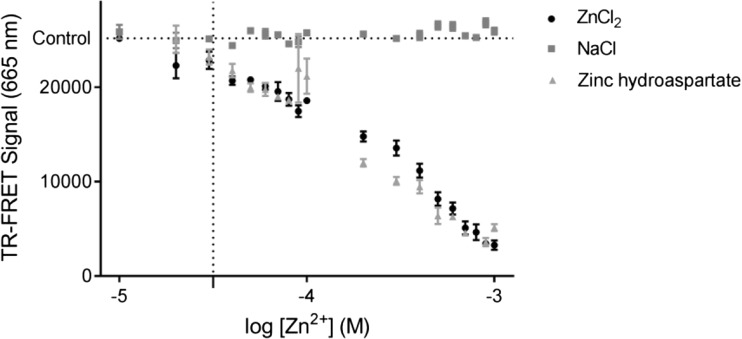
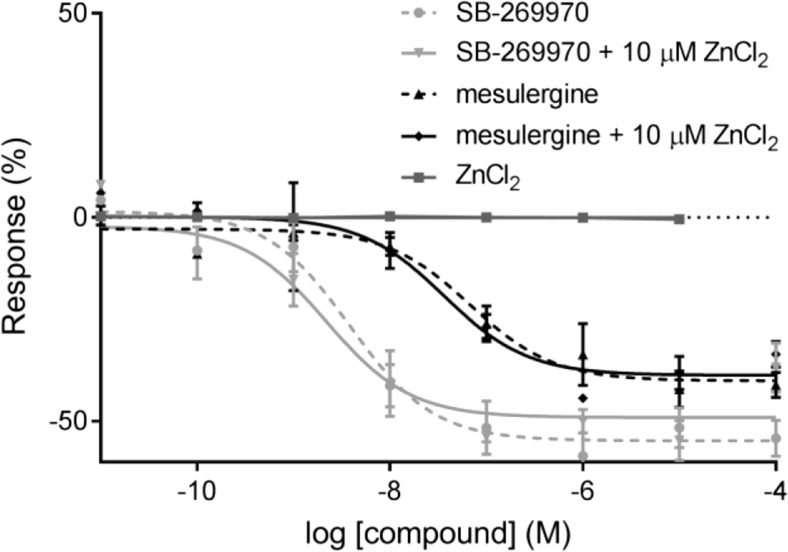
The allosteric regulation of G protein-coupled receptors (GPCRs) is a well-known phenomenon, but there are only a few examples of allosteric modulation within the metabotropic serotonergic receptor family. Recently, we described zinc non-competitive interactions toward agonist binding at serotonin 5-HT receptors, in which biphasic effects, involving potentiation at sub-micromolar concentrations (10 μM) and inhibition at sub-millimolar concentrations (500 μM) of Zn in radioligand binding assays, were consistent with both the agonist and antagonist-like effects of zinc ions observed in in vivo studies. Here, we showed new data demonstrating zinc allosteric inhibition of both agonist and antagonist binding at human recombinant 5-HT receptors stably expressed in HEK293 cells as observed by radioligand binding studies as well as zinc neutral antagonism displayed by the concentration of 10 μM in the functional LANCE assay. The allosteric nature of the effect of Zn on 5-HT receptors was confirmed (1) in saturation studies in which zinc inhibited the binding of potent orthosteric 5-HT receptor radioligands, the agonist [H]5-CT, and the two antagonists [H]SB-269970 and [H]mesulergine, showing ceiling effect and differences in the magnitude of negative cooperativity (α = 0.15, 0.06, and 0.25, respectively); (2) in competition experiments in which 500 μM of zinc inhibited all radioligand displacements by non-labeled orthosteric ligands (5-CT, SB-269970, and clozapine), and the most significant reduction in affinity was observed for the 5-CT agonist (4.9-16.7-fold) compared with both antagonists (1.4-3.9-fold); and (3) in kinetic experiments in which 500 μM zinc increased the dissociation rate constants for [H]5-CT and [H]mesulergine but not for [H]SB-269970. Additionally, in the functional LANCE test using the constitutively active HEK293 cell line expressing the 5-HT receptor, 10 μM zinc had features of neutral antagonism and increased the EC value of the 5-CT agonist by a factor of 3.2. Overall, these results showed that zinc can act as a negative allosteric inhibitor of 5-HT receptors. Given that the inhibiting effects of low concentrations of zinc in the functional assay represent the most likely direction of zinc activity under physiological conditions, among numerous zinc-regulated proteins, the 5-HT receptor can be considered a serotonergic target for zinc modulation in the CNS.
G 蛋白偶联受体(GPCRs)的变构调节是一种众所周知的现象,但在代谢型血清素能受体家族中只有少数变构调节的例子。最近,我们描述了锌对 5-羟色胺 5-HT 受体激动剂结合的非竞争性相互作用,在放射配体结合试验中,这种相互作用表现为亚微摩尔浓度(10 μM)下的增强作用和亚毫摩尔浓度(500 μM)下的抑制作用,与体内研究中观察到的锌离子的激动剂和拮抗剂样作用一致。在这里,我们展示了新的数据,表明锌在 HEK293 细胞中稳定表达的人重组 5-HT 受体上对激动剂和拮抗剂结合具有变构抑制作用,这可以通过放射配体结合研究以及在功能性 LANCE 测定中 10 μM 的浓度表现出的锌中性拮抗作用来观察到。锌对 5-HT 受体的作用的变构性质得到了证实:(1)在饱和研究中,锌抑制了强效的 5-HT 受体放射性配体,即激动剂[H]5-CT 和两种拮抗剂[H]SB-269970 和[H]mesulergine 的结合,表现出上限效应和负协同性的差异(α分别为 0.15、0.06 和 0.25);(2)在竞争实验中,500 μM 的锌抑制了所有非标记的 5-HT 受体配体(5-CT、SB-269970 和氯氮平)对放射性配体的置换,并且观察到 5-CT 激动剂的亲和力降低最显著(4.9-16.7 倍),与两种拮抗剂相比(1.4-3.9 倍);(3)在动力学实验中,500 μM 的锌增加了[H]5-CT 和[H]mesulergine 的解离速率常数,但不增加[H]SB-269970 的解离速率常数。此外,在使用表达 5-HT 受体的组成型激活的 HEK293 细胞系的功能性 LANCE 测试中,10 μM 的锌具有中性拮抗作用的特征,并使 5-CT 激动剂的 EC 值增加了 3.2 倍。总的来说,这些结果表明锌可以作为 5-HT 受体的负变构抑制剂。鉴于在功能测定中低浓度锌的抑制作用代表了生理条件下锌活性的最可能方向,在众多受锌调节的蛋白质中,5-HT 受体可以被认为是中枢神经系统中锌调节的血清素能靶标。