Department of Histology and Embryology, Medical College, Nanchang University, Nanchang 330006, China.
Queen Mary School, Medical College, Nanchang University, Nanchang 330006, China.
Nutrients. 2023 Apr 29;15(9):2140. doi: 10.3390/nu15092140.
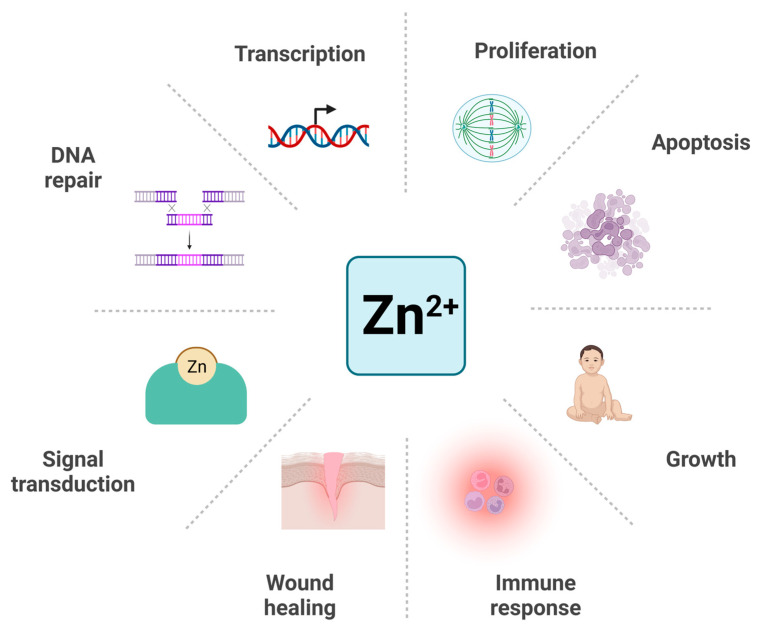
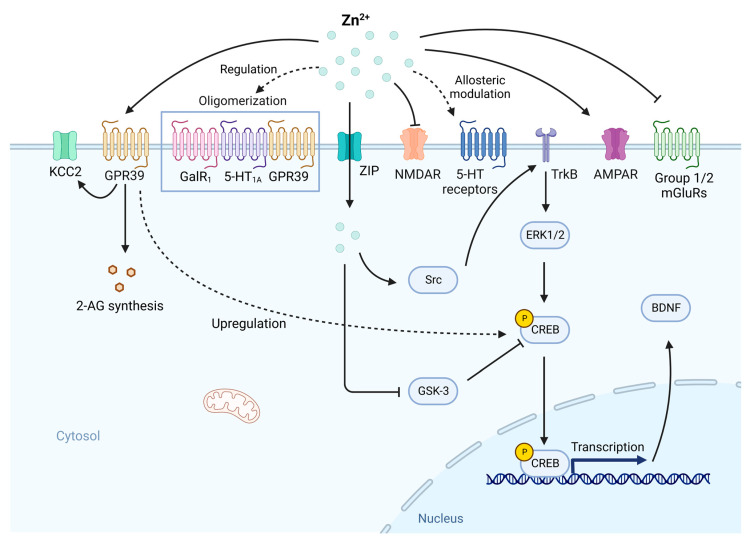
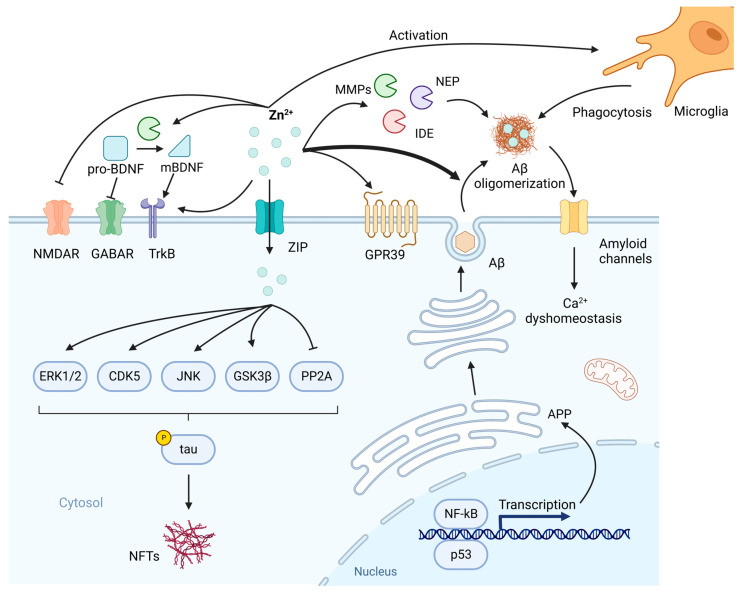
Zinc (Zn) is the second most abundant necessary trace element in the human body, exerting a critical role in many physiological processes such as cellular proliferation, transcription, apoptosis, growth, immunity, and wound healing. It is an essential catalyst ion for many enzymes and transcription factors. The maintenance of Zn homeostasis is essential for the central nervous system, in which Zn is abundantly distributed and accumulates in presynaptic vesicles. Synaptic Zn is necessary for neural transmission, playing a pivotal role in neurogenesis, cognition, memory, and learning. Emerging data suggest that disruption of Zn homeostasis is associated with several central nervous system disorders including Alzheimer's disease, depression, Parkinson's disease, multiple sclerosis, schizophrenia, epilepsy, and traumatic brain injury. Here, we reviewed the correlation between Zn and these central nervous system disorders. The potential mechanisms were also included. We hope that this review can provide new clues for the prevention and treatment of nervous system disorders.
锌(Zn)是人体中第二丰富的必需微量元素,在许多生理过程中发挥着关键作用,如细胞增殖、转录、细胞凋亡、生长、免疫和伤口愈合。它是许多酶和转录因子的必需催化离子。Zn 稳态的维持对中枢神经系统至关重要,在中枢神经系统中,Zn 大量分布并积累在突触小泡中。突触 Zn 是神经传递所必需的,在神经发生、认知、记忆和学习中起着关键作用。新出现的数据表明,Zn 稳态的破坏与包括阿尔茨海默病、抑郁症、帕金森病、多发性硬化症、精神分裂症、癫痫和创伤性脑损伤在内的几种中枢神经系统疾病有关。在这里,我们综述了 Zn 与这些中枢神经系统疾病的相关性。还包括了潜在的机制。我们希望这篇综述能为神经系统疾病的预防和治疗提供新的线索。