Namba Katsunari
Center for Endovascular Therapy, Division of Neuroendovascular Surgery, Jichi Medical University.
Neurol Med Chir (Tokyo). 2017 Jun 15;57(6):267-277. doi: 10.2176/nmc.ra.2017-0050. Epub 2017 May 1.
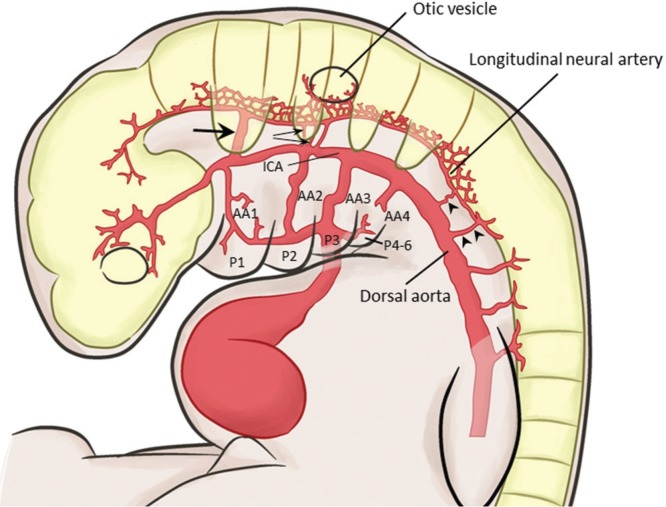
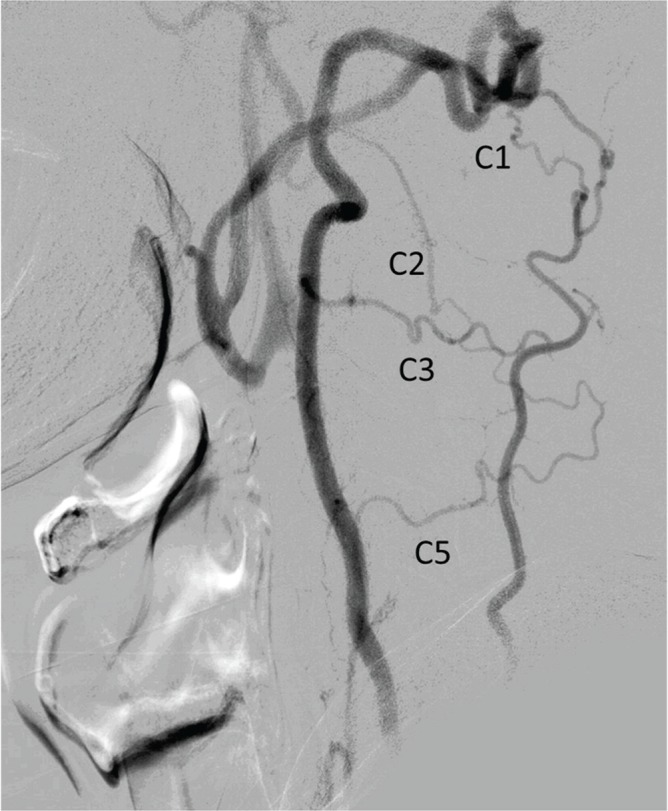
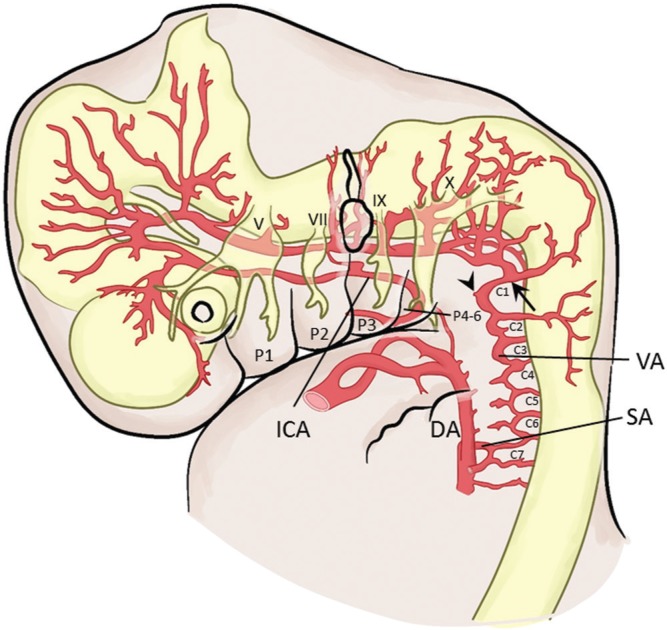
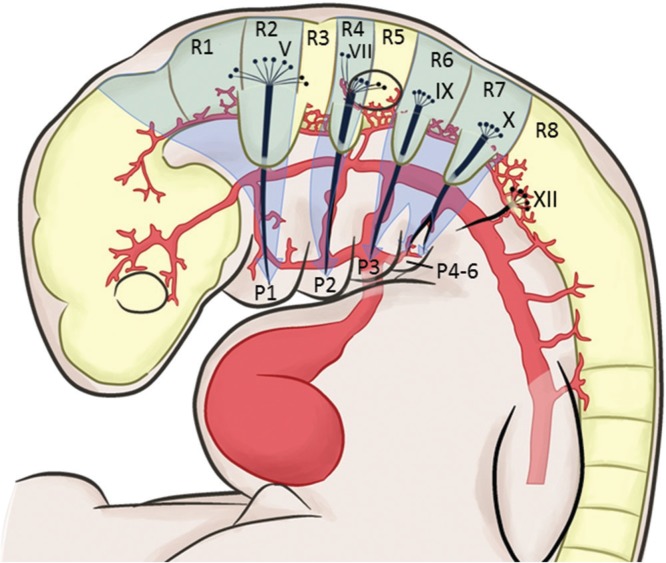
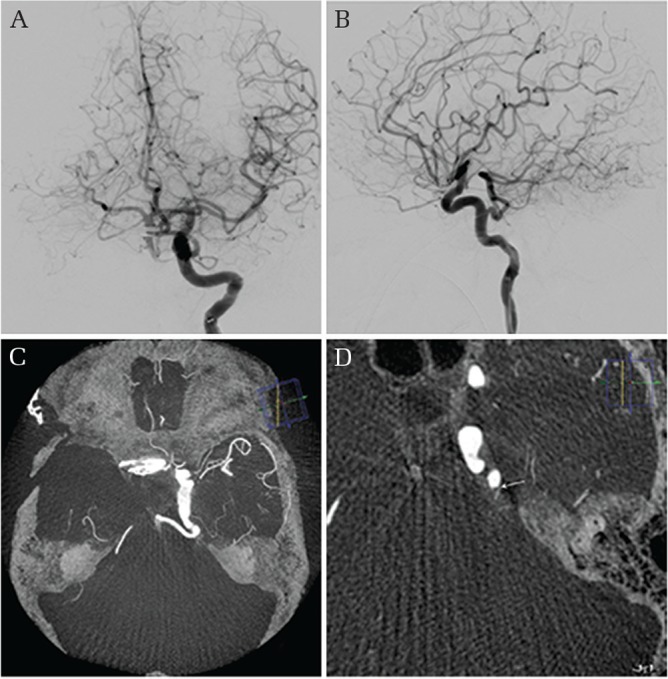
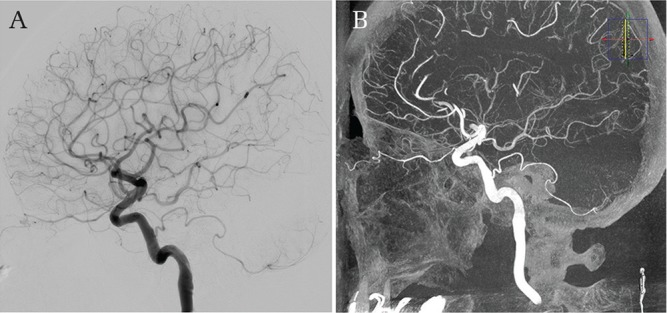
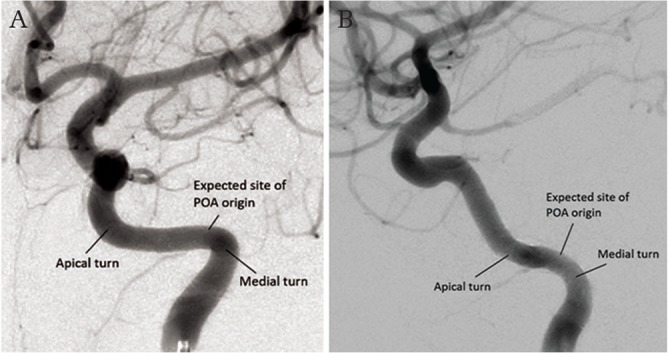
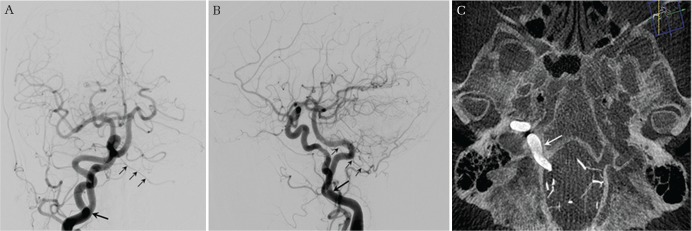
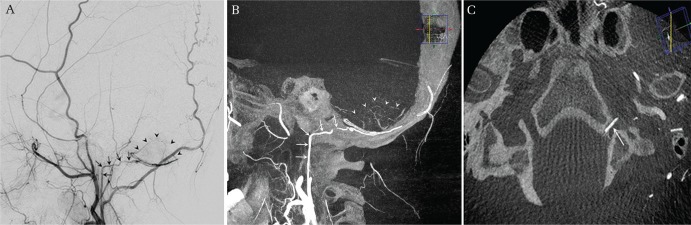
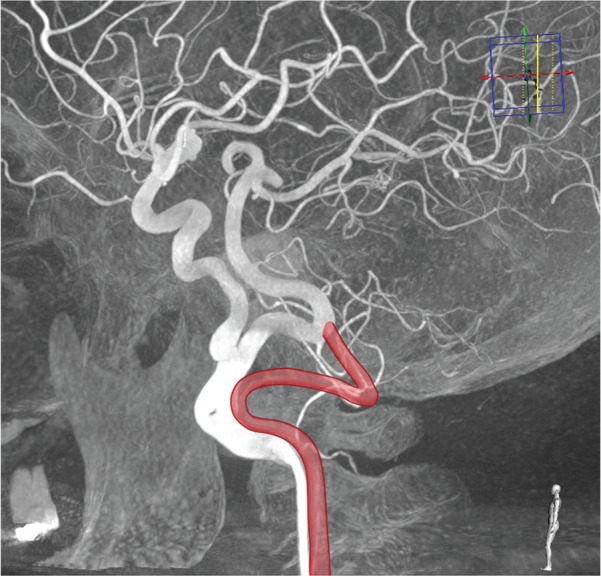
The primitive carotid-vertebrobasilar anastomoses are primitive embryonic cerebral vessels that temporarily provide arterial supply from the internal carotid artery to the longitudinal neural artery, the future vertebrobasilar artery in the hindbrain. Four types known are the trigeminal, otic, hypoglossal, and proatlantal intersegmental arteries. The arteries are accompanied by their corresponding nerves and resemble an intersegmental pattern. These vessels exist in the very early period of cerebral arterial development and rapidly involute within a week. Occasionally, persistence of the carotid to vertebrobasilar anastomosis is discovered in the adult period, and is considered as the vestige of the corresponding primitive embryonic vessel. The embryonic development and the segmental property of the primitive carotid-vertebrobasilar anastomoses are discussed. This is followed by a brief description of the persisting anastomoses in adults.
原始颈动脉 - 椎基底吻合支是原始胚胎期的脑血管,它们暂时从颈内动脉向纵行神经动脉(即后脑未来的椎基底动脉)提供动脉血供。已知有四种类型,即三叉、耳、舌下和寰椎前节间动脉。这些动脉与其相应的神经伴行,呈节段性分布。这些血管存在于脑动脉发育的早期阶段,并在一周内迅速退化。偶尔,在成年期会发现颈动脉至椎基底吻合支持续存在,这被认为是相应原始胚胎血管的遗迹。本文讨论了原始颈动脉 - 椎基底吻合支的胚胎发育和节段特性。随后简要描述了成人中持续存在的吻合支。