Li Nan, Yu Zilin, Pham Truc Thuy, Blower Philip J, Yan Ran
Division of Imaging Sciences and Biomedical Engineering, St Thomas' Hospital, King's College London, London, UK.
Tianjin Key Laboratory for Modern Drug Delivery & High-Efficiency, School of Pharmaceutical Science and Technology, Tianjin University, Tianjin, People's Republic of China.
Int J Nanomedicine. 2017 Apr 20;12:3281-3294. doi: 10.2147/IJN.S134379. eCollection 2017.
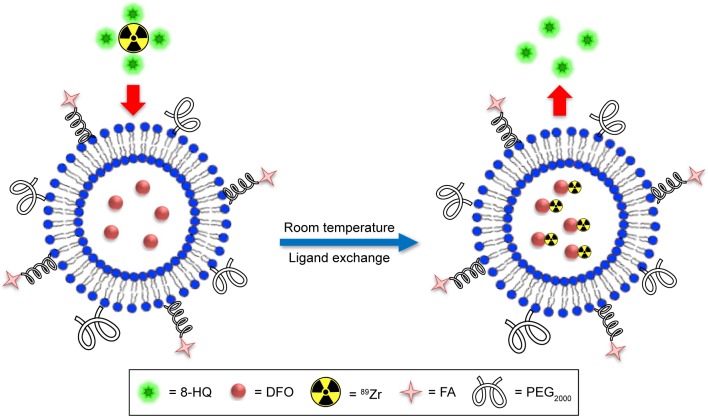
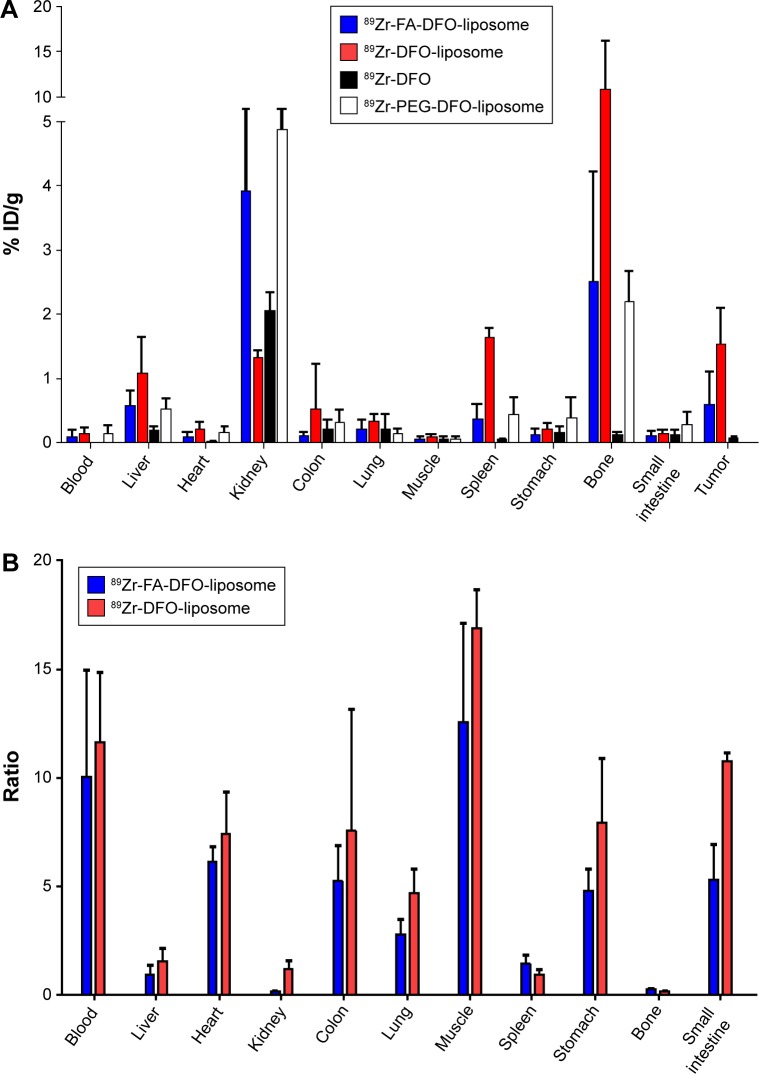
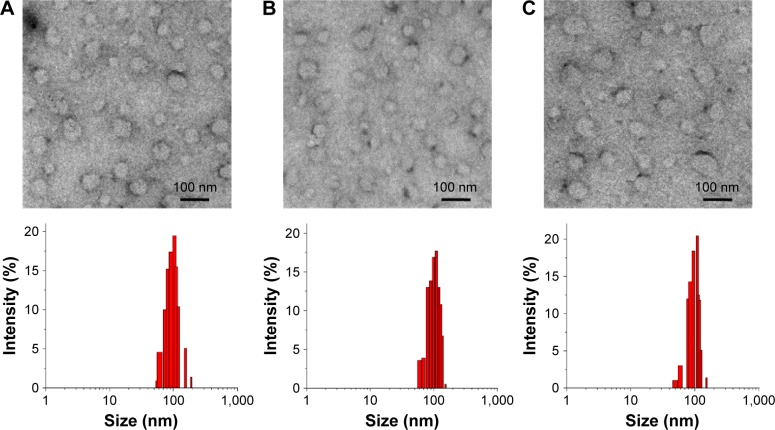
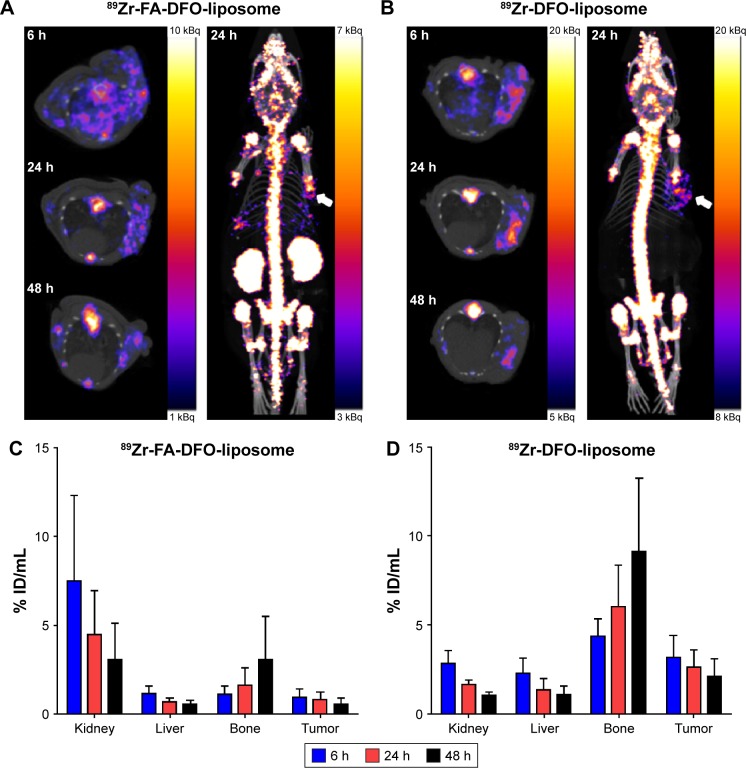
Liposomal nanoparticles are versatile drug delivery vehicles that show great promise in cancer therapy. In an effort to quantitatively measure their in vivo pharmacokinetics, we developed a highly efficient Zr liposome-labeling method based on a rapid ligand exchange reaction between the membrane-permeable Zr(8-hydroxyquinolinate) complex and the hydrophilic liposomal cavity-encapsulated deferoxamine (DFO). This novel Zr-labeling strategy allowed us to prepare radiolabeled forms of a folic acid (FA)-decorated active targeting Zr-FA-DFO-liposome, a thermosensitive Zr-DFO-liposome, and a renal avid Zr-PEG-DFO-liposome at room temperature with near-quantitative isolated radiochemical yields of 98%±1% (n=6), 98%±2% (n=5), and 97%±1% (n=3), respectively. These Zr-labeled liposomal nanoparticles showed remarkable stability in phosphate-buffered saline and serum at 37°C without leakage of radioactivity for 48 h. The uptake of Zr-FA-DFO-liposome by the folate receptor-overexpressing KB cells was almost 15-fold higher than the Zr-DFO-liposome in vitro. Positron emission tomography imaging and ex vivo biodistribution studies enabled us to observe the heterogeneous distribution of the Zr-FA-DFO-liposome and Zr-DFO-liposome in the KB tumor xenografts, the extensive kidney accumulation of the Zr-FA-DFO-liposome and Zr-PEG-DFO-liposome, and the different metabolic fate of the free and liposome-encapsulated Zr-DFO. It also unveiled the poor resistance of all three liposomes against endothelial uptake resulting in their catabolism and high uptake of free Zr in the skeleton. Thus, this technically simple Zr-labeling method would find widespread use to guide the development and clinical applications of novel liposomal nanomedicines.
脂质体纳米颗粒是多功能药物递送载体,在癌症治疗中显示出巨大潜力。为了定量测量它们的体内药代动力学,我们基于可渗透膜的Zr(8-羟基喹啉)配合物与亲水性脂质体腔内包裹的去铁胺(DFO)之间的快速配体交换反应,开发了一种高效的Zr脂质体标记方法。这种新颖的Zr标记策略使我们能够在室温下制备叶酸(FA)修饰的主动靶向Zr-FA-DFO-脂质体、热敏Zr-DFO-脂质体和肾亲和Zr-PEG-DFO-脂质体的放射性标记形式,分离得到的放射化学产率接近定量,分别为98%±1%(n = 6)、98%±2%(n = 5)和97%±1%(n = 3)。这些Zr标记的脂质体纳米颗粒在37°C的磷酸盐缓冲盐水和血清中显示出显著的稳定性,48小时内无放射性泄漏。在体外,叶酸受体过表达的KB细胞对Zr-FA-DFO-脂质体的摄取几乎比Zr-DFO-脂质体高15倍。正电子发射断层扫描成像和体外生物分布研究使我们能够观察到Zr-FA-DFO-脂质体和Zr-DFO-脂质体在KB肿瘤异种移植中的异质分布、Zr-FA-DFO-脂质体和Zr-PEG-DFO-脂质体在肾脏中的广泛积累,以及游离和脂质体包裹的Zr-DFO的不同代谢命运。它还揭示了所有三种脂质体对内皮摄取的抗性较差,导致它们的分解代谢以及骨骼中游离Zr的高摄取。因此,这种技术上简单的Zr标记方法将广泛用于指导新型脂质体纳米药物的开发和临床应用。