Wilson Mark A, Iser Wendy B, Son Tae Gen, Logie Anne, Cabral-Costa Joao V, Mattson Mark P, Camandola Simonetta
Laboratory of Neurosciences, National Institute on Aging, Intramural Research Program, Baltimore, Maryland, United States of America.
Department of Experimental Radiation, Research Center, Dongnam Institute of Radiological and Medical Science, Jwadong-ri, Jangan-eup, Gijang-gun, Busan, Republic of Korea.
PLoS One. 2017 May 1;12(5):e0176798. doi: 10.1371/journal.pone.0176798. eCollection 2017.
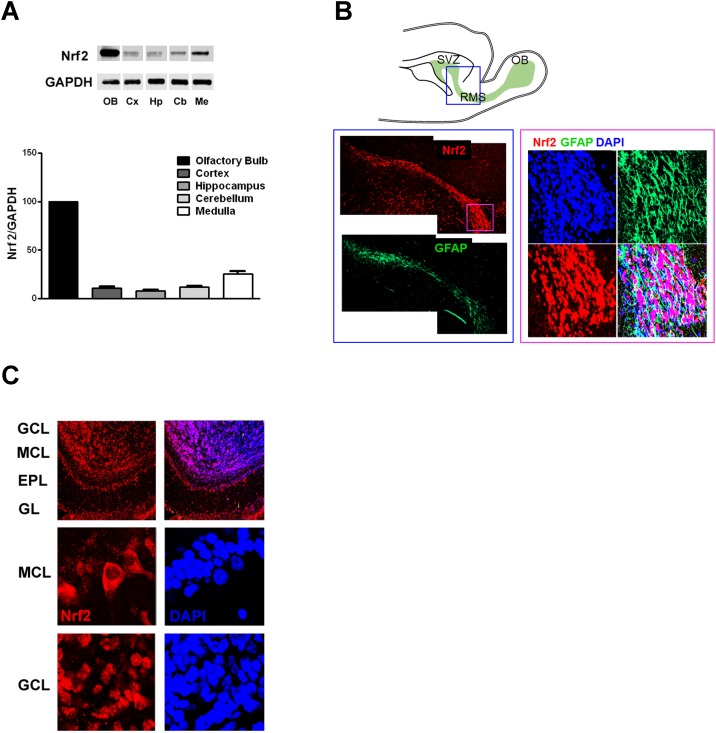
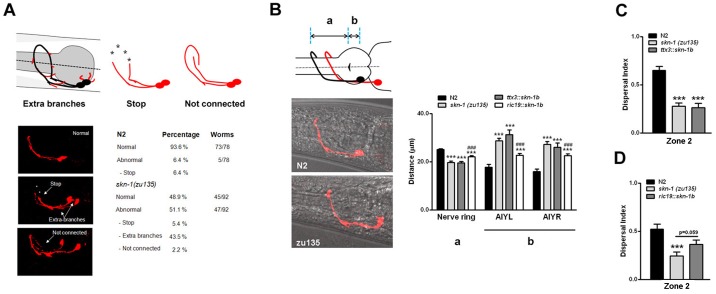
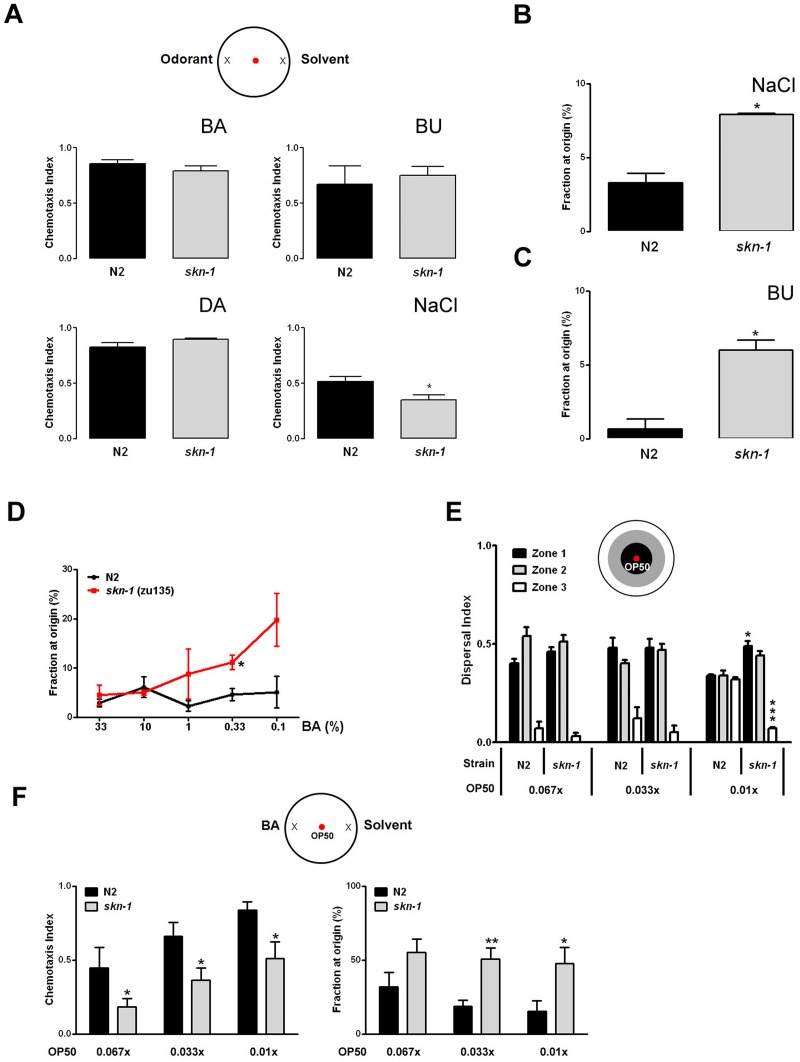
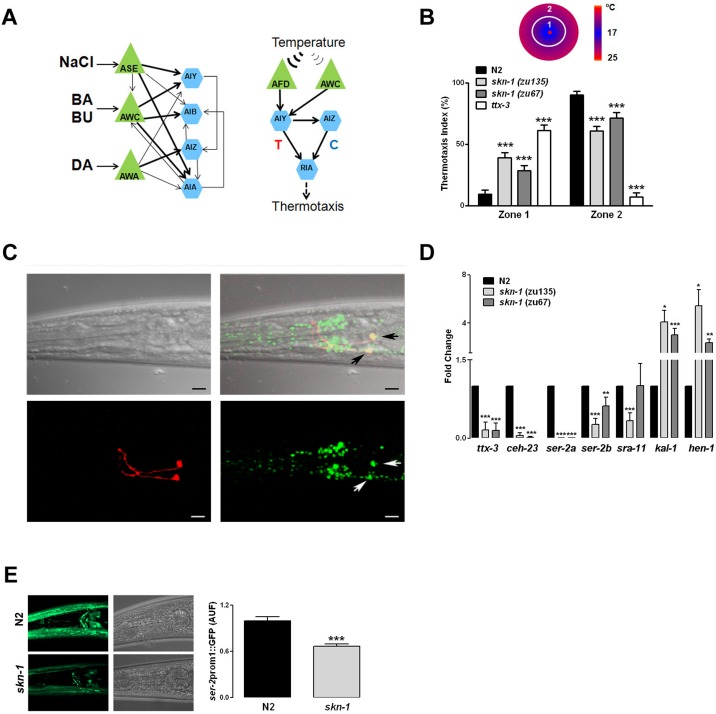
Nrf2/skn-1, a transcription factor known to mediate adaptive responses of cells to stress, also regulates energy metabolism in response to changes in nutrient availability. The ability to locate food sources depends upon chemosensation. Here we show that Nrf2/skn-1 is expressed in olfactory interneurons, and is required for proper integration of multiple food-related sensory cues in Caenorhabditis elegans. Compared to wild type worms, skn-1 mutants fail to perceive that food density is limiting, and display altered chemo- and thermotactic responses. These behavioral deficits are associated with aberrant AIY interneuron morphology and migration in skn-1 mutants. Both skn-1-dependent AIY autonomous and non-autonomous mechanisms regulate the neural circuitry underlying multisensory integration of environmental cues related to energy acquisition.
Nrf2/skn-1是一种已知可介导细胞对应激的适应性反应的转录因子,它还能根据营养物质可利用性的变化来调节能量代谢。定位食物来源的能力取决于化学感应。我们在此表明,Nrf2/skn-1在嗅觉中间神经元中表达,并且是秀丽隐杆线虫正确整合多种与食物相关的感觉线索所必需的。与野生型线虫相比,skn-1突变体无法感知食物密度受限,并表现出改变的化学和热趋性反应。这些行为缺陷与skn-1突变体中AIY中间神经元形态异常和迁移有关。skn-1依赖的AIY自主和非自主机制均调节与能量获取相关的环境线索多感觉整合的神经回路。