Scaini G, Fries G R, Valvassori S S, Zeni C P, Zunta-Soares G, Berk M, Soares J C, Quevedo J
Translational Psychiatry Program, Department of Psychiatry and Behavioral Sciences, McGovern Medical School, The University of Texas Health Science Center at Houston, Houston, TX, USA.
Laboratory of Neurosciences, Graduate Program in Health Sciences, Health Sciences Unit, University of Southern Santa Catarina, Criciúma, Brazil.
Transl Psychiatry. 2017 May 2;7(5):e1111. doi: 10.1038/tp.2017.83.
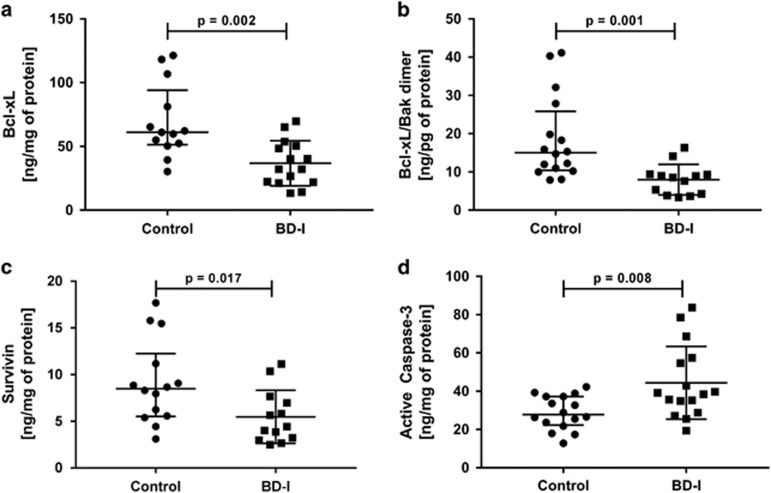
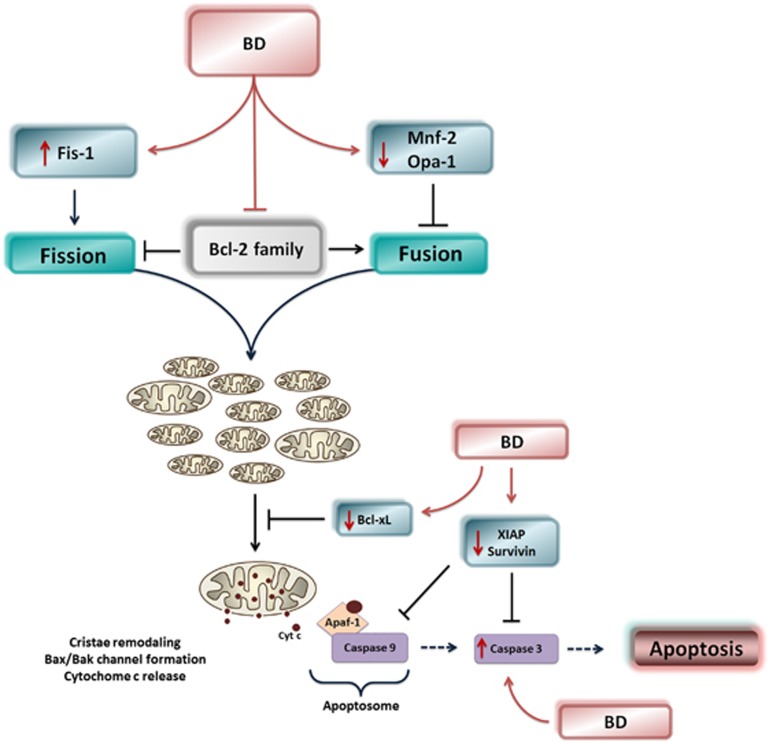
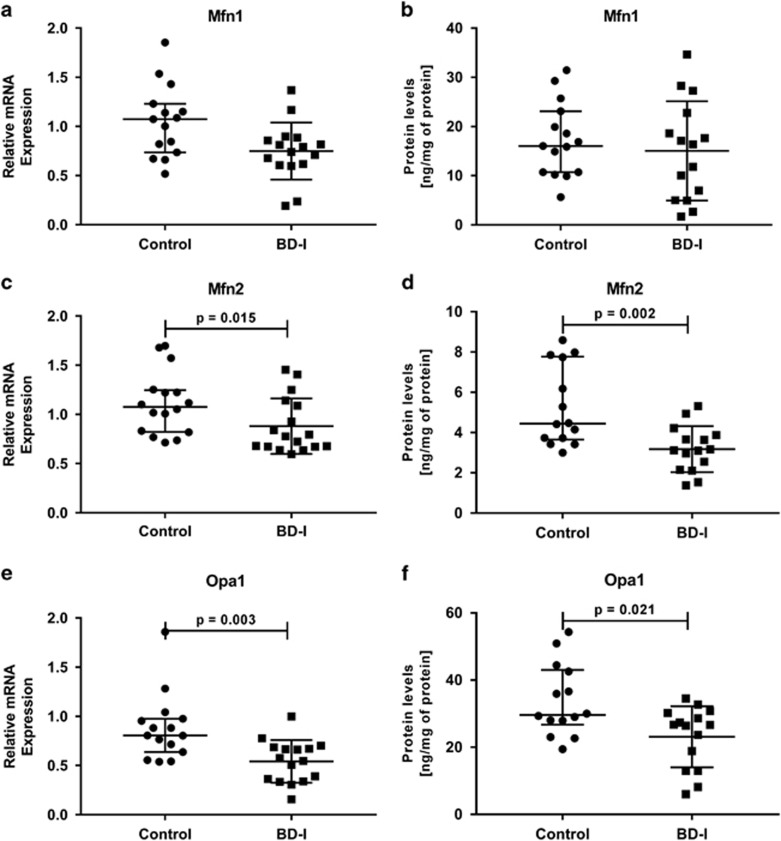
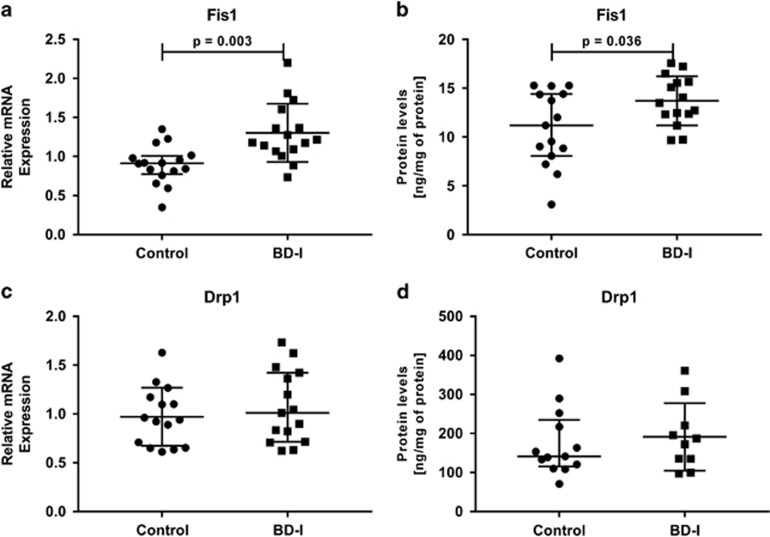
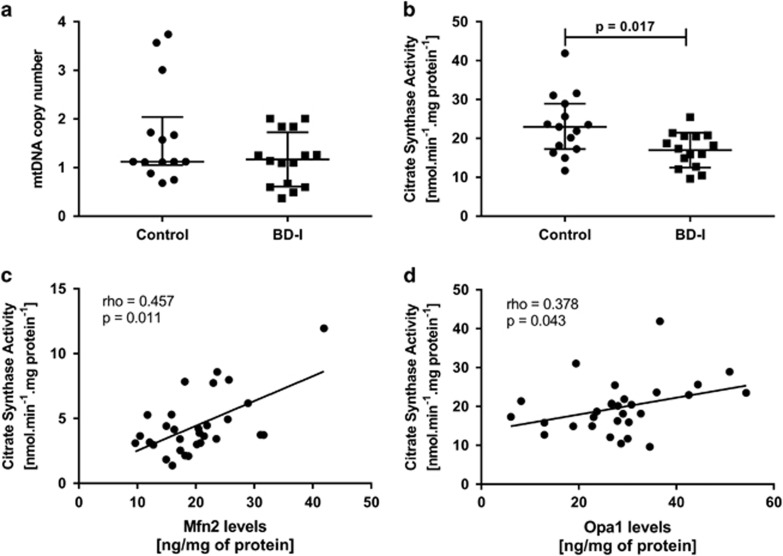
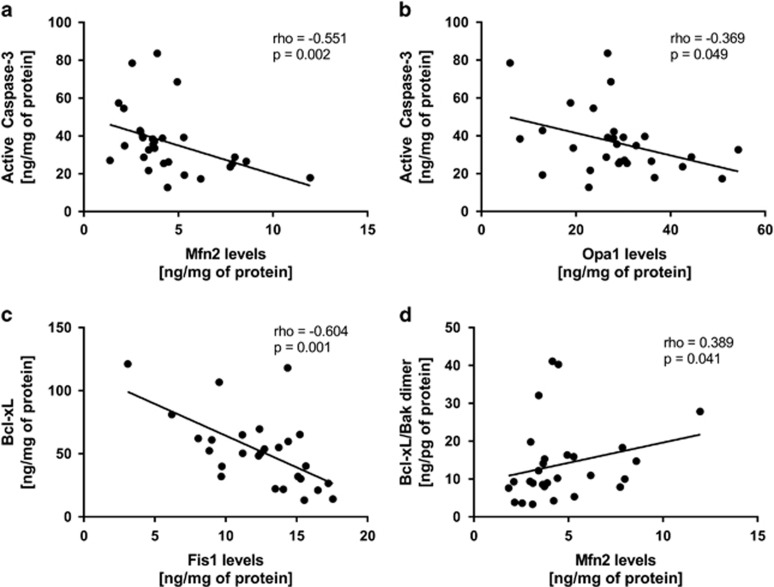
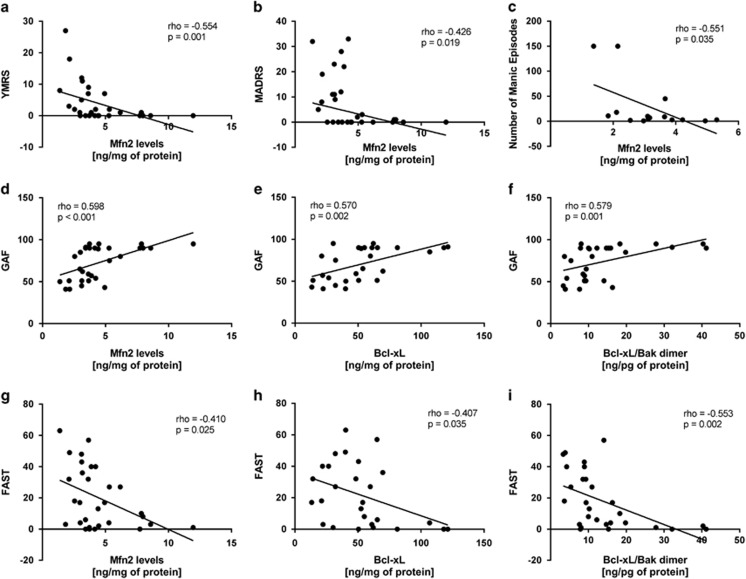
Bipolar disorder (BD) is a severe psychiatric disorder characterized by phasic changes of mood and can be associated with progressive structural brain change and cognitive decline. The numbers and sizes of glia and neurons are reduced in several brain areas, suggesting the involvement of apoptosis in the pathophysiology of BD. Because the changes in mitochondrial dynamics are closely related with the early process of apoptosis and the specific processes of apoptosis and mitochondrial dynamics in BD have not been fully elucidated, we measured the apoptotic pathway and the expression of mitochondrial fission/fusion proteins from BD patients and healthy controls. We recruited 16 patients with BD type I and sixteen well-matched healthy controls and investigated protein levels of several pro-apoptotic and anti-apoptotic factors, as well as the expression of mitochondrial fission/fusion proteins in peripheral blood mononuclear cells (PBMCs). Our results showed that the levels of the anti-apoptotic proteins Bcl-xL, survivin and Bcl-xL/Bak dimer were significantly decreased, while active caspase-3 protein levels were significantly increased in PBMCs from BD patients. Moreover, we observed the downregulation of the mitochondrial fusion-related proteins Mfn2 and Opa1 and the upregulation of the fission protein Fis1 in PBMCs from BD patients, both in terms of gene expression and protein levels. We also showed a significantly decrease in the citrate synthase activity. Finally, we found a positive correlation between Mfn2 and Opa1 with mitochondrial content markers, as well as a negative correlation between mitochondrial fission/fusion proteins and apoptotic markers. Overall, data reported here are consistent with the working hypothesis that apoptosis may contribute to cellular dysfunction, brain volume loss and progressive cognitive in BD. Moreover, we show an important relationship between mitochondrial dynamics and the cell death pathway activation in BD patients, supporting the link between mitochondrial dysfunction and the pathophysiology of BD.
双相情感障碍(BD)是一种严重的精神疾病,其特征为情绪的阶段性变化,并且可能与大脑结构的渐进性改变和认知功能衰退有关。在多个脑区中,神经胶质细胞和神经元的数量及大小均有所减少,这表明细胞凋亡参与了双相情感障碍的病理生理过程。由于线粒体动力学变化与细胞凋亡的早期过程密切相关,而双相情感障碍中细胞凋亡和线粒体动力学的具体过程尚未完全阐明,因此我们检测了双相情感障碍患者和健康对照者的凋亡途径以及线粒体分裂/融合蛋白的表达。我们招募了16例I型双相情感障碍患者和16名匹配良好的健康对照者,研究了外周血单核细胞(PBMCs)中几种促凋亡和抗凋亡因子的蛋白水平以及线粒体分裂/融合蛋白的表达。我们的结果显示,双相情感障碍患者PBMCs中抗凋亡蛋白Bcl-xL、生存素和Bcl-xL/Bak二聚体的水平显著降低,而活性半胱天冬酶-3蛋白水平显著升高。此外,从基因表达和蛋白水平来看,我们观察到双相情感障碍患者PBMCs中线粒体融合相关蛋白Mfn2和Opa1的下调以及分裂蛋白Fis1的上调。我们还发现柠檬酸合酶活性显著降低。最后,我们发现Mfn2和Opa1与线粒体含量标志物呈正相关,而线粒体分裂/融合蛋白与凋亡标志物呈负相关。总体而言,此处报告的数据与细胞凋亡可能导致双相情感障碍中的细胞功能障碍、脑容量损失和进行性认知功能衰退这一工作假设相一致。此外,我们显示了双相情感障碍患者中线粒体动力学与细胞死亡途径激活之间的重要关系,支持了线粒体功能障碍与双相情感障碍病理生理学之间的联系。