Zhao Na, Zhang Yong, Liu Qun, Xiang Wenpei
Family Planning Research Institute, Center of Reproductive Medicine, Tongji Medical College, Huazhong University of Science and Technology, Wuhan, Hubei, China.
Department of General Surgery, Union Hospital, Huazhong University of Science and Technology, Wuhan, Hubei, China.
PLoS One. 2015 May 15;10(5):e0125680. doi: 10.1371/journal.pone.0125680. eCollection 2015.
Growth factors, energy sources, and mitochondrial function strongly affect embryo growth and development in vitro. The biological role and prospective significance of the mitofusin gene Mfn2 in the development of preimplantation embryos remain poorly understood. Our goal is to profile the role of Mfn2 in mouse embryos and determine the underlying mechanism of Mfn2 function in embryo development.
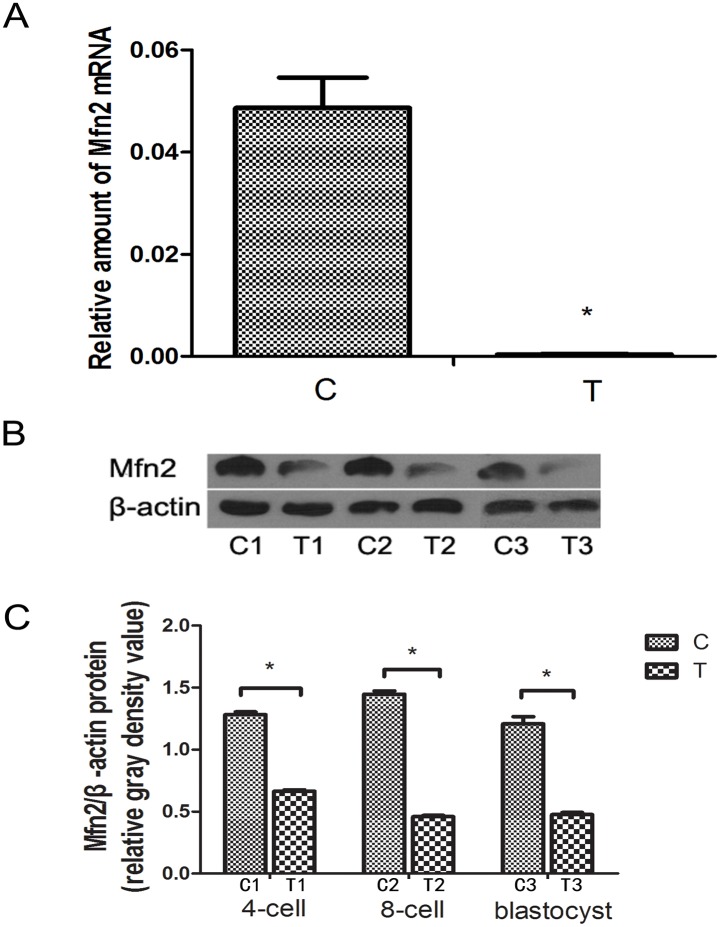
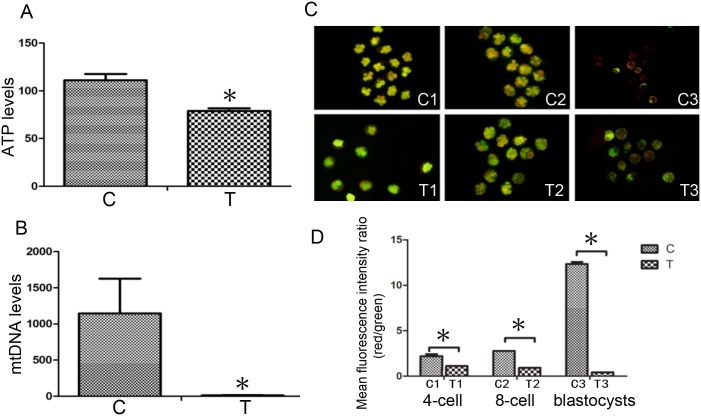
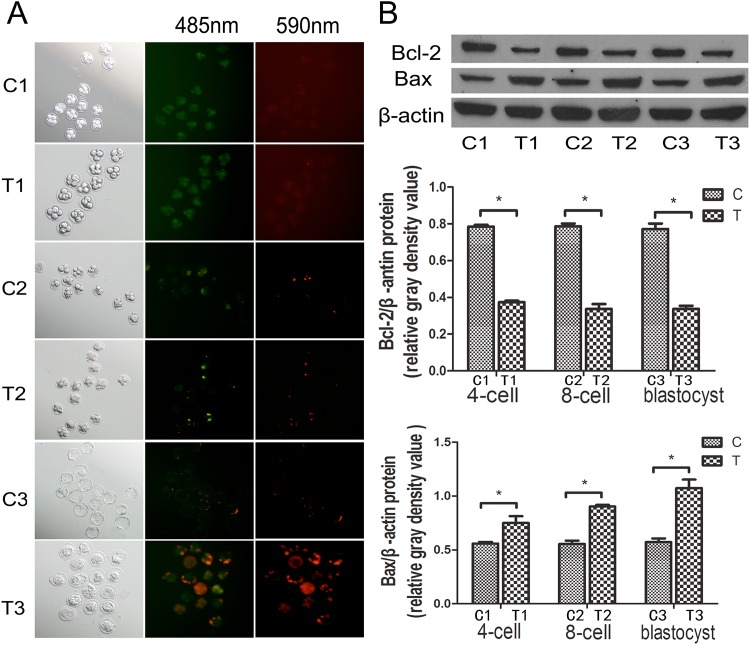
We transfected Mfn2-siRNA into 2-cell fertilized eggs and then examined the expression of Mfn2, the anti-apoptotic protein Bcl-2, and the apoptosis-promoting protein Bax by Western blot. Additionally, we determined the blastocyst formation rate and measured ATP levels, mtDNA levels, mitochondrial membrane potential (ΔΨm), and apoptosis in all of the embryos.
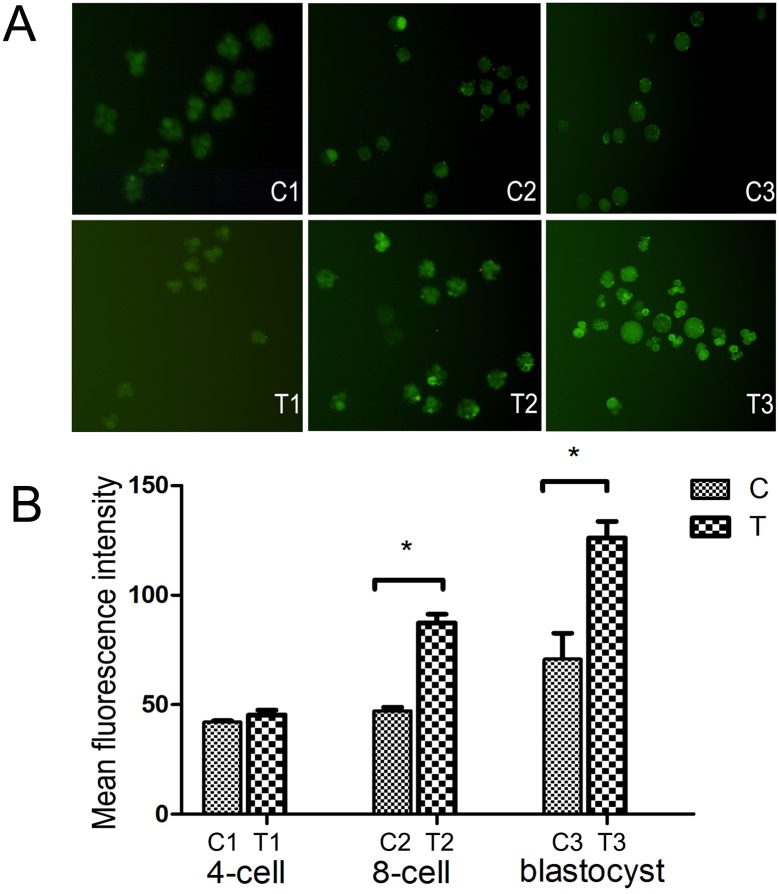
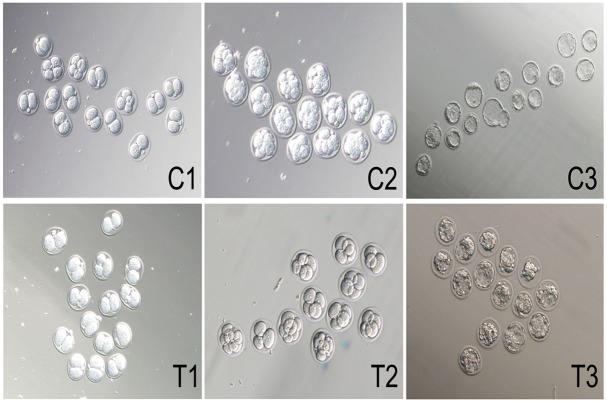
The results indicate that the Mfn2 and Bcl-2 levels were markedly decreased, whereas Bax levels were increased in the T group (embryos transfected with Mfn2-siRNA) compared with the C group (embryos transfected with control-siRNA). The blastocyst formation rate was significantly decreased in the T group. The ATP content and the relative amounts of mtDNA and cDNA in the T group were significantly reduced compared with the C group. In the T group, ΔΨm and Ca(2+) levels were reduced, and the number of apoptotic cells was increased.
Low in vitro expression of Mfn2 attenuates the blastocyst formation rate and cleavage speed in mouse zygotes and causes mitochondrial dysfunction, as confirmed by the ATP and mtDNA levels and mitochondrial membrane potential. Mfn2 deficiency induced apoptosis through the Bcl-2/Bax and Ca(2+) pathways. These findings indicate that Mfn2 could affect preimplantation embryo development through mitochondrial function and cellular apoptosis.
生长因子、能量来源和线粒体功能对体外胚胎的生长和发育有强烈影响。线粒体融合蛋白基因Mfn2在植入前胚胎发育中的生物学作用和潜在意义仍知之甚少。我们的目标是剖析Mfn2在小鼠胚胎中的作用,并确定Mfn2在胚胎发育中发挥功能的潜在机制。
我们将Mfn2-siRNA转染到二细胞受精卵中,然后通过蛋白质免疫印迹法检测Mfn2、抗凋亡蛋白Bcl-2和促凋亡蛋白Bax的表达。此外,我们测定了所有胚胎的囊胚形成率,并测量了ATP水平、线粒体DNA水平、线粒体膜电位(ΔΨm)和凋亡情况。
结果表明,与C组(转染对照-siRNA的胚胎)相比,T组(转染Mfn2-siRNA的胚胎)中Mfn2和Bcl-2水平显著降低,而Bax水平升高。T组的囊胚形成率显著降低。与C组相比,T组的ATP含量以及线粒体DNA和cDNA的相对含量显著降低。在T组中,ΔΨm和Ca(2+)水平降低,凋亡细胞数量增加。
Mfn2在体外的低表达会降低小鼠受精卵的囊胚形成率和分裂速度,并导致线粒体功能障碍,ATP和线粒体DNA水平以及线粒体膜电位的变化证实了这一点。Mfn2缺乏通过Bcl-2/Bax和Ca(2+)途径诱导细胞凋亡。这些发现表明,Mfn2可能通过线粒体功能和细胞凋亡影响植入前胚胎发育。