Institute for Genome Stability in Ageing and Disease, Cologne Cluster of Excellence in Cellular Stress Responses in Aging-Associated Diseases (CECAD), and Center for Molecular Medicine (CMMC), University of Cologne, Cologne, Germany.
J Cell Physiol. 2018 Apr;233(4):2781-2790. doi: 10.1002/jcp.25979. Epub 2017 May 31.
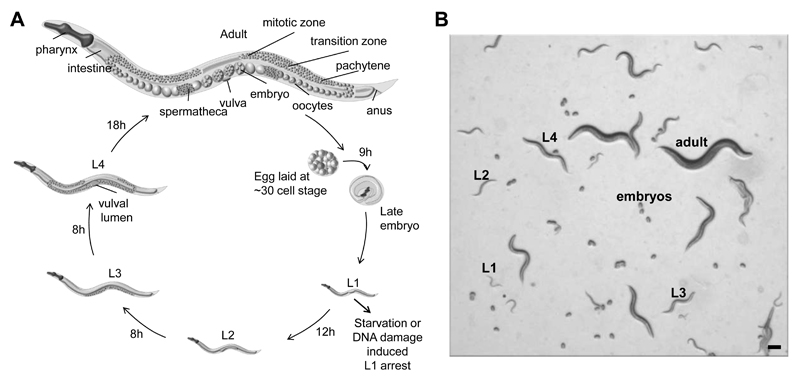
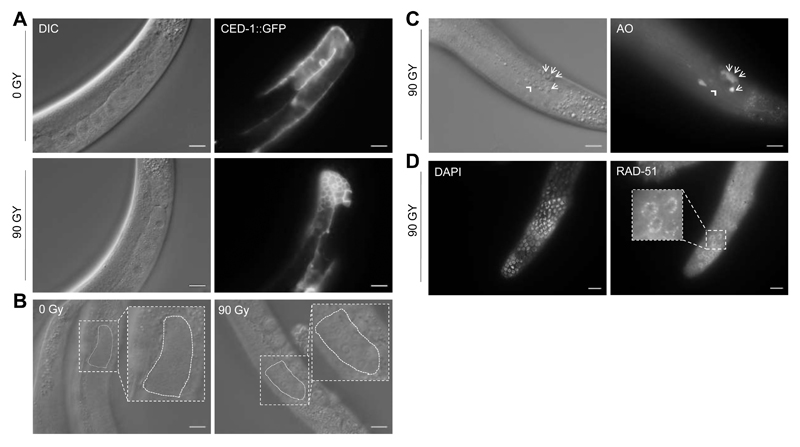
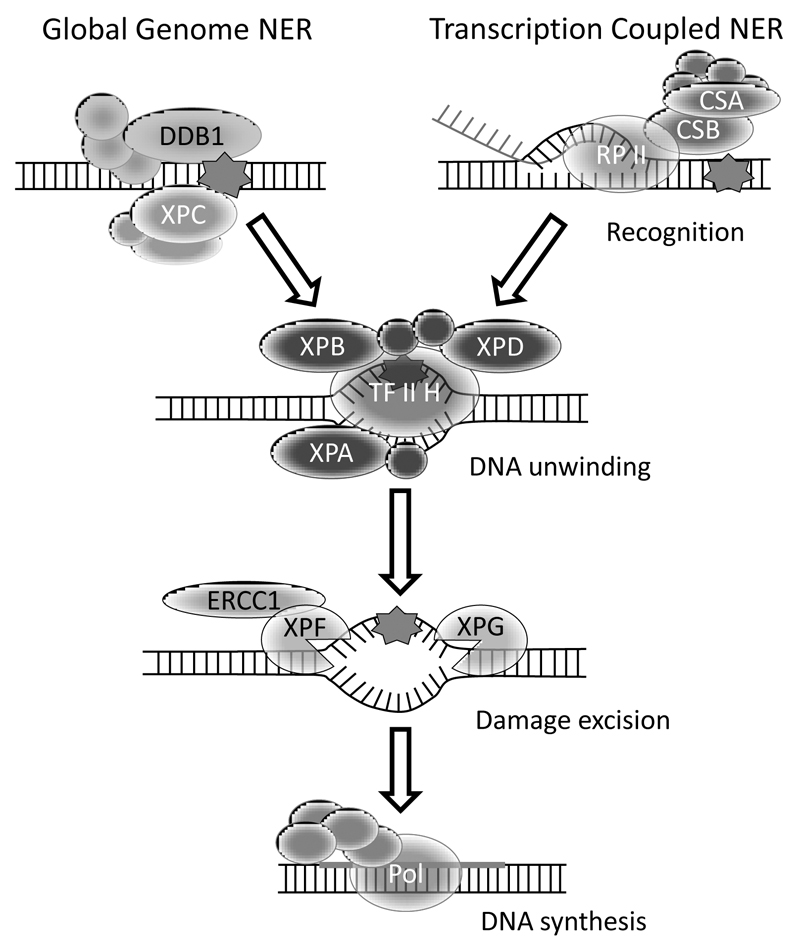
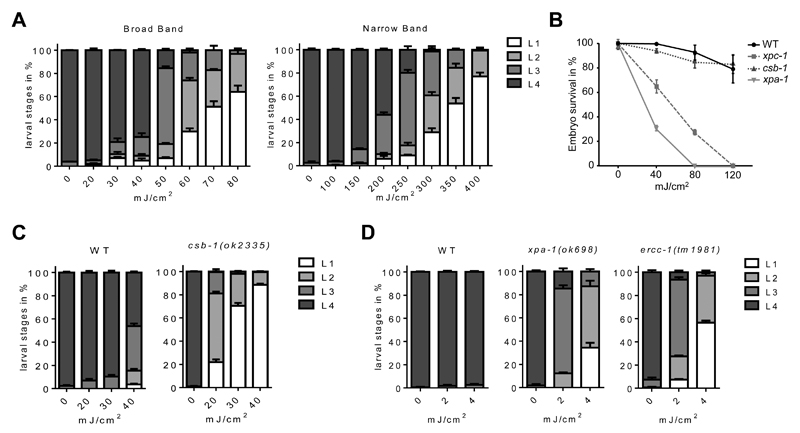
The genetic information is constantly challenged by genotoxic attacks. DNA repair mechanisms evolved early in evolution and recognize and remove the various lesions. A complex network of DNA damage responses (DDR) orchestrates a variety of physiological adaptations to the presence of genome instability. Erroneous repair or malfunctioning of the DDR causes cancer development and the accumulation of DNA lesions drives the aging process. For understanding the complex DNA repair and DDR mechanisms it is pivotal to employ simple metazoan as model systems. The nematode Caenorhabditis elegans has become a well-established and popular experimental organism that allows dissecting genome stability mechanisms in dynamic and differentiated tissues and under physiological conditions. We provide an overview of the distinct advantages of the nematode system for studying DDR and provide a range of currently applied methodologies.
遗传信息不断受到遗传毒性攻击的挑战。DNA 修复机制在进化早期就出现了,它能够识别并清除各种损伤。一个复杂的 DNA 损伤反应 (DDR) 网络协调了多种生理适应机制,以应对基因组不稳定性的存在。DDR 的错误修复或故障会导致癌症的发展,而 DNA 损伤的积累则会推动衰老过程。为了理解复杂的 DNA 修复和 DDR 机制,采用简单的后生动物作为模型系统至关重要。秀丽隐杆线虫已成为一种成熟且流行的实验生物,它可以在动态和分化组织中以及在生理条件下,对基因组稳定性机制进行剖析。我们概述了线虫系统在研究 DDR 方面的独特优势,并提供了一系列目前应用的方法。