Department of Toxicogenetics, Leiden University Medical Center, 2300 RC Leiden, The Netherlands.
Genome Res. 2014 Jun;24(6):954-62. doi: 10.1101/gr.170431.113. Epub 2014 Mar 10.
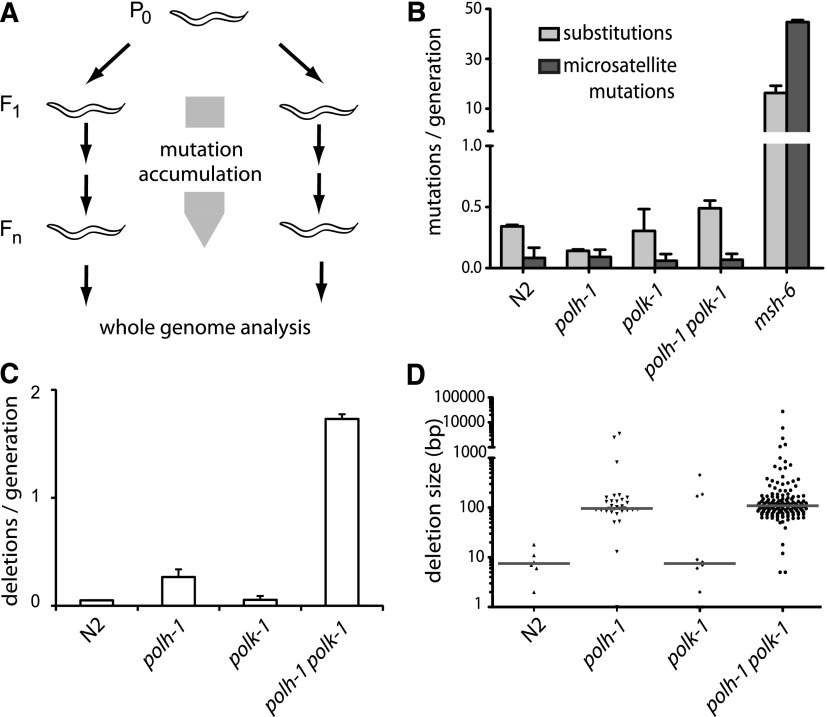
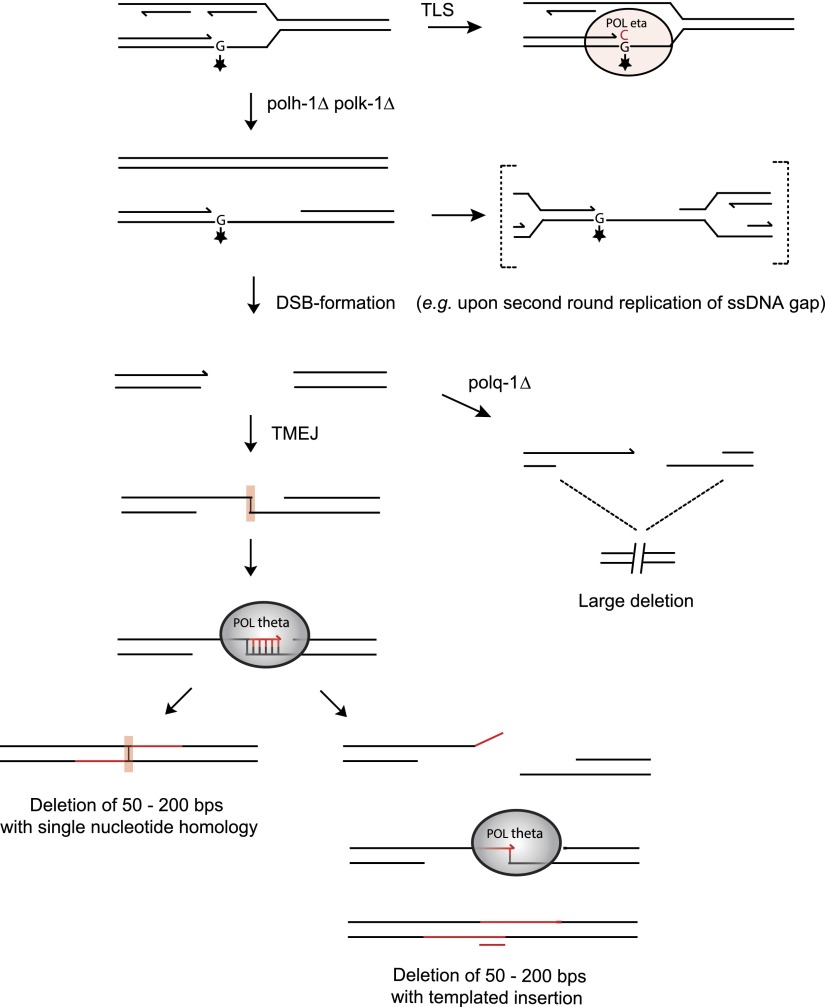
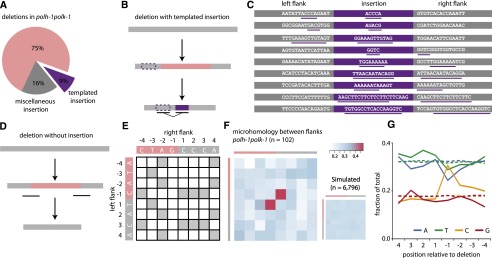
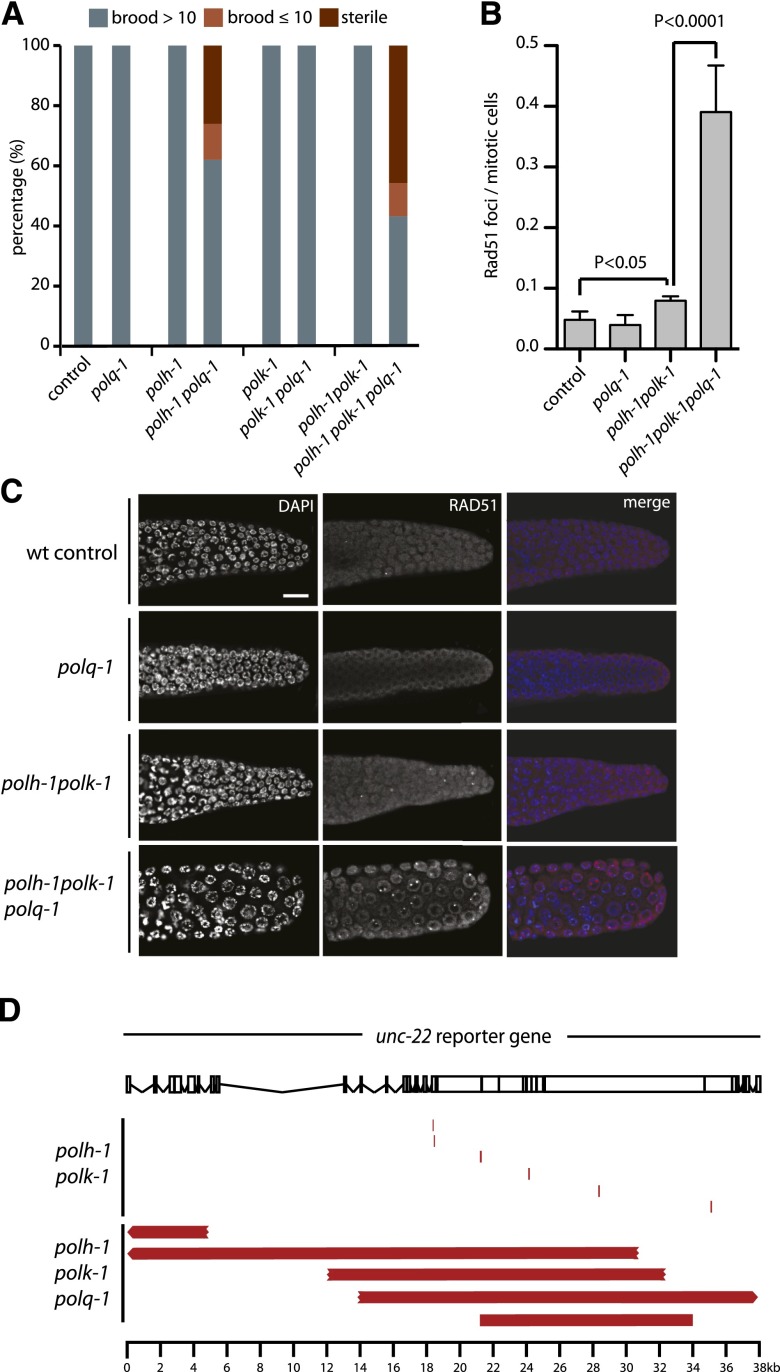
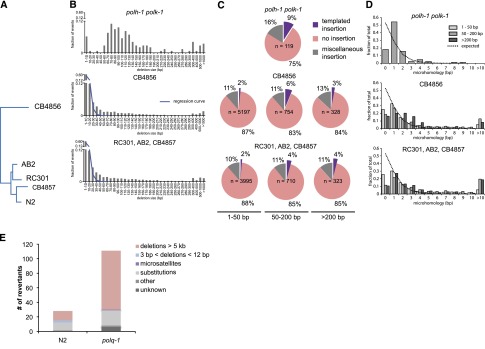
DNA lesions that block replication fork progression are drivers of cancer-associated genome alterations, but the error-prone DNA repair mechanisms acting on collapsed replication are incompletely understood, and their contribution to genome evolution largely unexplored. Here, through whole-genome sequencing of animal populations that were clonally propagated for more than 50 generations, we identify a distinct class of deletions that spontaneously accumulate in C. elegans strains lacking translesion synthesis (TLS) polymerases. Emerging DNA double-strand breaks are repaired via an error-prone mechanism in which the outermost nucleotide of one end serves to prime DNA synthesis on the other end. This pathway critically depends on the A-family polymerase theta, which protects the genome against gross chromosomal rearrangements. By comparing the genomes of isolates of C. elegans from different geographical regions, we found that in fact most spontaneously evolving structural variations match the signature of polymerase theta-mediated end joining (TMEJ), illustrating that this pathway is an important source of genetic diversification.
阻断复制叉前进的 DNA 损伤是与癌症相关的基因组改变的驱动因素,但作用于崩溃的复制的易错 DNA 修复机制尚不完全清楚,其对基因组进化的贡献在很大程度上仍未得到探索。在这里,通过对经过超过 50 代无性繁殖的动物群体进行全基因组测序,我们在缺乏跨损伤合成(TLS)聚合酶的 C. elegans 菌株中鉴定出一类独特的自发积累的缺失。新兴的 DNA 双链断裂通过易错机制进行修复,其中一个末端的最外核苷酸用于在另一个末端启动 DNA 合成。这种途径严重依赖于 A 家族聚合酶 theta,它可以保护基因组免受大规模染色体重排的影响。通过比较来自不同地理区域的 C. elegans 分离株的基因组,我们发现事实上大多数自发进化的结构变异与聚合酶 theta 介导的末端连接(TMEJ)的特征相匹配,这表明该途径是遗传多样化的重要来源。