Bayha Keith M, Ortell Natalie, Ryan Caitlin N, Griffitt Kimberly J, Krasnec Michelle, Sena Johnny, Ramaraj Thiruvarangan, Takeshita Ryan, Mayer Gregory D, Schilkey Faye, Griffitt Robert J
Gulf Coast Research Laboratory, School of Ocean Science and Technology, University of Southern Mississippi, Ocean Springs, Mississippi, United States of America.
Department of Environmental Toxicology, Texas Tech University, Lubbock, Texas, United States of America.
PLoS One. 2017 May 2;12(5):e0176559. doi: 10.1371/journal.pone.0176559. eCollection 2017.
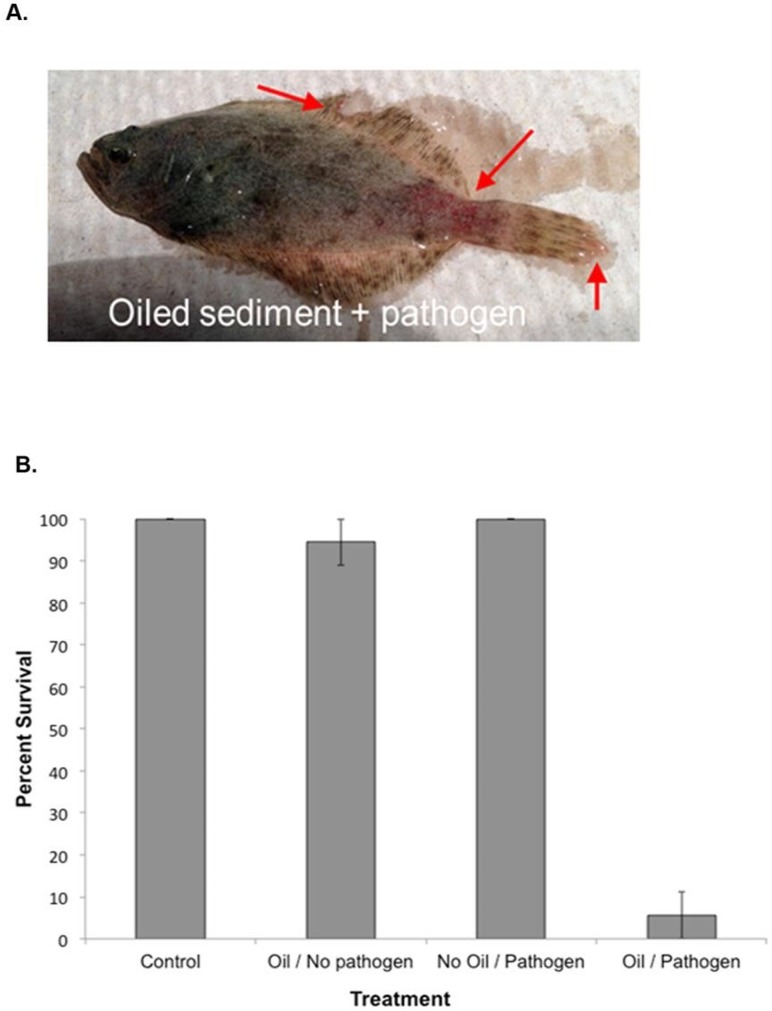
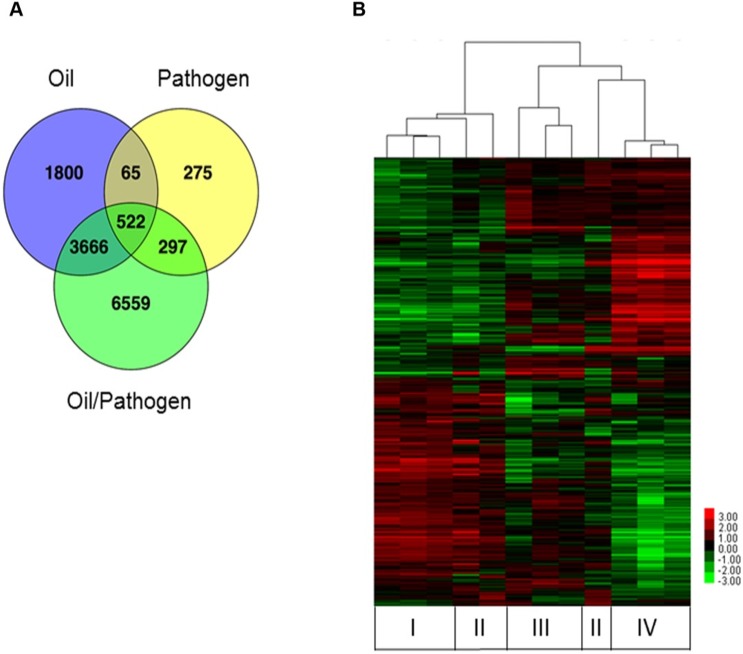
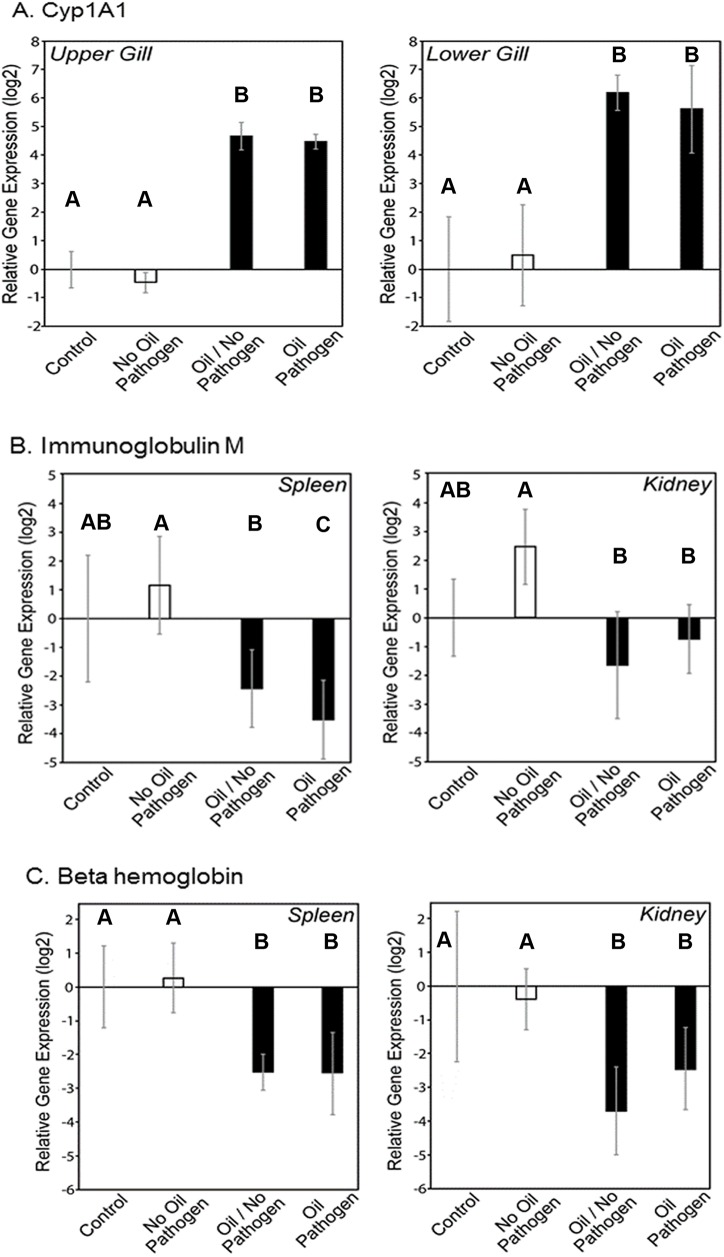
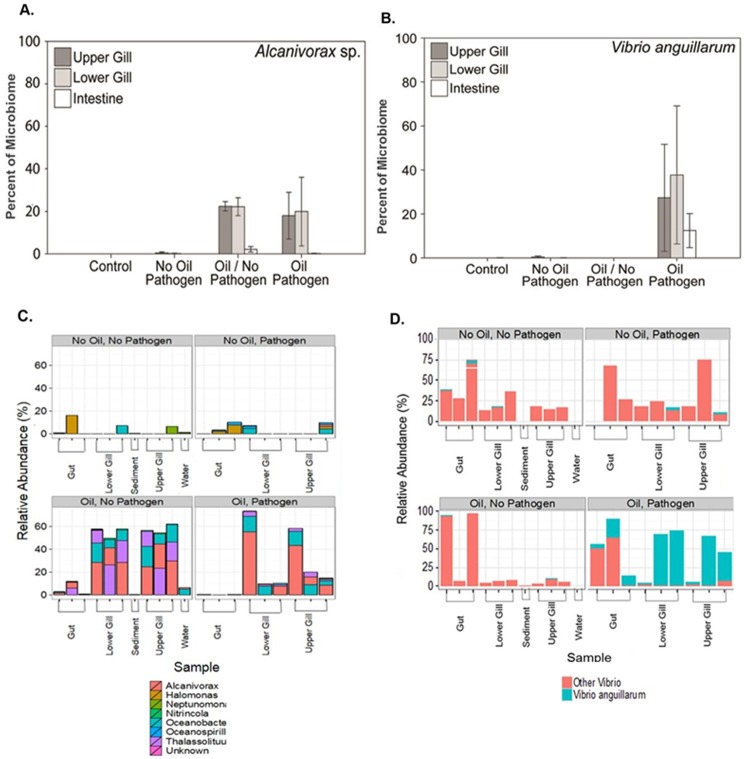
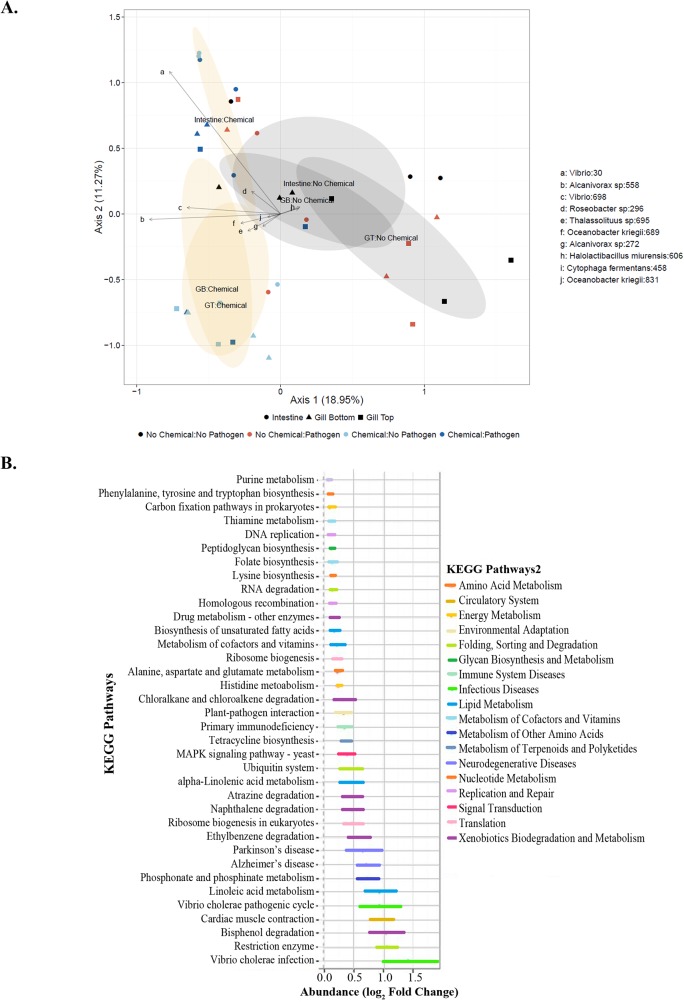
Exposure to crude oil or its individual constituents can have detrimental impacts on fish species, including impairment of the immune response. Increased observations of skin lesions in northern Gulf of Mexico fish during the 2010 Deepwater Horizon oil spill indicated the possibility of oil-induced immunocompromisation resulting in bacterial or viral infection. This study used a full factorial design of oil exposure and bacterial challenge to examine how oil exposure impairs southern flounder (Paralichthys lethostigma) immune function and increases susceptibility to the bacteria Vibrio anguillarum, a causative agent of vibriosis. Fish exposed to oil prior to bacterial challenge exhibited 94.4% mortality within 48 hours of bacterial exposure. Flounder challenged with V. anguillarum without prior oil exposure had <10% mortality. Exposure resulted in taxonomically distinct gill and intestine bacterial communities. Mortality strongly correlated with V. anguillarum levels, where it comprised a significantly higher percentage of the microbiome in Oil/Pathogen challenged fish and was nearly non-existent in the No Oil/Pathogen challenged fish bacterial community. Elevated V. anguillarum levels were a direct result of oil exposure-induced immunosuppression. Oil-exposure reduced expression of immunoglobulin M, the major systemic fish antibody, and resulted in an overall downregulation in transcriptome response, particularly in genes related to immune function, response to stimulus and hemostasis. Ultimately, sediment-borne oil exposure impairs immune function, leading to increased incidences of bacterial infections. This type of sediment-borne exposure may result in long-term marine ecosystem effects, as oil-bound sediment in the northern Gulf of Mexico will likely remain a contamination source for years to come.
接触原油或其单个成分会对鱼类产生有害影响,包括损害免疫反应。2010年深水地平线漏油事件期间,墨西哥湾北部鱼类皮肤损伤的观察结果增加,表明存在油诱导的免疫功能低下导致细菌或病毒感染的可能性。本研究采用油暴露和细菌攻击的全因子设计,以研究油暴露如何损害南方鲆(Paralichthys lethostigma)的免疫功能,并增加其对鳗弧菌(Vibrio anguillarum)的易感性,鳗弧菌是弧菌病的病原体。在细菌攻击前接触油的鱼在接触细菌后48小时内死亡率为94.4%。未事先接触油而受到鳗弧菌攻击的鲆死亡率<10%。暴露导致鳃和肠道细菌群落分类学上不同。死亡率与鳗弧菌水平密切相关,在油/病原体攻击的鱼中,鳗弧菌在微生物组中所占百分比显著更高,而在无油/病原体攻击的鱼细菌群落中几乎不存在。鳗弧菌水平升高是油暴露诱导的免疫抑制的直接结果。油暴露降低了主要的全身性鱼类抗体免疫球蛋白M的表达,并导致转录组反应总体下调,特别是与免疫功能、对刺激的反应和止血相关的基因。最终,沉积物携带的油暴露会损害免疫功能,导致细菌感染发生率增加。这种沉积物携带的暴露可能会对海洋生态系统产生长期影响,因为墨西哥湾北部与油结合的沉积物在未来几年可能仍将是一个污染源。