Lan Linhua, Guo Miaomiao, Ai Yong, Chen Fuhong, Zhang Ya, Xia Lei, Huang Dawei, Niu Lili, Zheng Ying, Suzuki Carolyn K, Zhang Yihua, Liu Yongzhang, Lu Bin
Department of Biochemistry, Institute of Biophysics, Attardi Institute of Mitochondrial Biomedicine and Zhejiang Provincial Key Laboratory of Medical Genetics, School of Life Sciences, Wenzhou Medical University, Wenzhou, Zhejiang 325035, China.
State Key Laboratory of Natural Medicines, China Pharmaceutical University, Nanjing, Jiangsu 210009, China.
Biosci Rep. 2017 May 17;37(3). doi: 10.1042/BSR20170319. Print 2017 Jun 30.
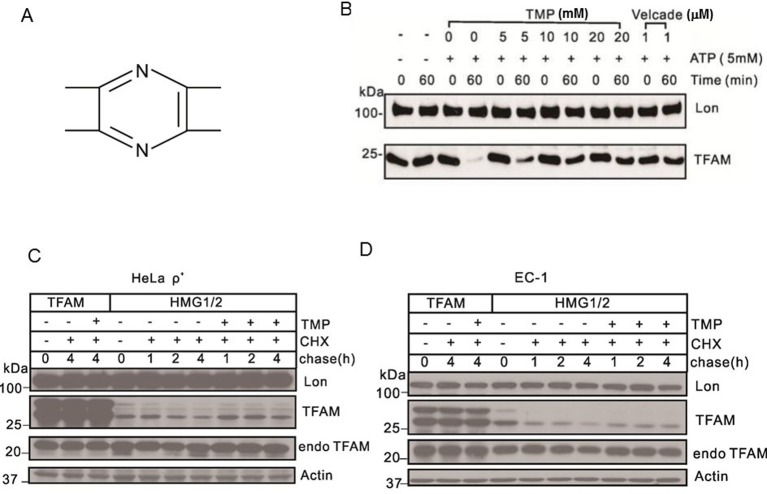
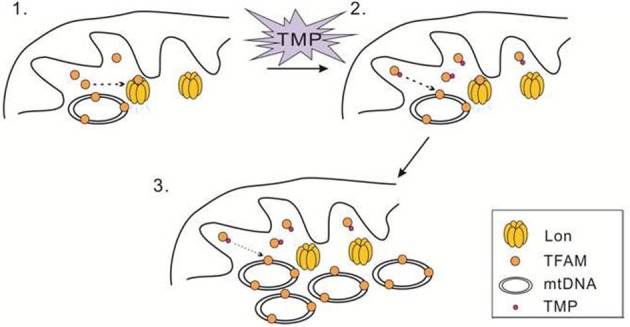
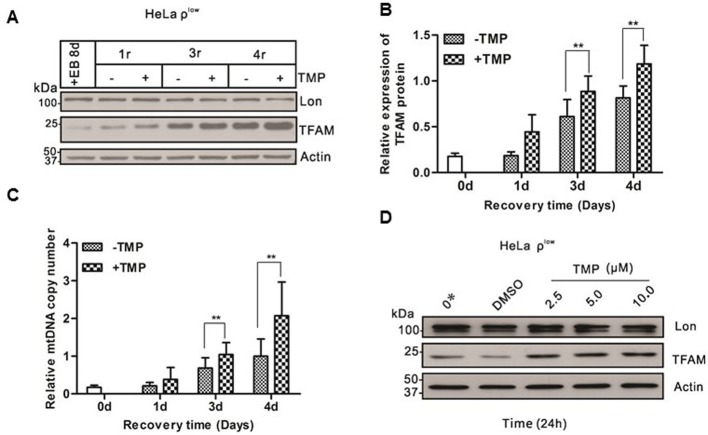
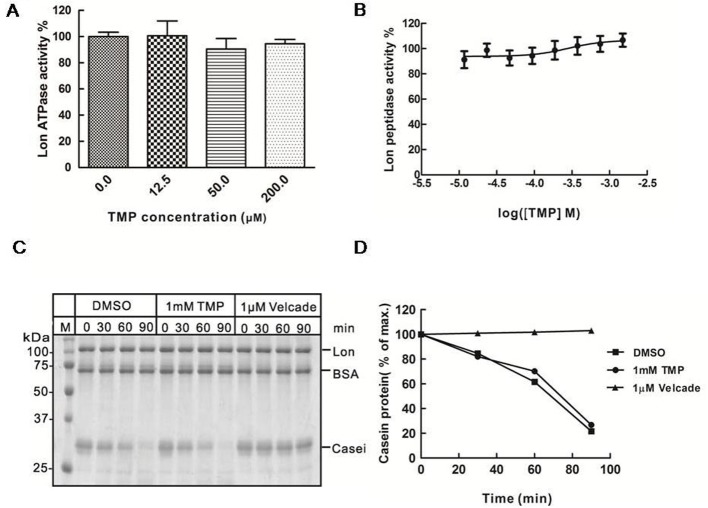
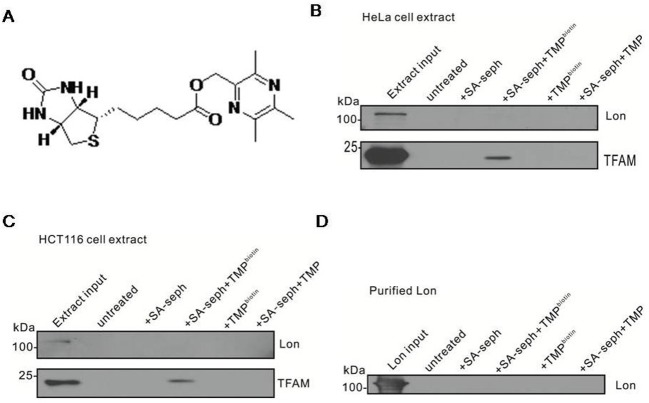
The natural small molecule compound: 2,3,5,6-tetramethylpyrazine (TMP), is a major component of the Chinese medicine , which has wide clinical applications in dilating blood vessels, inhibiting platelet aggregation and treating thrombosis. Recent work suggests that TMP is also an antitumour agent. Despite its chemotherapeutic potential, the mechanism(s) underlying TMP action are unknown. Herein, we demonstrate that TMP binds to mitochondrial transcription factor A (TFAM) and blocks its degradation by the mitochondrial Lon protease. TFAM is a key regulator of mtDNA replication, transcription and transmission. Our previous work showed that when TFAM is not bound to DNA, it is rapidly degraded by the ATP-dependent Lon protease, which is essential for mitochondrial proteostasis. In cultured cells, TMP specifically blocks Lon-mediated degradation of TFAM, leading to TFAM accumulation and subsequent up-regulation of mtDNA content in cells with substantially low levels of mtDNA. protease assays show that TMP does not directly inhibit mitochondrial Lon, rather interacts with TFAM and blocks degradation. Pull-down assays show that biotinylated TMP interacts with TFAM. These findings suggest a novel mechanism whereby TMP stabilizes TFAM and confers resistance to Lon-mediated degradation, thereby promoting mtDNA up-regulation in cells with low mtDNA content.
2,3,5,6 - 四甲基吡嗪(TMP),是中药的主要成分之一,在扩张血管、抑制血小板聚集和治疗血栓形成方面具有广泛的临床应用。最近的研究表明,TMP也是一种抗肿瘤剂。尽管其具有化疗潜力,但其作用的潜在机制尚不清楚。在此,我们证明TMP与线粒体转录因子A(TFAM)结合,并阻止其被线粒体Lon蛋白酶降解。TFAM是线粒体DNA复制、转录和传递的关键调节因子。我们之前的研究表明,当TFAM不与DNA结合时,它会被ATP依赖的Lon蛋白酶迅速降解,这对于线粒体蛋白质稳态至关重要。在培养细胞中,TMP特异性地阻止Lon介导的TFAM降解,导致TFAM积累,并随后上调线粒体DNA含量极低的细胞中的线粒体DNA含量。蛋白酶分析表明,TMP不会直接抑制线粒体Lon,而是与TFAM相互作用并阻止其降解。下拉分析表明,生物素化的TMP与TFAM相互作用。这些发现提示了一种新机制,即TMP稳定TFAM并赋予其对Lon介导降解的抗性,从而促进线粒体DNA含量低的细胞中线粒体DNA上调。