Amankulor Nduka M, Kim Youngmi, Arora Sonali, Kargl Julia, Szulzewsky Frank, Hanke Mark, Margineantu Daciana H, Rao Aparna, Bolouri Hamid, Delrow Jeff, Hockenbery David, Houghton A McGarry, Holland Eric C
Department of Neurosurgery, University of Pittsburgh, Pittsburgh, Pennsylvania 15213, USA.
Human Biology Division, Fred Hutchinson Cancer Research Center, Seattle, Washington 98109, USA.
Genes Dev. 2017 Apr 15;31(8):774-786. doi: 10.1101/gad.294991.116. Epub 2017 May 2.
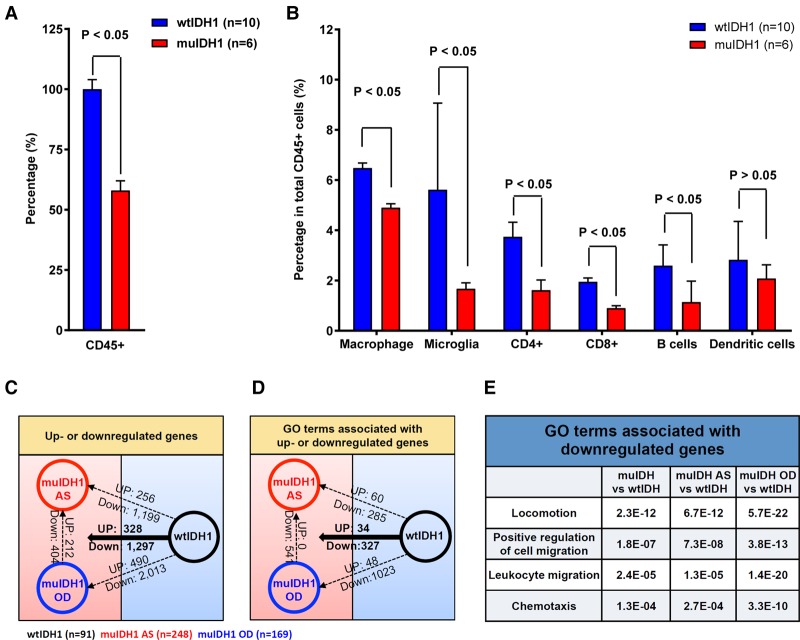
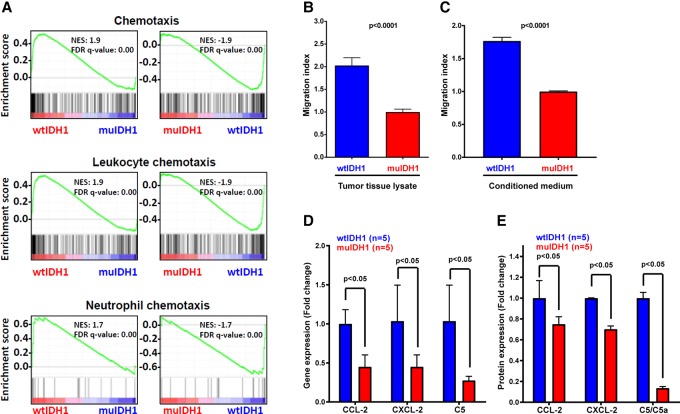
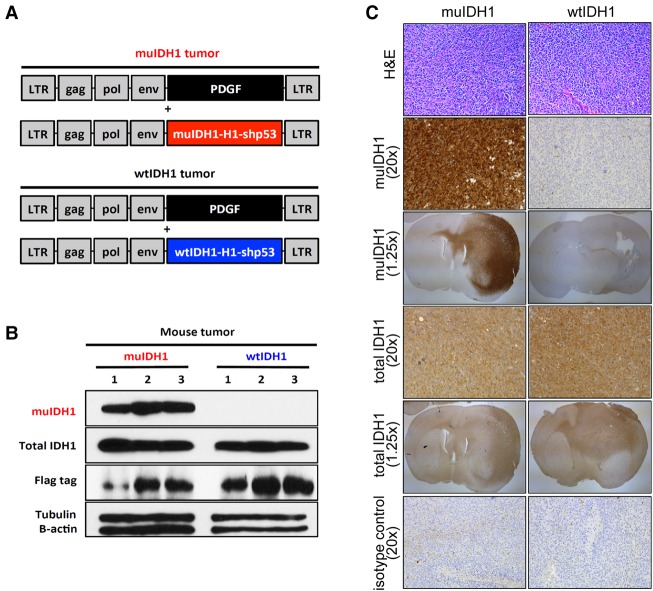
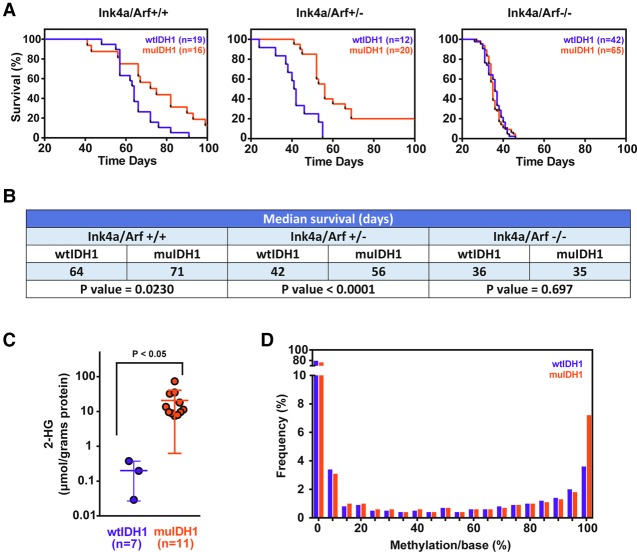
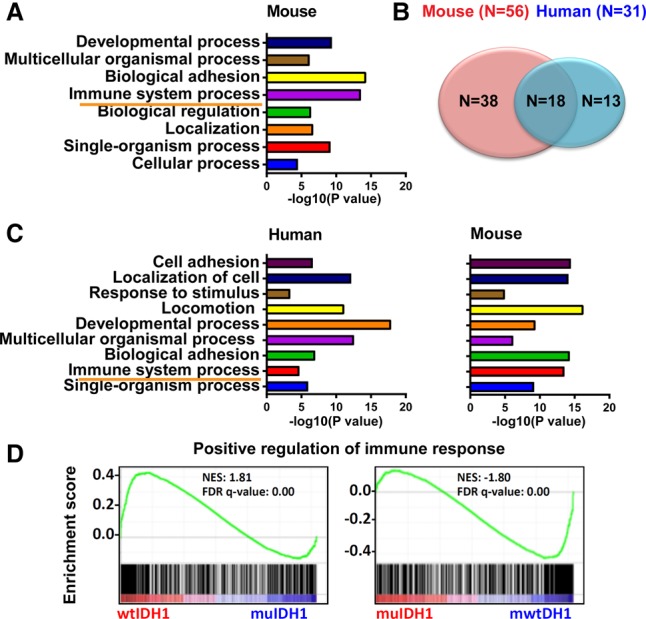
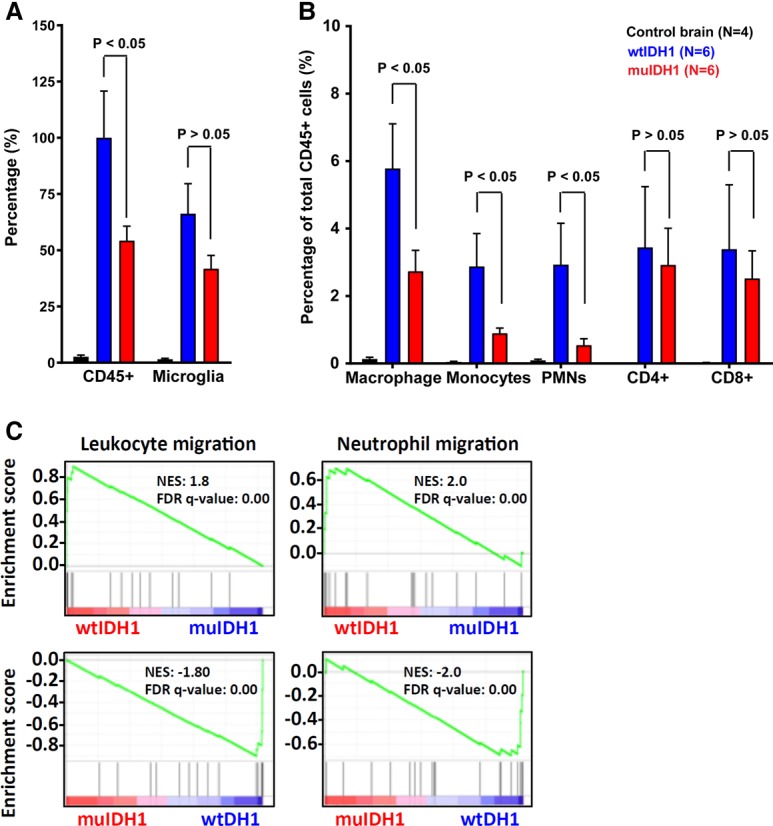
Gliomas harboring mutations in isocitrate dehydrogenase 1/2 (IDH1/2) have the CpG island methylator phenotype (CIMP) and significantly longer patient survival time than wild-type IDH1/2 (wtIDH1/2) tumors. Although there are many factors underlying the differences in survival between these two tumor types, immune-related differences in cell content are potentially important contributors. In order to investigate the role of IDH mutations in immune response, we created a syngeneic pair mouse model for mutant IDH1 (muIDH1) and wtIDH1 gliomas and demonstrated that muIDH1 mice showed many molecular and clinical similarities to muIDH1 human gliomas, including a 100-fold higher concentration of 2-hydroxygluratate (2-HG), longer survival time, and higher CpG methylation compared with wtIDH1. Also, we showed that IDH1 mutations caused down-regulation of leukocyte chemotaxis, resulting in repression of the tumor-associated immune system. Given that significant infiltration of immune cells such as macrophages, microglia, monocytes, and neutrophils is linked to poor prognosis in many cancer types, these reduced immune infiltrates in muIDH1 glioma tumors may contribute in part to the differences in aggressiveness of the two glioma types.
携带异柠檬酸脱氢酶1/2(IDH1/2)突变的胶质瘤具有CpG岛甲基化表型(CIMP),患者生存时间比野生型IDH1/2(wtIDH1/2)肿瘤显著更长。尽管这两种肿瘤类型在生存方面存在差异的原因有很多,但细胞成分中与免疫相关的差异可能是重要因素。为了研究IDH突变在免疫反应中的作用,我们创建了突变型IDH1(muIDH1)和wtIDH1胶质瘤的同基因配对小鼠模型,并证明muIDH1小鼠在分子和临床方面与muIDH1人类胶质瘤有许多相似之处,包括2-羟基戊二酸(2-HG)浓度高出100倍、生存时间更长以及与wtIDH1相比甲基化程度更高。此外,我们还表明IDH1突变导致白细胞趋化性下调,从而抑制肿瘤相关免疫系统。鉴于巨噬细胞、小胶质细胞、单核细胞和中性粒细胞等免疫细胞的显著浸润与许多癌症类型的不良预后相关,muIDH1胶质瘤肿瘤中这些免疫浸润的减少可能部分导致了两种胶质瘤类型侵袭性的差异。