Brown Kevin M, Long Shaojun, Sibley L David
Department of Molecular Microbiology, Washington University School of Medicine, St. Louis, Missouri, USA.
Department of Molecular Microbiology, Washington University School of Medicine, St. Louis, Missouri, USA
mBio. 2017 May 2;8(3):e00375-17. doi: 10.1128/mBio.00375-17.
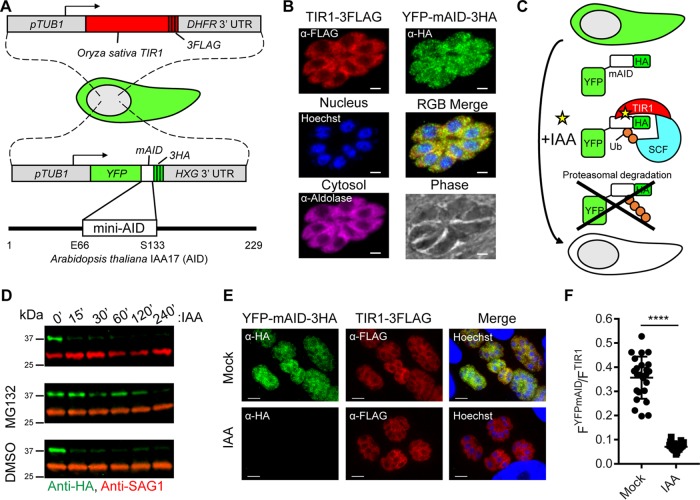
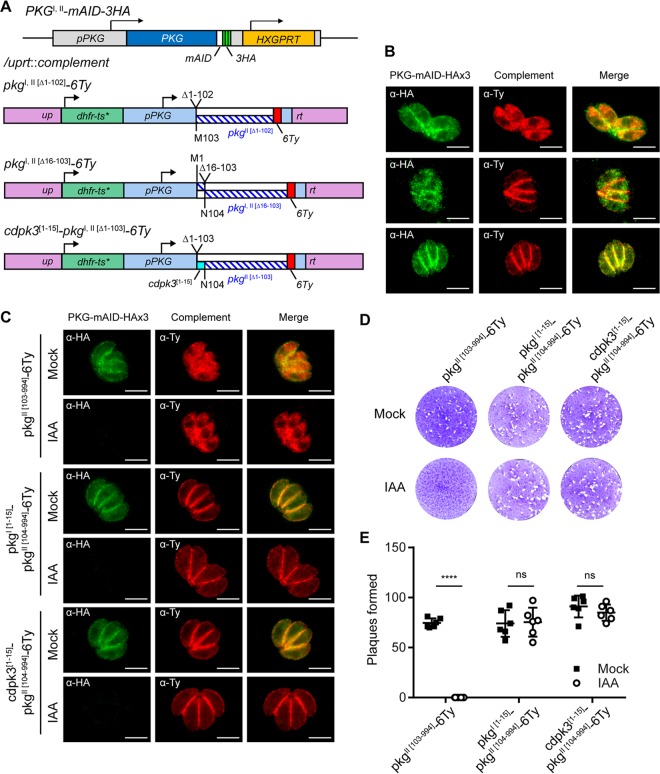
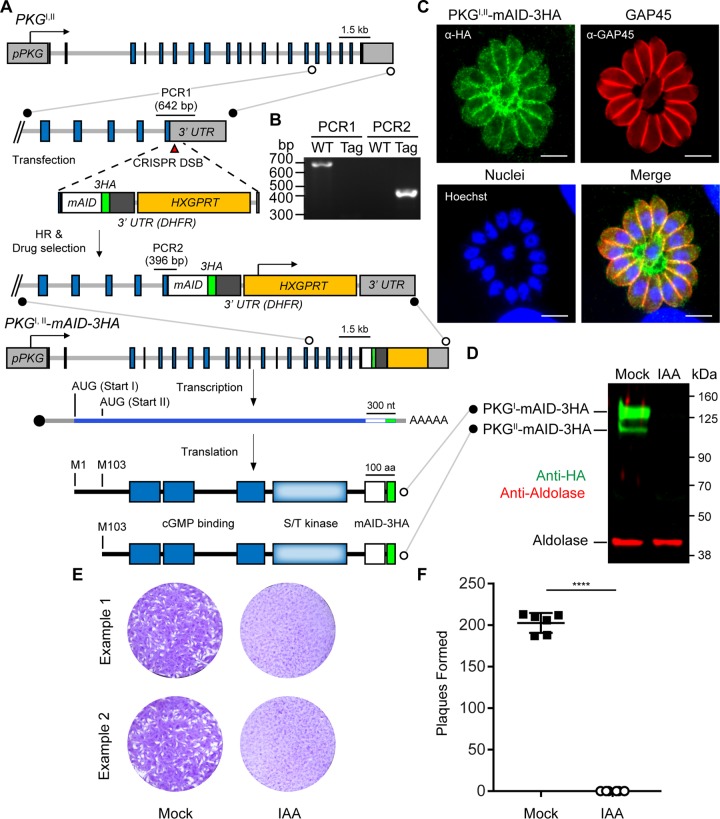
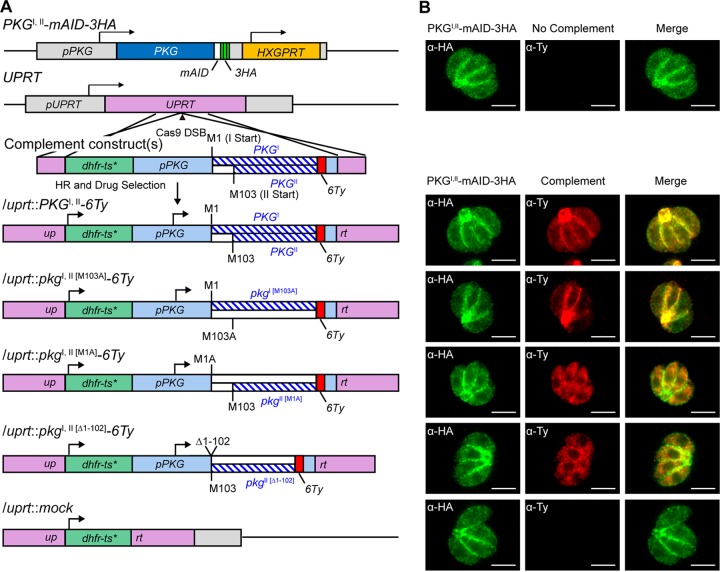
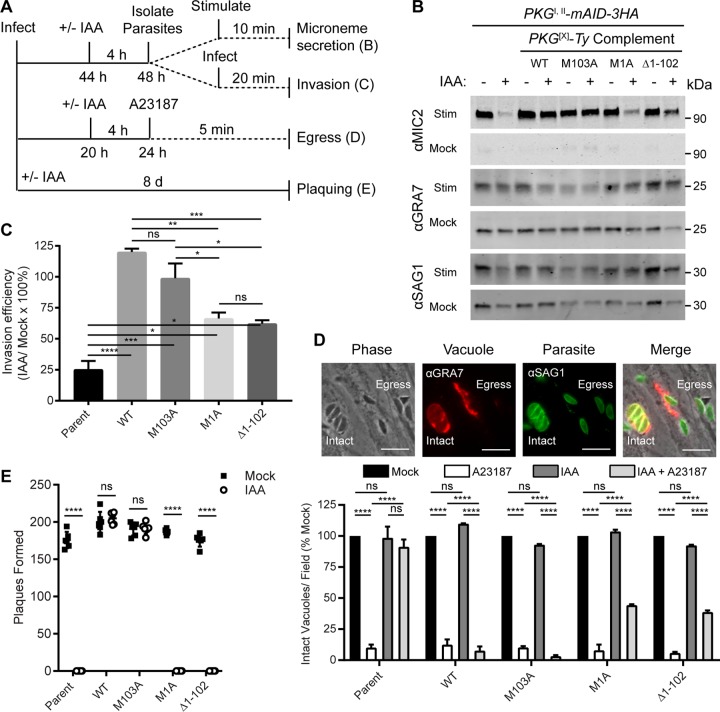
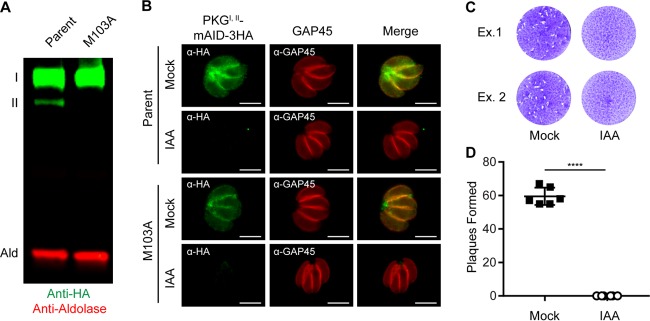
Cyclic GMP (cGMP)-dependent protein kinase (protein kinase G [PKG]) is essential for microneme secretion, motility, invasion, and egress in apicomplexan parasites, However, the separate roles of two isoforms of the kinase that are expressed by some apicomplexans remain uncertain. Despite having identical regulatory and catalytic domains, PKG is plasma membrane associated whereas PKG is cytosolic in To determine whether these isoforms are functionally distinct or redundant, we developed an auxin-inducible degron (AID) tagging system for conditional protein depletion in By combining AID regulation with genome editing strategies, we determined that PKG is necessary and fully sufficient for PKG-dependent cellular processes. Conversely, PKG is functionally insufficient and dispensable in the presence of PKG The difference in functionality mapped to the first 15 residues of PKG, containing a myristoylated Gly residue at position 2 that is critical for membrane association and PKG function. Collectively, we have identified a novel requirement for cGMP signaling at the plasma membrane and developed a new system for examining essential proteins in is an obligate intracellular apicomplexan parasite and important clinical and veterinary pathogen that causes toxoplasmosis. Since apicomplexans can only propagate within host cells, efficient invasion is critically important for their life cycles. Previous studies using chemical genetics demonstrated that cyclic GMP signaling through protein kinase G (PKG)-controlled invasion by apicomplexan parasites. However, these studies did not resolve functional differences between two compartmentalized isoforms of the kinase. Here we developed a conditional protein regulation tool to interrogate PKG isoforms in We found that the cytosolic PKG isoform was largely insufficient and dispensable. In contrast, the plasma membrane-associated isoform was necessary and fully sufficient for PKG function. Our studies identify the plasma membrane as a key location for PKG activity and provide a broadly applicable system for examining essential proteins in .
环磷酸鸟苷(cGMP)依赖性蛋白激酶(蛋白激酶G [PKG])对于顶复门寄生虫的微线体分泌、运动、入侵和逸出至关重要。然而,一些顶复门寄生虫所表达的该激酶两种同种型的各自作用仍不明确。尽管具有相同的调节和催化结构域,但PKG与质膜相关,而PKG在胞质中。为了确定这些同种型在功能上是不同还是冗余,我们开发了一种生长素诱导降解子(AID)标记系统,用于在弓形虫中进行条件性蛋白缺失研究。通过将AID调节与基因组编辑策略相结合,我们确定PKG对于依赖PKG的细胞过程是必需的且完全足够。相反,在存在PKG的情况下,PKG在功能上是不足的且可省略的。功能差异映射到PKG的前15个残基,其中第2位含有一个肉豆蔻酰化的甘氨酸残基,这对于膜结合和PKG功能至关重要。总体而言,我们确定了质膜上cGMP信号传导的新需求,并开发了一种用于研究弓形虫中必需蛋白的新系统。弓形虫是一种专性细胞内寄生的顶复门寄生虫,是引起弓形虫病的重要临床和兽医病原体。由于顶复门寄生虫只能在宿主细胞内繁殖,高效入侵对其生命周期至关重要。先前使用化学遗传学的研究表明,环磷酸鸟苷信号通过蛋白激酶G(PKG)控制顶复门寄生虫的入侵。然而,这些研究没有解决该激酶两种区室化同种型之间的功能差异。在这里,我们开发了一种条件性蛋白调节工具来研究弓形虫中的PKG同种型。我们发现胞质PKG同种型在很大程度上是不足的且可省略的。相反,质膜相关同种型对于PKG功能是必需的且完全足够。我们的研究确定质膜是PKG活性的关键位置,并提供了一个广泛适用的系统来研究弓形虫中的必需蛋白。