Horvatits Thomas, Drolz Andreas, Rutter Karoline, Roedl Kevin, Langouche Lies, Van den Berghe Greet, Fauler Günter, Meyer Brigitte, Hülsmann Martin, Heinz Gottfried, Trauner Michael, Fuhrmann Valentin
Division of Gastroenterology and Hepatology, Department Internal Medicine 3, Medical University of Vienna, Vienna, Austria.
Department of Intensive Care Medicine, University Medical Center Hamburg-Eppendorf, Martinistraße 52, 20246, Hamburg, Germany.
Ann Intensive Care. 2017 Dec;7(1):48. doi: 10.1186/s13613-017-0272-7. Epub 2017 May 2.
Jaundice and cholestatic hepatic dysfunction are frequent findings in critically ill patients associated with increased mortality. Cholestasis in critically ill patients is closely associated with stimulation of pro-inflammatory cytokines resulting in impaired bile secretion and subsequent accumulation of bile acids. Aim of this study was to evaluate the clinical role of circulating bile acids in critically ill patients.
Total and individual serum bile acids were assessed via high-performance liquid chromatography in 320 critically ill patients and 19 controls.
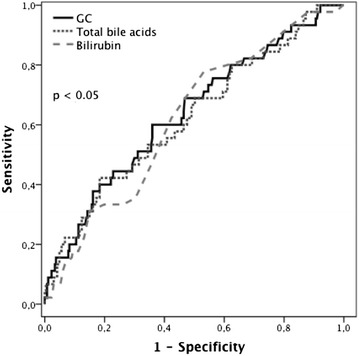
Total serum bile acids were threefold higher in septic than cardiogenic shock patients and sixfold higher than in post-surgical patients or controls (p < 0.001). Elevated bile acid levels correlated with severity of illness, renal dysfunction and inflammation (p < 0.05). Total bile acids predicted 28-day mortality independently of sex, age, serum bilirubin and severity of illness (HR 1.041, 95% CI 1.013-1.071, p < 0.005). Best prediction of mortality of total bile acids was seen in patients suffering from septic shock.
Individual and total BAs are elevated by various degrees in different shock conditions. BAs represent an early predictor of short-term survival in a mixed cohort of ICU patients and may serve as marker for early risk stratification in critically ill patients. Future studies should elucidate whether modulation of BA metabolism and signalling influences the clinical course and outcome in critically ill patients.
黄疸和胆汁淤积性肝功能障碍在危重症患者中很常见,且与死亡率增加相关。危重症患者的胆汁淤积与促炎细胞因子的刺激密切相关,导致胆汁分泌受损及随后胆汁酸的蓄积。本研究的目的是评估循环胆汁酸在危重症患者中的临床作用。
通过高效液相色谱法对320例危重症患者和19例对照者的总胆汁酸和个体胆汁酸进行评估。
脓毒症休克患者的血清总胆汁酸水平比心源性休克患者高三倍,比术后患者或对照者高六倍(p<0.001)。胆汁酸水平升高与疾病严重程度、肾功能障碍和炎症相关(p<0.05)。总胆汁酸独立于性别、年龄、血清胆红素和疾病严重程度预测28天死亡率(HR 1.041,95%CI 1.013 - 1.071,p<0.005)。在脓毒症休克患者中观察到总胆汁酸对死亡率的预测效果最佳。
在不同的休克状态下,个体和总胆汁酸均有不同程度升高。胆汁酸是ICU患者混合队列短期生存的早期预测指标,可作为危重症患者早期风险分层的标志物。未来的研究应阐明胆汁酸代谢和信号传导的调节是否会影响危重症患者的临床病程和结局。