Hayman Erik G, Patel Akil P, James Robert F, Simard J Marc
Department of Neurosurgery, University of Maryland School of Medicine, Baltimore, MD 21201, USA.
Department of Neurosurgery, University of Louisville, Louisville, KY 40208, USA.
Molecules. 2017 May 2;22(5):724. doi: 10.3390/molecules22050724.
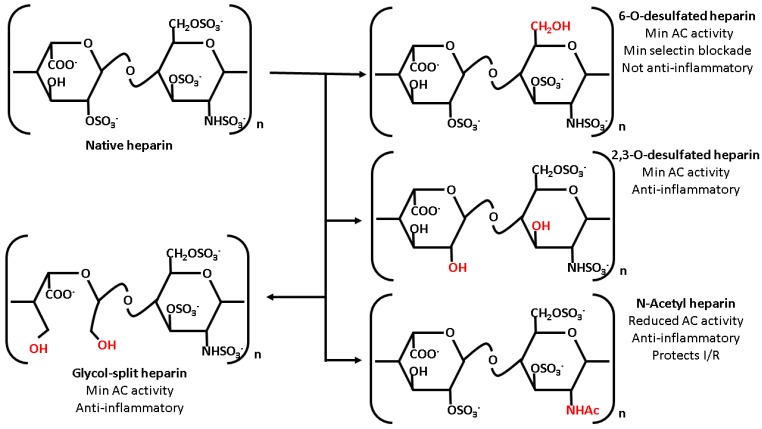
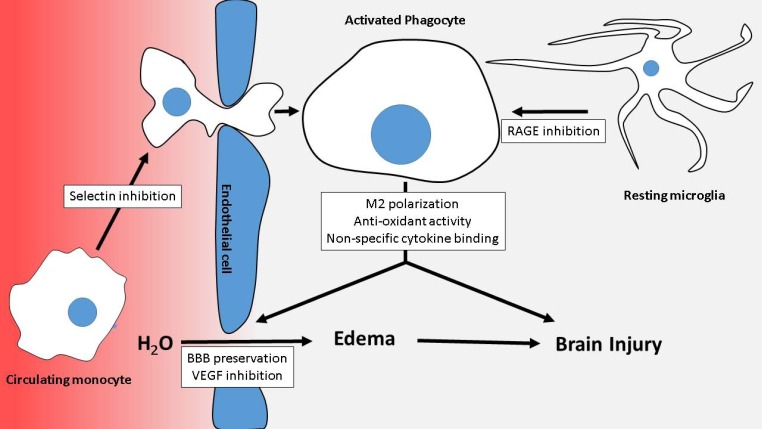
Pharmacologic efforts to improve outcomes following aneurysmal subarachnoid hemorrhage (aSAH) remain disappointing, likely owing to the complex nature of post-hemorrhage brain injury. Previous work suggests that heparin, due to the multimodal nature of its actions, reduces the incidence of clinical vasospasm and delayed cerebral ischemia that accompany the disease. This narrative review examines how heparin may mitigate the non-vasospastic pathological aspects of aSAH, particularly those related to neuroinflammation. Following a brief review of early brain injury in aSAH and heparin's general pharmacology, we discuss potential mechanistic roles of heparin therapy in treating post-aSAH inflammatory injury. These roles include reducing ischemia-reperfusion injury, preventing leukocyte extravasation, modulating phagocyte activation, countering oxidative stress, and correcting blood-brain barrier dysfunction. Following a discussion of evidence to support these mechanistic roles, we provide a brief discussion of potential complications of heparin usage in aSAH. Our review suggests that heparin's use in aSAH is not only safe, but effectively addresses a number of pathologies initiated by aSAH.
改善动脉瘤性蛛网膜下腔出血(aSAH)后预后的药物治疗效果仍然令人失望,这可能是由于出血后脑损伤的复杂性所致。先前的研究表明,肝素因其作用的多模式性质,可降低该疾病伴随的临床血管痉挛和迟发性脑缺血的发生率。这篇叙述性综述探讨了肝素如何减轻aSAH的非血管痉挛性病理方面,特别是那些与神经炎症相关的方面。在简要回顾aSAH中的早期脑损伤和肝素的一般药理学后,我们讨论了肝素治疗在治疗aSAH后炎症性损伤中的潜在机制作用。这些作用包括减少缺血再灌注损伤、防止白细胞外渗、调节吞噬细胞活化、对抗氧化应激以及纠正血脑屏障功能障碍。在讨论支持这些机制作用的证据后,我们简要讨论了肝素用于aSAH的潜在并发症。我们的综述表明,肝素用于aSAH不仅安全,而且能有效解决aSAH引发的多种病理问题。