Dong Peng, Liu Zhe
Howard Hughes Medical Institute, Janelia Research Campus, 19700 Helix Dr, Ashburn, VA 20147, USA
Open Biol. 2017 May;7(5). doi: 10.1098/rsob.170030.
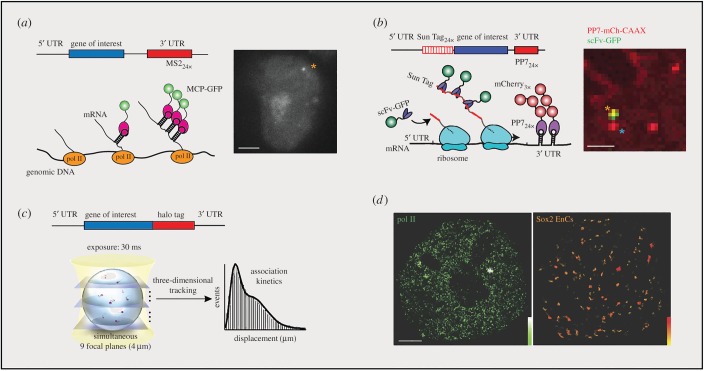
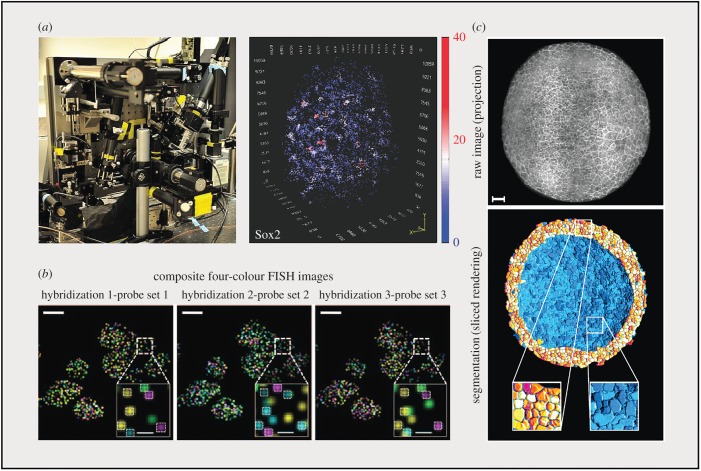
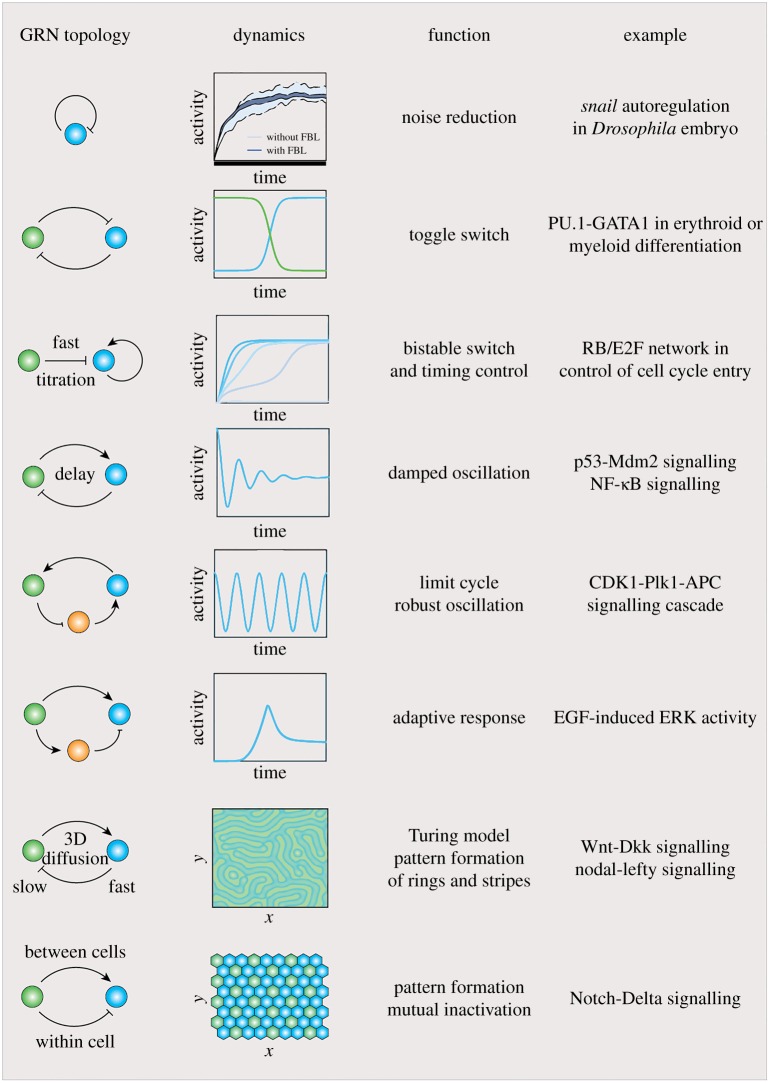
Animal development is orchestrated by spatio-temporal gene expression programmes that drive precise lineage commitment, proliferation and migration events at the single-cell level, collectively leading to large-scale morphological change and functional specification in the whole organism. Efforts over decades have uncovered two 'seemingly contradictory' mechanisms in gene regulation governing these intricate processes: (i) stochasticity at individual gene regulatory steps in single cells and (ii) highly coordinated gene expression dynamics in the embryo. Here we discuss how these two layers of regulation arise from the molecular and the systems level, and how they might interplay to determine cell fate and to control the complex body plan. We also review recent technological advancements that enable quantitative analysis of gene regulation dynamics at single-cell, single-molecule resolution. These approaches outline next-generation experiments to decipher general principles bridging gaps between molecular dynamics in single cells and robust gene regulations in the embryo.
动物发育由时空基因表达程序精心编排,这些程序在单细胞水平驱动精确的谱系定向、增殖和迁移事件,共同导致整个生物体发生大规模形态变化和功能特化。数十年来的研究努力揭示了在调控这些复杂过程的基因调控中存在两种“看似矛盾”的机制:(i)单细胞中单个基因调控步骤的随机性,以及(ii)胚胎中高度协调的基因表达动态。在这里,我们讨论这两层调控如何在分子和系统层面产生,以及它们如何相互作用以决定细胞命运并控制复杂的身体结构。我们还回顾了最近的技术进步,这些进步能够在单细胞、单分子分辨率下对基因调控动态进行定量分析。这些方法勾勒出了下一代实验,以破译弥合单细胞分子动态与胚胎中稳健基因调控之间差距的一般原则。