Interfaculty Institute for Microbiology and Infection Medicine, Division Organismic Interactions, University of Tübingen, Tübingen, Germany.
Division of Molecular Genetics, German Cancer Research Center (DKFZ), Heidelberg, Germany.
Sci Rep. 2017 May 3;7(1):1437. doi: 10.1038/s41598-017-01440-w.
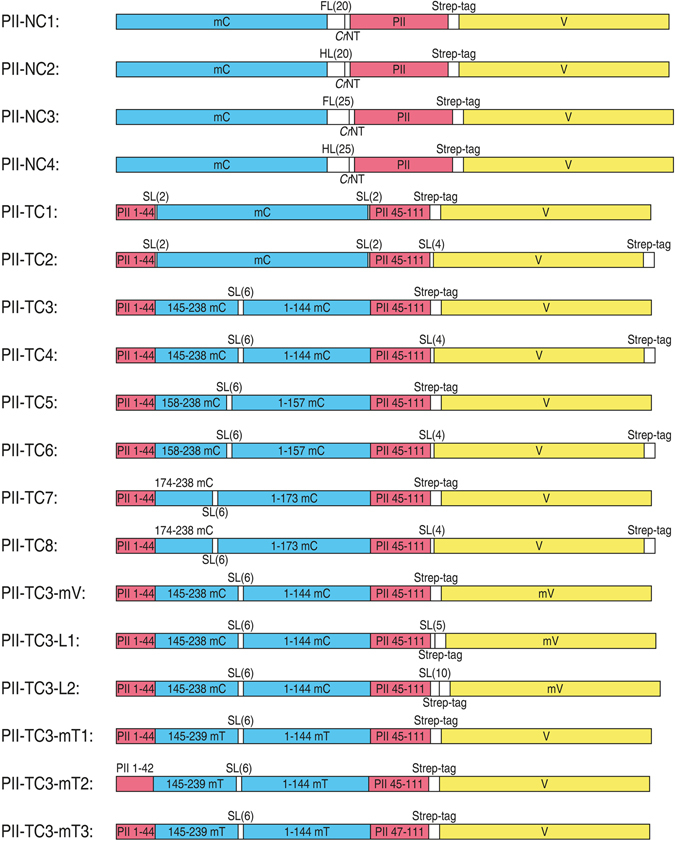
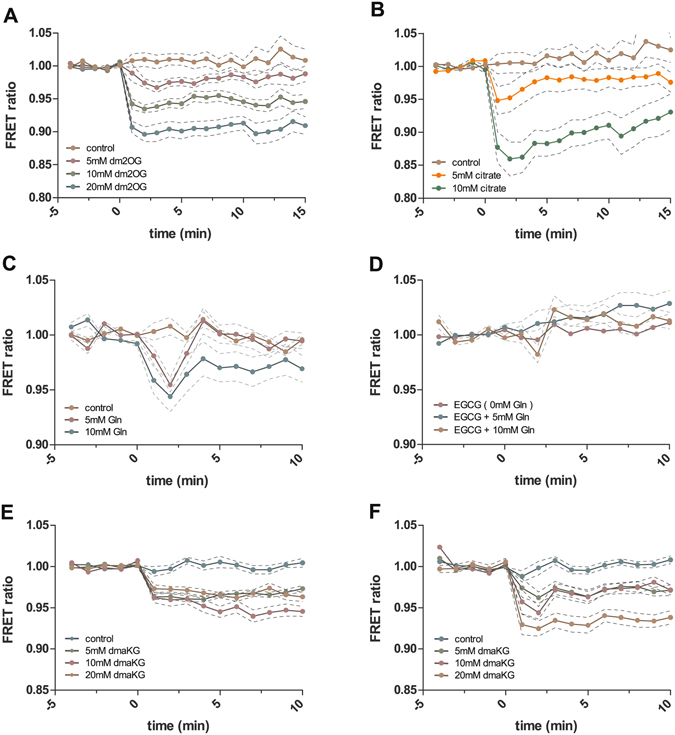
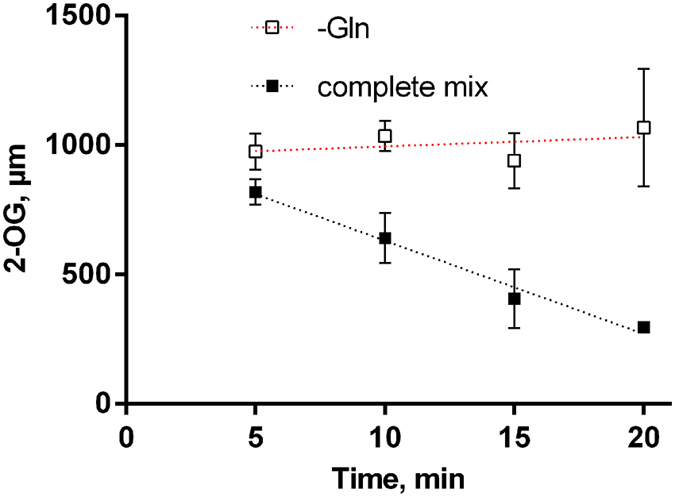
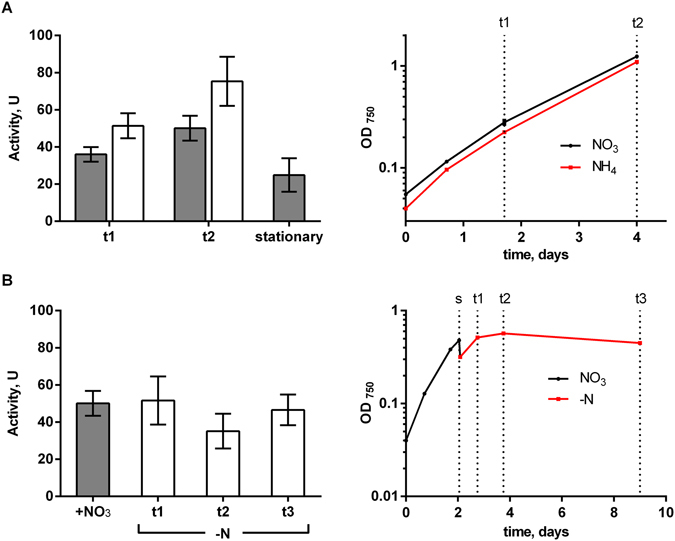
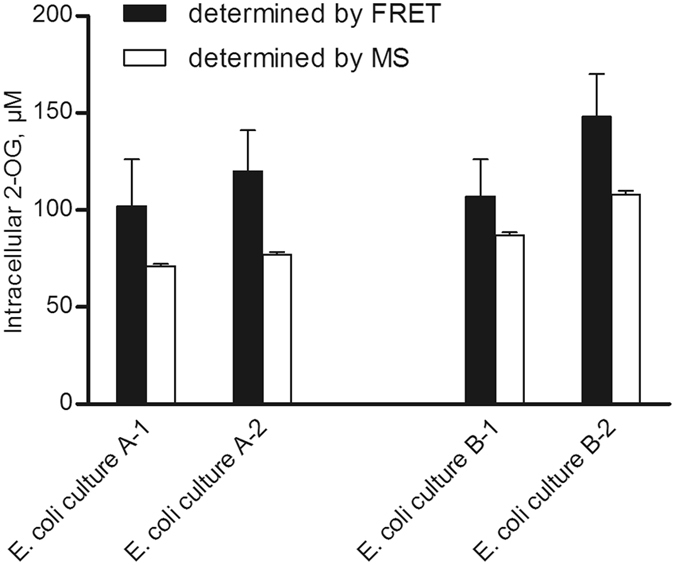
The citric acid cycle intermediate 2-oxoglutarate (2-OG, a.k.a. alpha-ketoglutarate) links the carbon and nitrogen metabolic pathways and can provide information on the metabolic status of cells. In recent years, it has become exceedingly clear that 2-OG also acts as a master regulator of diverse biologic processes in all domains of life. Consequently, there is a great demand for time-resolved data on 2-OG fluctuations that can't be adequately addressed using established methods like mass spectrometry-based metabolomics analysis. Therefore, we set out to develop a novel intramolecular 2-OG FRET sensor based on the signal transduction protein P from Synechococcus elongatus PCC 7942. We created two variants of the sensor, with a dynamic range for 2-OG from 0.1 µM to 0.1 mM or from 10 µM to 10 mM. As proof of concept, we applied the sensors to determine in situ glutamine:2-oxoglutarate aminotransferase (GOGAT) activity in Synechococcus elongatus PCC 7942 cells and measured 2-OG concentrations in cell extracts from Escherichia coli in vitro. Finally, we could show the sensors' functionality in living human cell lines, demonstrating their potential in the context of mechanistic studies and drug screening.
柠檬酸循环中间产物 2-氧戊二酸(2-OG,又名α-酮戊二酸)连接碳氮代谢途径,并能提供细胞代谢状态的信息。近年来,越来越清楚的是,2-OG 还作为所有生命领域中多种生物过程的主要调节剂发挥作用。因此,人们迫切需要能够实时解析 2-OG 波动的相关数据,而基于质谱的代谢组学分析等现有方法无法充分满足这一需求。因此,我们着手开发一种基于聚球藻 PCC 7942 中信号转导蛋白 P 的新型分子内 2-OG FRET 传感器。我们创建了该传感器的两种变体,其 2-OG 的动态范围为 0.1μM 至 0.1mM 或 10μM 至 10mM。作为概念验证,我们将传感器应用于测定聚球藻 PCC 7942 细胞中的原位谷氨酰胺:2-氧戊二酸转氨酶(GOGAT)活性,并测量了体外大肠杆菌细胞提取物中的 2-OG 浓度。最后,我们可以证明传感器在活的人细胞系中的功能,展示了它们在机制研究和药物筛选方面的潜力。