Ramani Ritika, Megason Gail, Schallheim Jason, Karlson Cynthia, Vijayakumar Vani, Vijayakumar Srinivasan, Hicks Chindo
Cold Spring Harbor Laboratory, Cold Spring Harbor, NY, USA.
Children's Cancer Center, University of Mississippi Medical Center, Jackson, MS, USA.
Biomark Insights. 2017 Apr 12;12:1177271917702895. doi: 10.1177/1177271917702895. eCollection 2017.
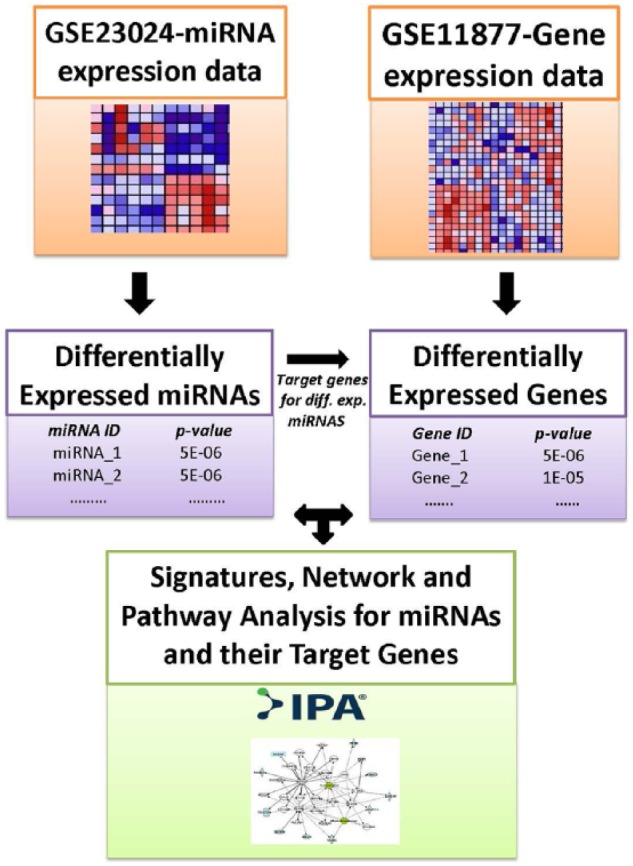
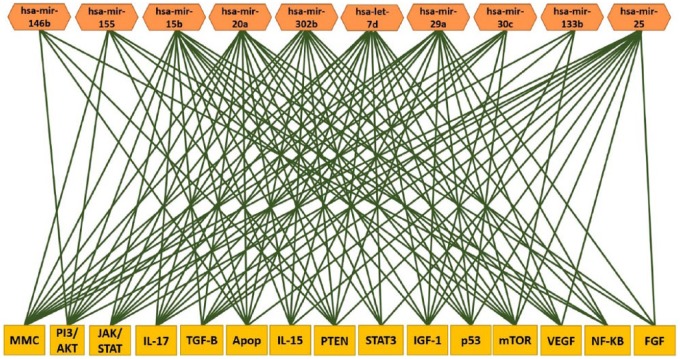
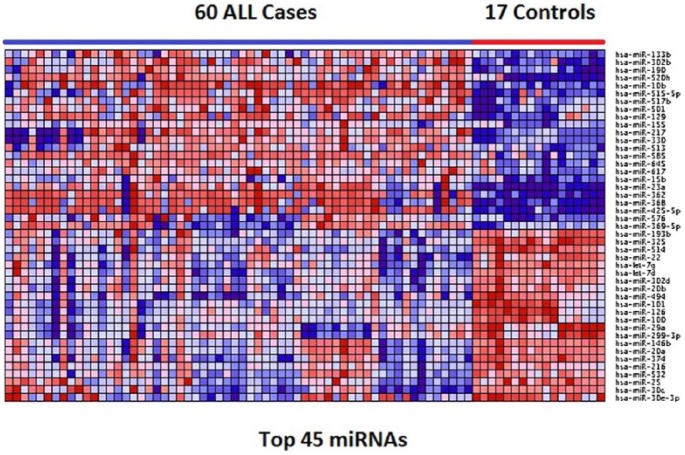
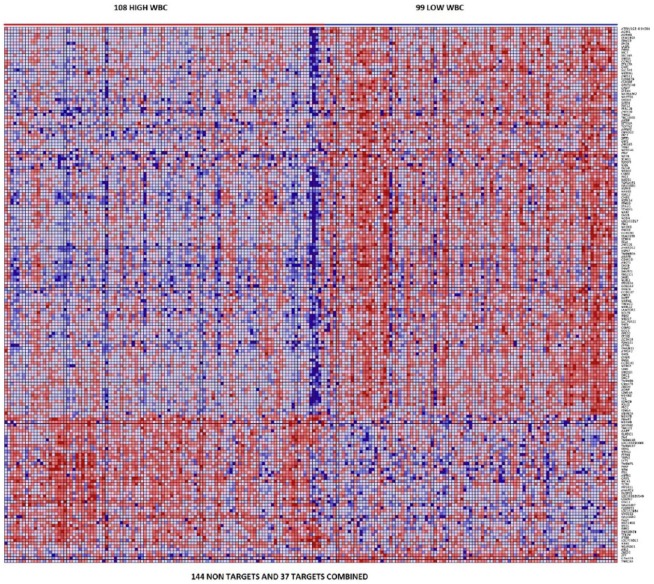
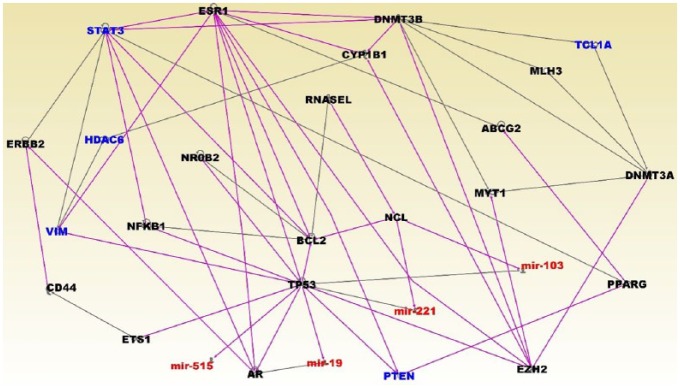
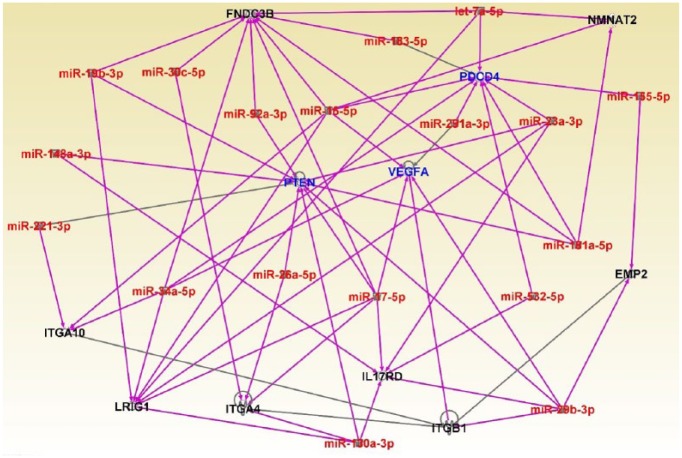
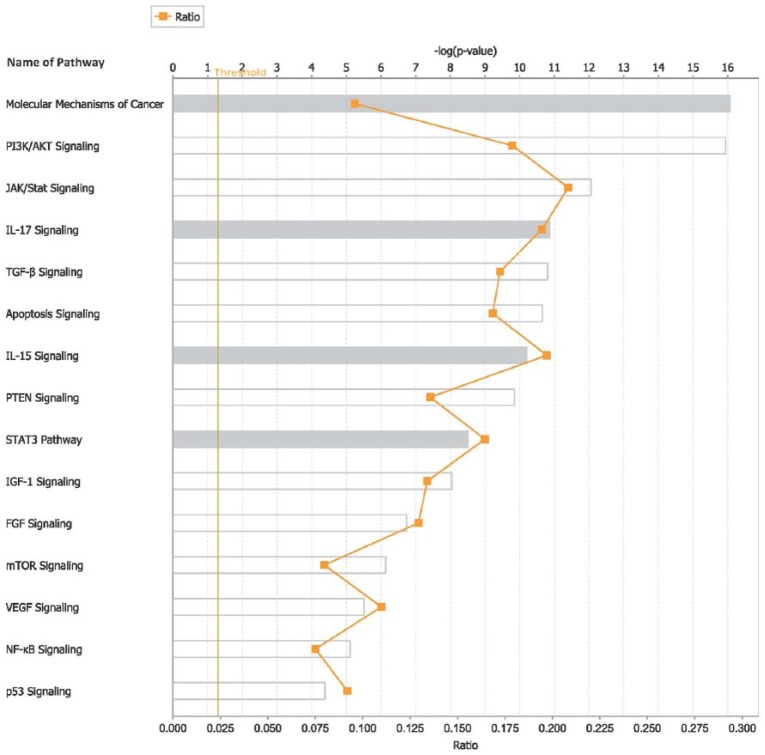
MicroRNAs (miRNAs) regulate the expression of protein-coding genes and represent potential biomarkers for childhood acute lymphoblastic leukemia (ALL). However, information linking miRNAs with their messenger RNA (mRNA) target genes modulating white blood cell (WBC) count is lacking. Here, we analyzed miRNAs and gene expression data from pediatric patients with ALL to identify a signature of miRNAs involved in ALL and their mRNA target genes, molecular networks, and biological pathways modulating WBC. We discovered a signature of miRNAs differentially expressed in ALL and a signature of mRNA target genes distinguishing patients with high WBC from patients with low WBC. In addition, we identified molecular networks and biological pathways, among them PI3/AKT, JAK/STAT, IL-17, TGF-β, apoptosis, IL-15, STAT3, IGF-1, FGF, mTOR, VEGF, NF-kB, and P53 signaling pathways, enriched for or targeted by miRNAs. The discovered miRNAs and their target genes and pathways represent potential clinically actionable biomarkers and therapeutic targets.
微小RNA(miRNA)可调节蛋白质编码基因的表达,是儿童急性淋巴细胞白血病(ALL)潜在的生物标志物。然而,目前尚缺乏关于miRNA与其调节白细胞(WBC)计数的信使核糖核酸(mRNA)靶基因之间关系的信息。在此,我们分析了ALL儿科患者的miRNA和基因表达数据,以确定参与ALL的miRNA及其mRNA靶基因、分子网络和调节WBC的生物学途径的特征。我们发现了ALL中差异表达的miRNA特征以及区分高WBC患者和低WBC患者的mRNA靶基因特征。此外,我们还确定了分子网络和生物学途径,其中包括PI3/AKT、JAK/STAT、IL-17、TGF-β、凋亡、IL-15、STAT3、IGF-1、FGF、mTOR、VEGF、NF-kB和P53信号通路,这些通路被miRNA富集或靶向。所发现的miRNA及其靶基因和途径代表了潜在的临床可操作生物标志物和治疗靶点。