Latchana Nicholas, Abrams Zachary B, Howard J Harrison, Regan Kelly, Jacob Naduparambil, Fadda Paolo, Terando Alicia, Markowitz Joseph, Agnese Doreen, Payne Philip, Carson William E
Department of Surgery, The Ohio State University, Columbus, OH, USA.
Department of Biomedical Informatics, The Ohio State University, Columbus, OH, USA.
Bioinform Biol Insights. 2017 Feb 23;11:1177932217694837. doi: 10.1177/1177932217694837. eCollection 2017.
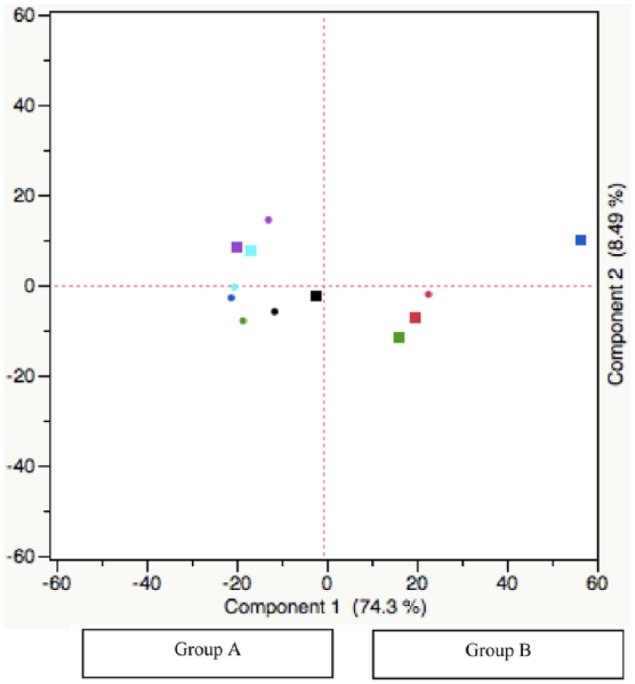
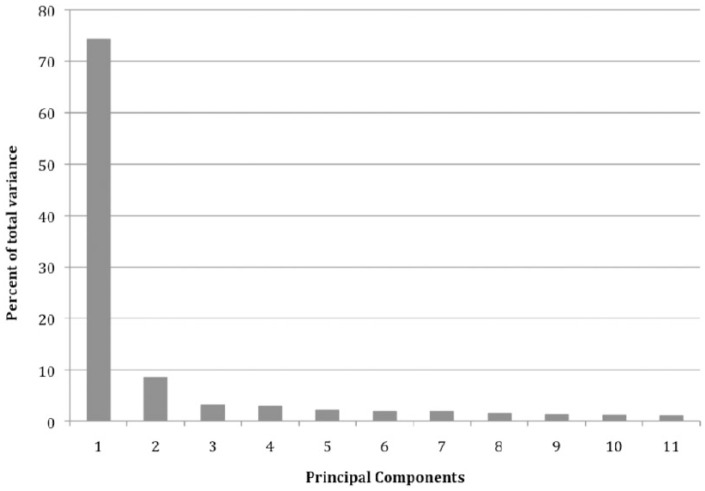
Melanoma remains the leading cause of skin cancer-related deaths. Surgical resection and adjuvant therapies can result in disease-free intervals for stage III and stage IV disease; however, recurrence is common. Understanding microRNA (miR) dynamics following surgical resection of melanomas is critical to accurately interpret miR changes suggestive of melanoma recurrence. Plasma of 6 patients with stage III (n = 2) and stage IV (n = 4) melanoma was evaluated using the NanoString platform to determine pre- and postsurgical miR expression profiles, enabling analysis of more than 800 miRs simultaneously in 12 samples. Principal component analysis detected underlying patterns of miR expression between pre- vs postsurgical patients. Group A contained 3 of 4 patients with stage IV disease (pre- and postsurgical samples) and 2 patients with stage III disease (postsurgical samples only). The corresponding preoperative samples to both individuals with stage III disease were contained in group B along with 1 individual with stage IV disease (pre- and postsurgical samples). Group A was distinguished from group B by statistically significant analysis of variance changes in miR expression ( < <0001). This analysis revealed that group A vs group B had downregulation of let-7b-5p, miR-520f, miR-720, miR-4454, miR-21-5p, miR-22-3p, miR-151a-3p, miR-378e, and miR-1283 and upregulation of miR-126-3p, miR-223-3p, miR-451a, let-7a-5p, let-7g-5p, miR-15b-5p, miR-16-5p, miR-20a-5p, miR-20b-5p, miR-23a-3p, miR-26a-5p, miR-106a-5p, miR-17-5p, miR-130a-3p, miR-142-3p, miR-150-5p, miR-191-5p, miR-199a-3p, miR-199b-3p, and miR-1976. Changes in miR expression were not readily evident in individuals with distant metastatic disease (stage IV) as these individuals may have prolonged inflammatory responses. Thus, inflammatory-driven miRs coinciding with tumor-derived miRs can blunt anticipated changes in expression profiles following surgical resection.
黑色素瘤仍然是皮肤癌相关死亡的主要原因。手术切除和辅助治疗可使III期和IV期疾病实现无病间期;然而,复发很常见。了解黑色素瘤手术切除后的微小RNA(miR)动态对于准确解读提示黑色素瘤复发的miR变化至关重要。使用NanoString平台对6例III期(n = 2)和IV期(n = 4)黑色素瘤患者的血浆进行评估,以确定手术前后的miR表达谱,从而能够在12个样本中同时分析800多个miR。主成分分析检测手术前后患者之间miR表达的潜在模式。A组包括4例IV期疾病患者中的3例(手术前后样本)和2例III期疾病患者(仅手术样本)。2例III期疾病患者的相应术前样本与1例IV期疾病患者(手术前后样本)一起包含在B组中。通过miR表达的方差变化的统计学显著分析(< <0001)将A组与B组区分开来。该分析显示,与B组相比,A组中let-7b-5p、miR-520f、miR-720、miR-4454、miR-21-5p、miR-22-3p、miR-151a-3p、miR-378e和miR-1283下调,而miR-126-3p、miR-223-3p、miR-451a、let-7a-5p、let-7g-5p、miR-15b-5p、miR-16-5p、miR-20a-5p、miR-20b-5p、miR-23a-3p、miR-26a-5p、miR-106a-5p、miR-17-5p、miR-130a-3p、miR-142-3p、miR-150-5p、miR-191-5p、miR-199a-3p、miR-199b-3p和miR-1976上调。在有远处转移疾病(IV期)的个体中,miR表达的变化并不明显,因为这些个体可能有延长的炎症反应。因此,与肿瘤来源的miR一致的炎症驱动的miR可减弱手术切除后预期的表达谱变化。