Cooper Rory L, Martin Kyle J, Rasch Liam J, Fraser Gareth J
Department of Animal and Plant Sciences, and the Bateson Centre, University of Sheffield, Sheffield, S10 2TN UK.
Evodevo. 2017 May 2;8:8. doi: 10.1186/s13227-017-0071-0. eCollection 2017.
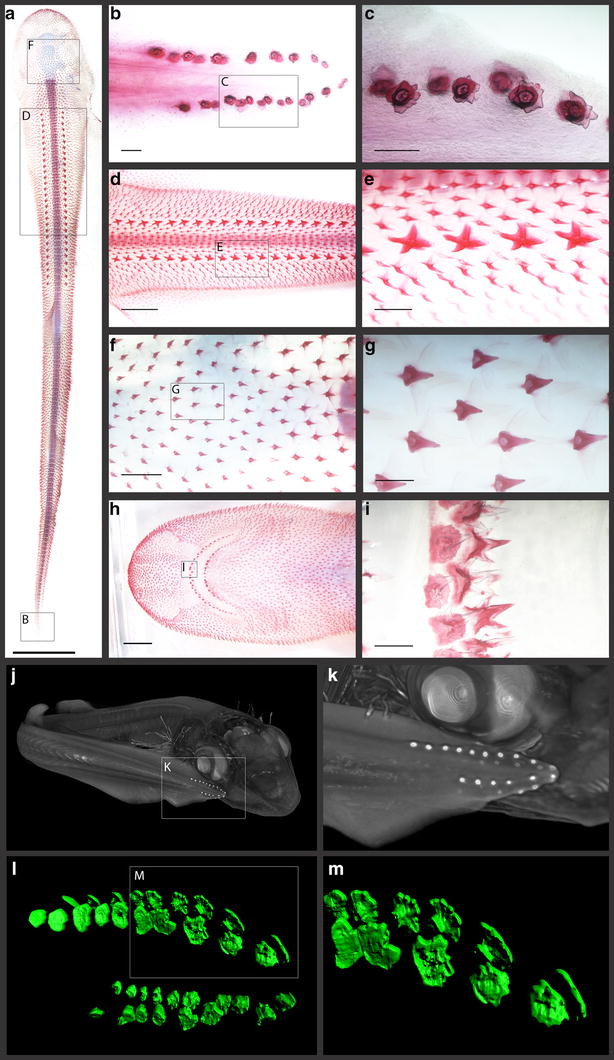
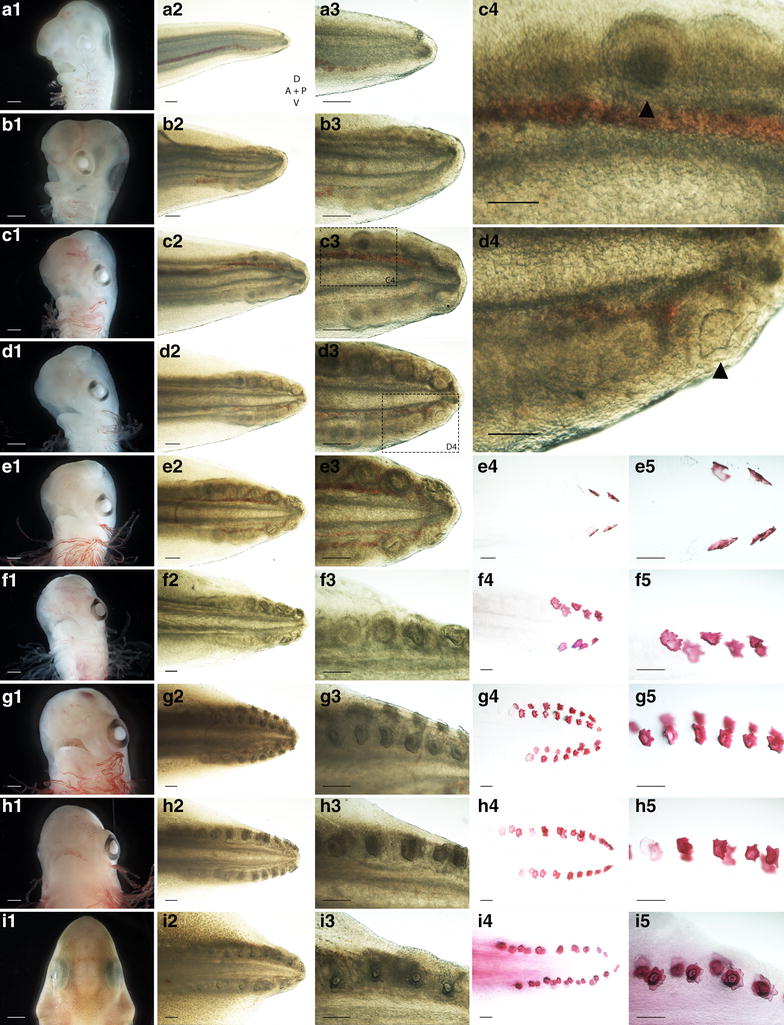
Vertebrate epithelial appendages constitute a diverse group of organs that includes integumentary structures such as reptilian scales, avian feathers and mammalian hair. Recent studies have provided new evidence for the homology of integumentary organ development throughout amniotes, despite their disparate final morphologies. These structures develop from conserved molecular signalling centres, known as epithelial placodes. It is not yet certain whether this homology extends beyond the integumentary organs of amniotes, as there is a lack of knowledge regarding their development in basal vertebrates. As the ancient sister lineage of bony vertebrates, extant chondrichthyans are well suited to testing the phylogenetic depth of this homology. Elasmobranchs (sharks, skates and rays) possess hard, mineralised epithelial appendages called odontodes, which include teeth and dermal denticles (placoid scales). Odontodes constitute some of the oldest known vertebrate integumentary appendages, predating the origin of gnathostomes. Here, we used an emerging model shark () to test the hypothesis that denticles are homologous to other placode-derived amniote integumentary organs. To examine the conservation of putative gene regulatory network (GRN) member function, we undertook small molecule inhibition of fibroblast growth factor (FGF) signalling during caudal denticle formation.
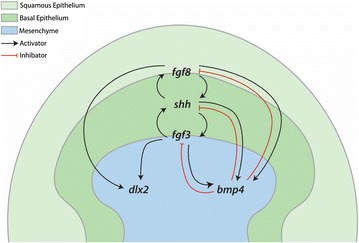
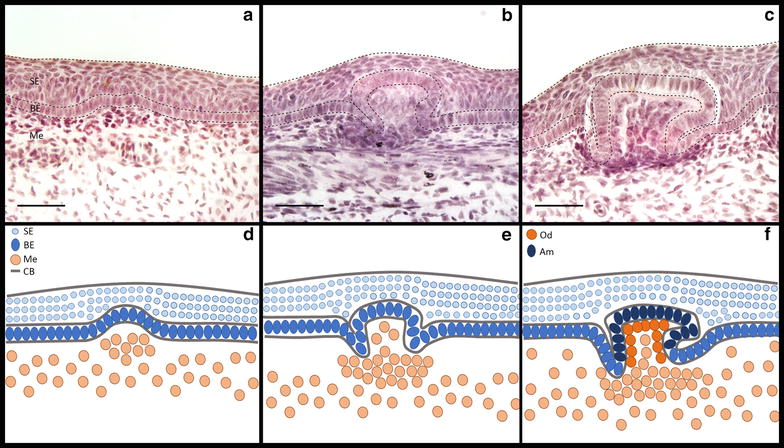
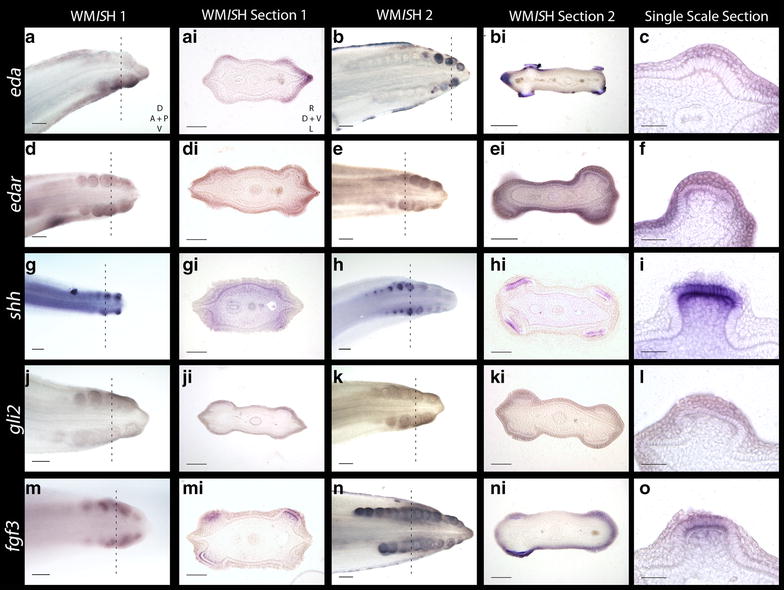
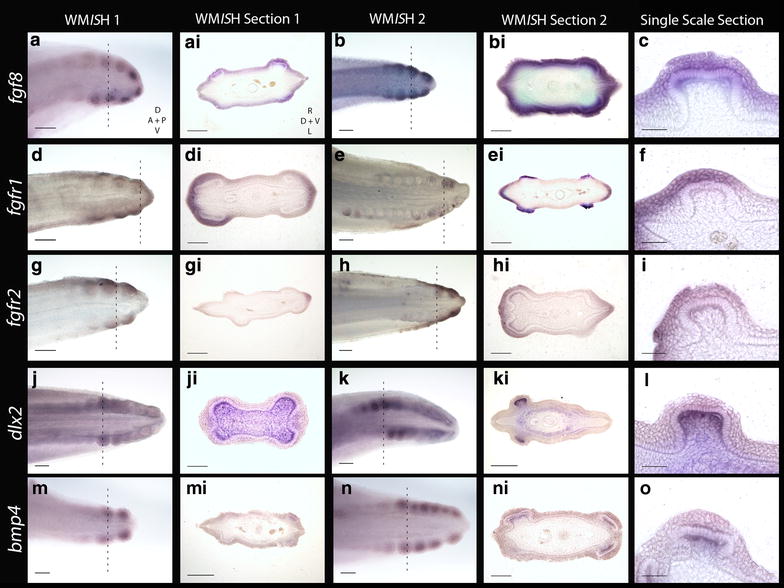
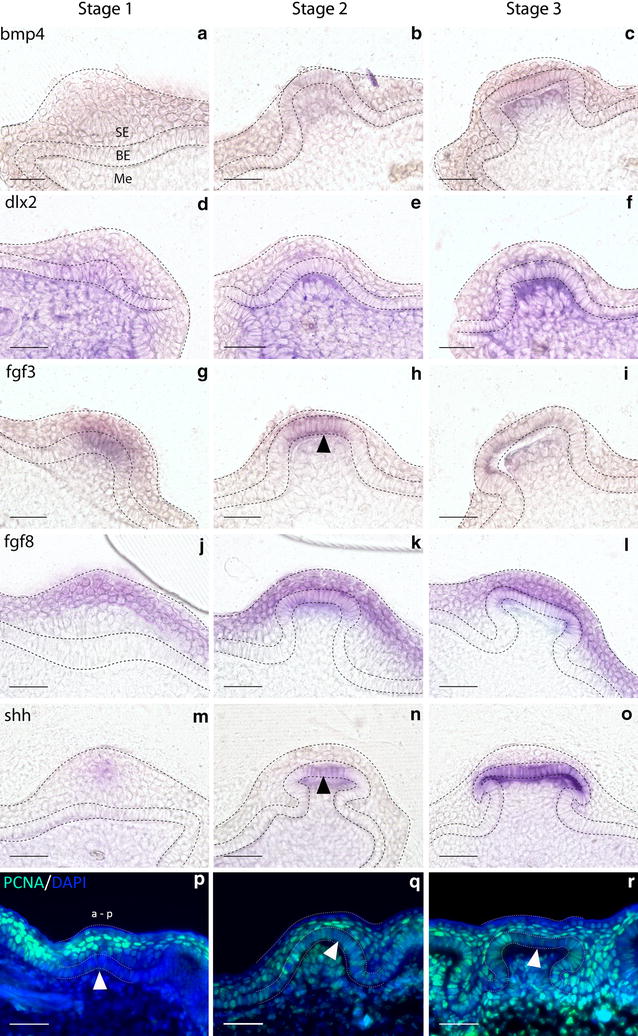
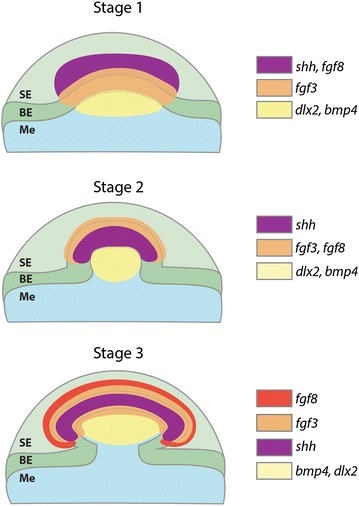
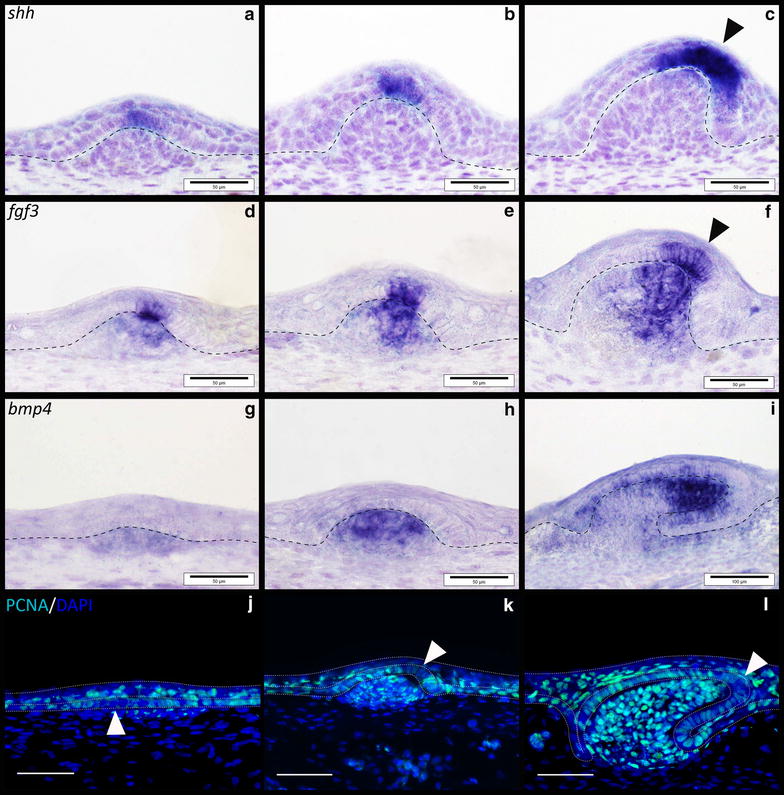
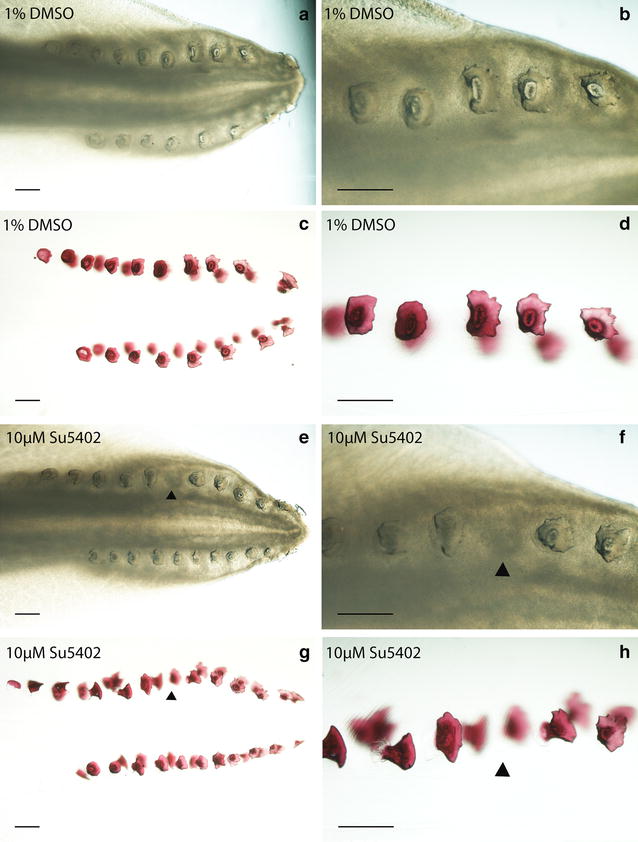
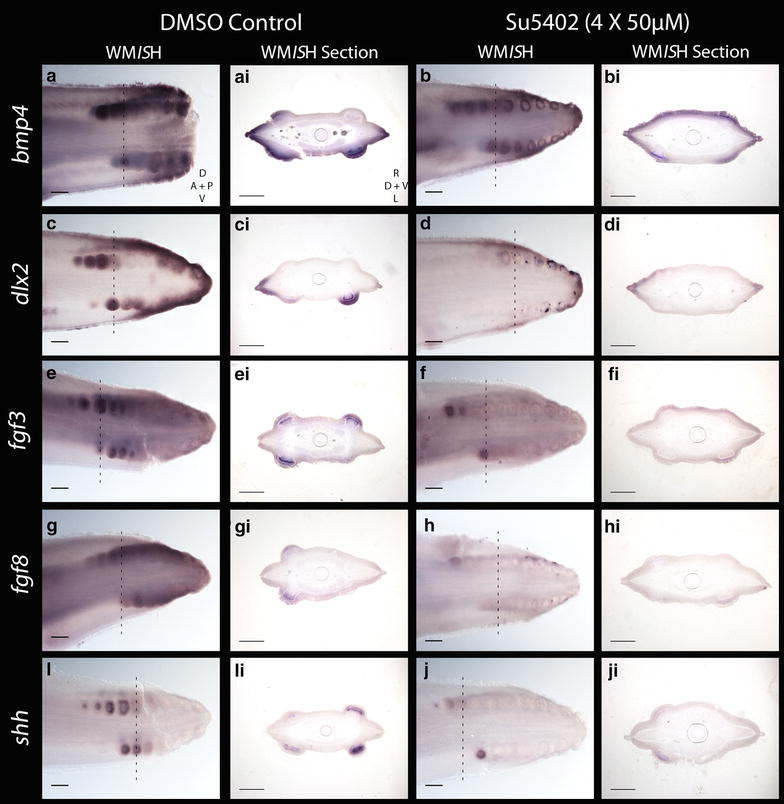
We show that during early caudal denticle morphogenesis, the shark expresses homologues of conserved developmental gene families, known to comprise a core GRN for early placode morphogenesis in amniotes. This includes conserved expression of FGFs, sonic hedgehog () and bone morphogenetic protein 4 (). Additionally, we reveal that denticle placodes possess columnar epithelial cells with a reduced rate of proliferation, a conserved characteristic of amniote skin appendage development. Small molecule inhibition of FGF signalling revealed placode development is FGF dependent, and inhibiting FGF activity resulted in downregulation of and expression, consistent with the expectation from comparison to the amniote integumentary appendage GRN.
Overall, these findings suggest the core GRN for building vertebrate integumentary epithelial appendages has been highly conserved over 450 million years. This provides evidence for the continuous, historical homology of epithelial appendage placodes throughout jawed vertebrates, from sharks to mammals. Epithelial placodes constitute the shared foundation upon which diverse vertebrate integumentary organs have evolved.
脊椎动物的上皮附属器构成了一组多样的器官,包括如爬行动物的鳞片、鸟类的羽毛和哺乳动物的毛发等皮肤结构。最近的研究为整个羊膜动物皮肤器官发育的同源性提供了新证据,尽管它们最终的形态各不相同。这些结构由保守的分子信号中心发育而来,即上皮基板。由于缺乏关于它们在基干脊椎动物中发育的知识,目前尚不确定这种同源性是否延伸到羊膜动物的皮肤器官之外。作为硬骨脊椎动物的古老姐妹谱系,现存的软骨鱼类非常适合测试这种同源性的系统发育深度。板鳃亚纲动物(鲨鱼、鳐鱼和魟)拥有坚硬的、矿化的上皮附属器,称为齿状物,其中包括牙齿和皮齿(盾鳞)。齿状物是已知最古老的脊椎动物皮肤附属器之一,早于有颌类动物的起源。在这里,我们使用一种新兴的模式鲨鱼()来测试皮齿与其他基板衍生的羊膜动物皮肤器官同源的假说。为了研究假定的基因调控网络(GRN)成员功能的保守性,我们在尾皮齿形成过程中对成纤维细胞生长因子(FGF)信号进行了小分子抑制。
我们表明,在早期尾皮齿形态发生过程中,鲨鱼表达保守发育基因家族的同源物,已知这些基因家族构成了羊膜动物早期基板形态发生的核心GRN。这包括FGF、音猬因子()和骨形态发生蛋白4()的保守表达。此外,我们发现皮齿基板具有柱状上皮细胞,其增殖速率降低,这是羊膜动物皮肤附属器发育的一个保守特征。FGF信号的小分子抑制表明基板发育依赖于FGF,抑制FGF活性导致和表达下调,这与与羊膜动物皮肤附属器GRN比较的预期一致。
总体而言,这些发现表明构建脊椎动物皮肤上皮附属器的核心GRN在4.5亿多年来一直高度保守。这为从鲨鱼到哺乳动物的整个有颌脊椎动物上皮附属器基板的连续历史同源性提供了证据。上皮基板构成了多样的脊椎动物皮肤器官进化的共同基础。