Jaehne Emily J, Ameti Dzeneta, Paiva Tehani, van den Buuse Maarten
Department Psychology and Counselling, School of Psychology and Public Health, La Trobe University, Melbourne, VIC, Australia.
Department of Pharmacology, University of Melbourne, Melbourne, VIC, Australia.
Front Psychiatry. 2017 Apr 20;8:61. doi: 10.3389/fpsyt.2017.00061. eCollection 2017.
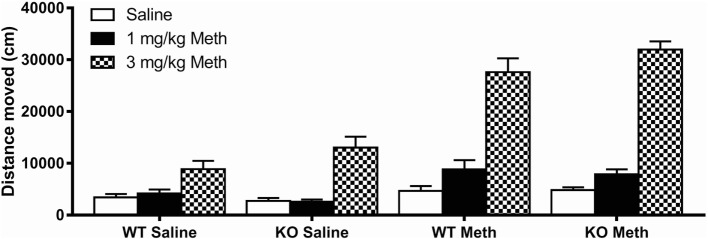
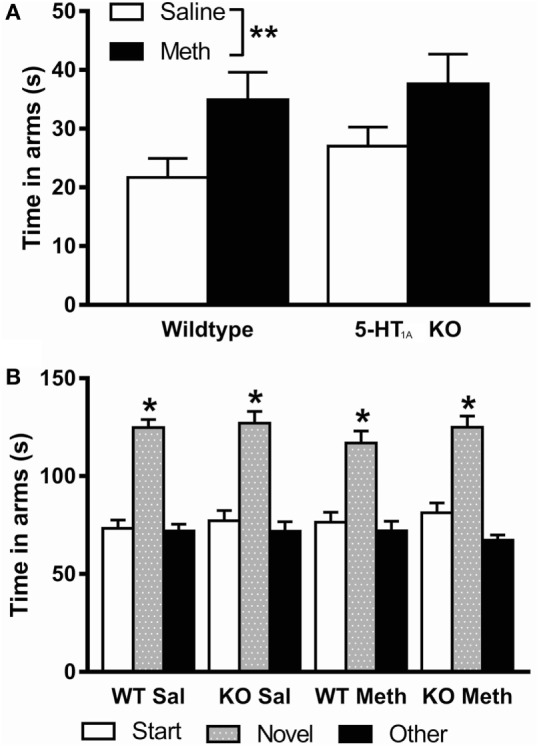
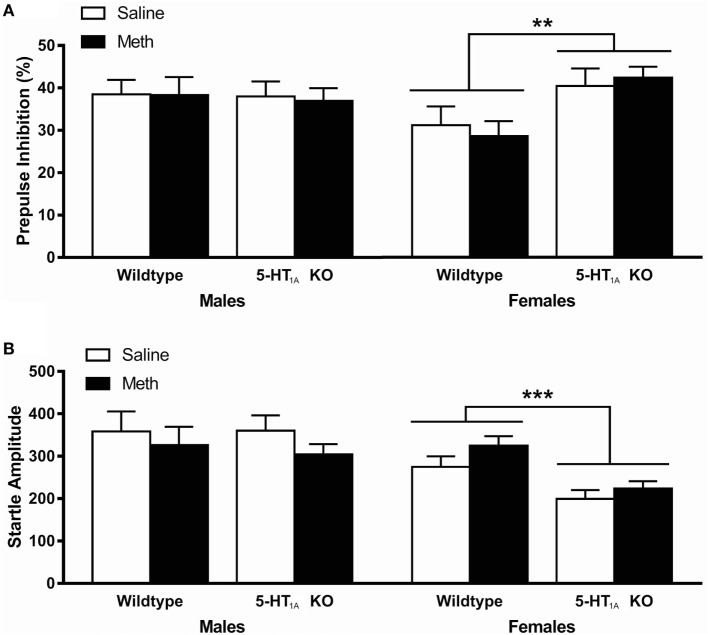
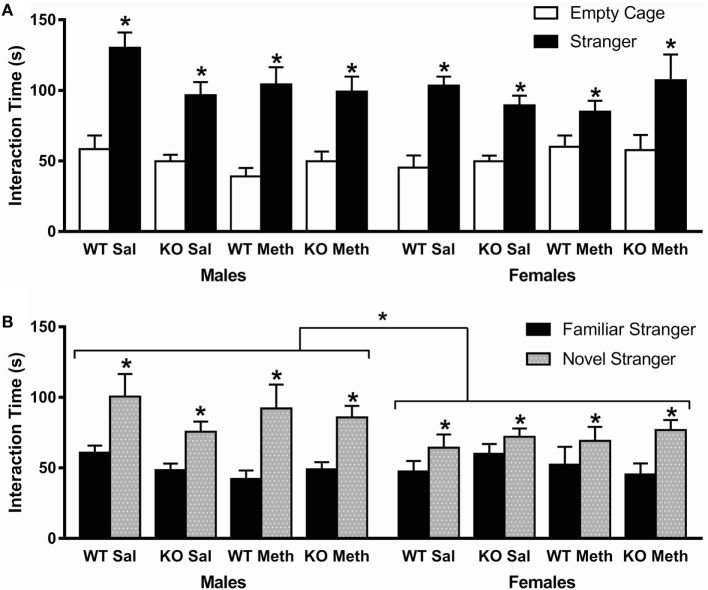
Methamphetamine (Meth) is a widely abused stimulant drug, but this abuse is associated with an increased risk of developing psychosis. In addition to its well-known action on brain dopamine, Meth also affects serotonergic (5-HT) neurons. The aim of this study was to investigate this role in mice, which lack one of the main serotonin receptors, the 5-HT receptor, which has been implicated in both schizophrenia and Meth-induced psychosis. Male and female wild-type or 5-HT knockout (KO) mice received daily treatment with increasing doses of methamphetamine from 6 to 9 weeks of age (1-4 mg/kg/day twice a day). At least 2 weeks after the last injection, the mice underwent a battery of behavioral tests focusing on psychosis-related behaviors, including Meth-induced hyperactivity, prepulse inhibition (PPI), social interaction, elevated plus maze (EPM), and Y-maze. Meth pretreatment resulted in significantly increased hyperlocomotion in response to an acute Meth challenge, but this effect was independent of genotype. Chronic Meth treatment resulted in decreased levels of anxiety in the EPM in both sexes, as well as increased startle responses in female mice only, again independent of genotype. 5-HT KO mice showed an increased locomotor response to acute Meth in both sexes, as well as increased PPI and decreased startle responses in female mice only, independent of Meth pretreatment. In conclusion, the effects of chronic Meth appear unaffected by the absence of the 5-HT receptor. These results do not support a role of the 5-HT receptor in Meth-induced psychosis.
甲基苯丙胺(冰毒)是一种广泛滥用的刺激性药物,但其滥用会增加患精神病的风险。除了对脑多巴胺有众所周知的作用外,冰毒还会影响血清素能(5-HT)神经元。本研究的目的是在缺乏主要血清素受体之一5-HT受体的小鼠中研究这一作用,该受体与精神分裂症和冰毒诱发的精神病均有关联。雄性和雌性野生型或5-HT基因敲除(KO)小鼠在6至9周龄时每天接受递增剂量的甲基苯丙胺治疗(1-4mg/kg/天,每天两次)。在最后一次注射后至少2周,小鼠接受了一系列侧重于与精神病相关行为的行为测试,包括冰毒诱发的多动、前脉冲抑制(PPI)、社交互动、高架十字迷宫(EPM)和Y迷宫。冰毒预处理导致对急性冰毒挑战的过度运动显著增加,但这种效应与基因型无关。慢性冰毒治疗导致两性在EPM中的焦虑水平降低,以及仅在雌性小鼠中惊跳反应增加,但同样与基因型无关。5-HT基因敲除小鼠在两性中对急性冰毒均表现出运动反应增加,并且仅在雌性小鼠中PPI增加而惊跳反应降低,与冰毒预处理无关。总之,慢性冰毒的影响似乎不受5-HT受体缺失的影响。这些结果不支持5-HT受体在冰毒诱发的精神病中起作用。