QCD Labs, COMP Centre of Excellence, Department of Applied Physics, Aalto University, PO Box 13500, FI-00076 Aalto, Finland.
Nat Commun. 2017 May 8;8:15189. doi: 10.1038/ncomms15189.
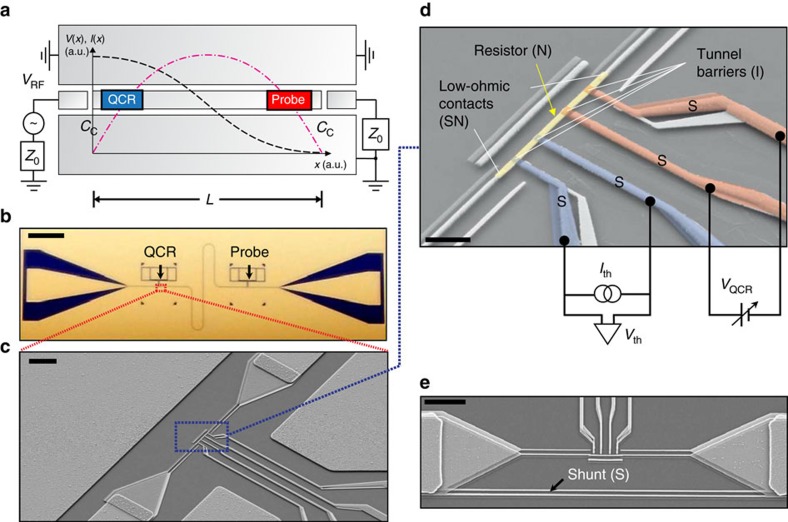
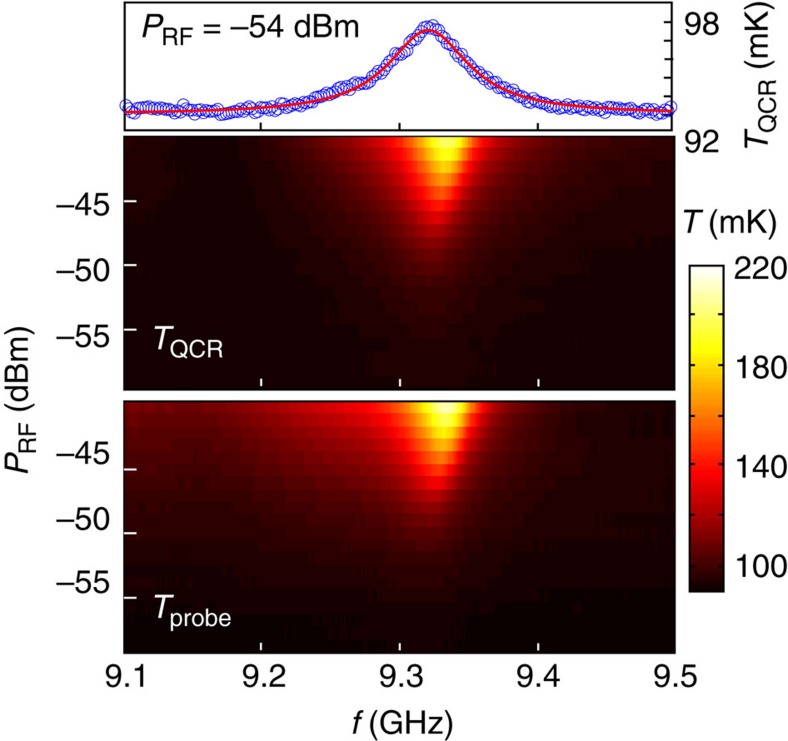
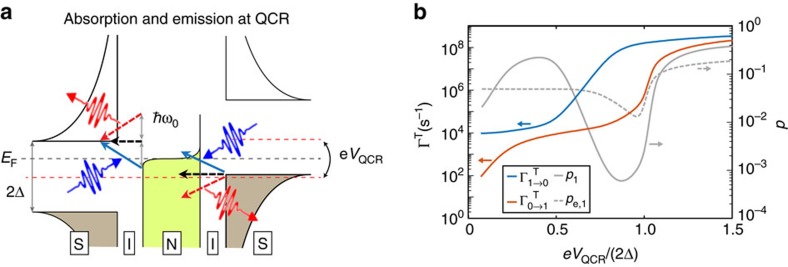
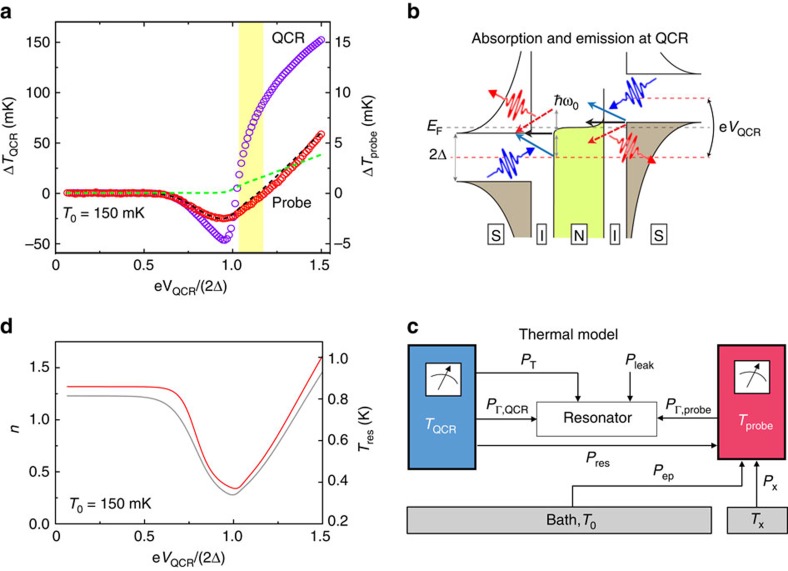
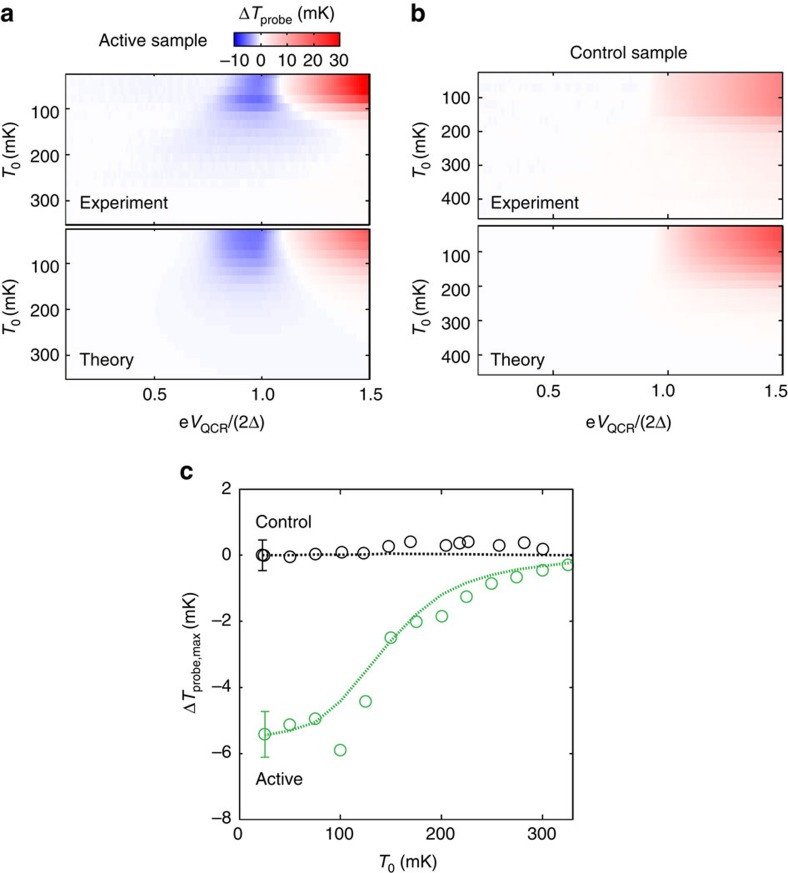
Quantum technology promises revolutionizing applications in information processing, communications, sensing and modelling. However, efficient on-demand cooling of the functional quantum degrees of freedom remains challenging in many solid-state implementations, such as superconducting circuits. Here we demonstrate direct cooling of a superconducting resonator mode using voltage-controllable electron tunnelling in a nanoscale refrigerator. This result is revealed by a decreased electron temperature at a resonator-coupled probe resistor, even for an elevated electron temperature at the refrigerator. Our conclusions are verified by control experiments and by a good quantitative agreement between theory and experimental observations at various operation voltages and bath temperatures. In the future, we aim to remove spurious dissipation introduced by our refrigerator and to decrease the operational temperature. Such an ideal quantum-circuit refrigerator has potential applications in the initialization of quantum electric devices. In the superconducting quantum computer, for example, fast and accurate reset of the quantum memory is needed.
量子技术有望彻底改变信息处理、通信、传感和建模等领域的应用。然而,在许多固态实现中,如超导电路中,有效、按需冷却功能量子自由度仍然是一个挑战。在这里,我们通过在纳米级制冷器中使用电压可控的电子隧道效应,证明了超导谐振器模式的直接冷却。这一结果通过在与谐振器耦合的探针电阻器处降低电子温度来揭示,即使在制冷器处的电子温度升高的情况下也是如此。我们的结论通过控制实验和不同工作电压和浴温下理论与实验观测之间的良好定量一致性得到验证。在未来,我们的目标是消除由我们的制冷器引入的杂散耗散,并降低操作温度。这种理想的量子电路制冷器在量子电子设备的初始化中具有潜在的应用。例如,在超导量子计算机中,需要快速、准确地重置量子存储器。