Kolsum Umme, Donaldson Gavin C, Singh Richa, Barker Bethan L, Gupta Vandana, George Leena, Webb Adam J, Thurston Sarah, Brookes Anthony J, McHugh Timothy D, Wedzicha Jadwiga A, Brightling Christopher E, Singh Dave
Division of Infection, Immunity and Respiratory Medicine, School of Biological Sciences, Faculty of Biology, Medicine and Health, Manchester Academic Health Science Centre, The University of Manchester and University Hospital of South Manchester NHS Foundation Trust, Manchester, M23 9QZ, UK.
The Medicines Evaluation Unit, Manchester, UK.
Respir Res. 2017 May 8;18(1):88. doi: 10.1186/s12931-017-0570-5.
Sputum and blood eosinophil counts predict corticosteroid effects in COPD patients. Bacterial infection causes increased airway neutrophilic inflammation. The relationship of eosinophil counts with airway bacterial load in COPD patients is uncertain. We tested the hypothesis that bacterial load and eosinophil counts are inversely related.
COPD patients were seen at stable state and exacerbation onset. Sputum was processed for quantitative polymerase chain reaction detection of the potentially pathogenic microorganisms (PPM) H. influenzae, M. catarrhalis and S. pneumoniae. PPM positive was defined as total load ≥1 × 10copies/ml. Sputum and whole blood were analysed for differential cell counts.
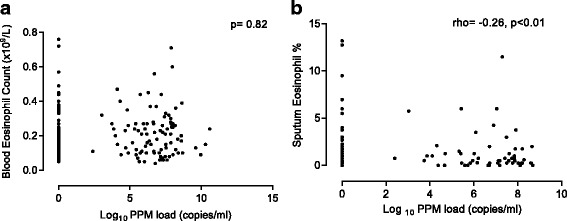
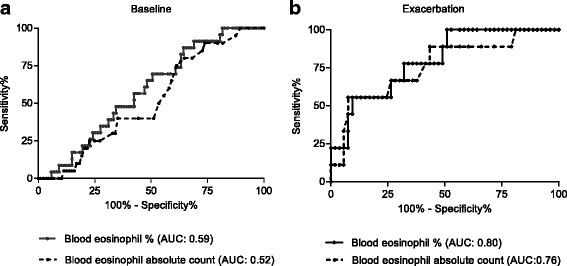
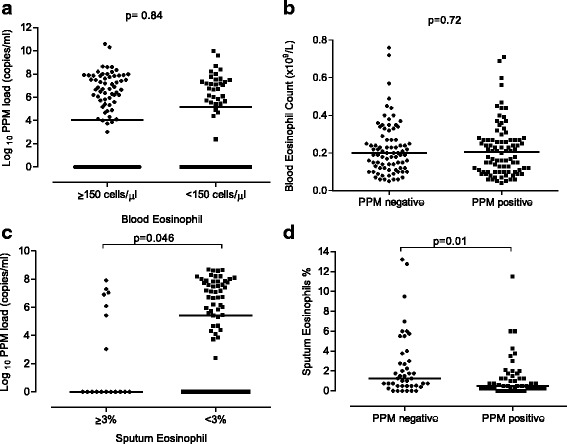
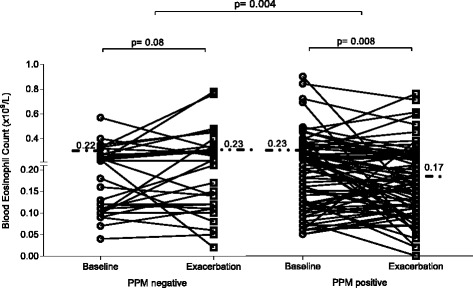
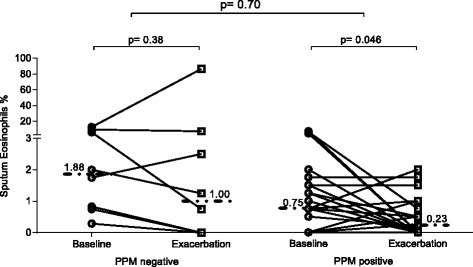
At baseline, bacterial counts were not related to blood eosinophils, but sputum eosinophil % was significantly lower in patients with PPM positive compared to PPM negative samples (medians: 0.5% vs. 1.25% respectively, p = 0.01). Patients with PPM positive samples during an exacerbation had significantly lower blood eosinophil counts at exacerbation compared to baseline (medians: 0.17 × 10/L vs. 0.23 × 10/L respectively, p = 0.008), while no blood eosinophil change was observed with PPM negative samples.
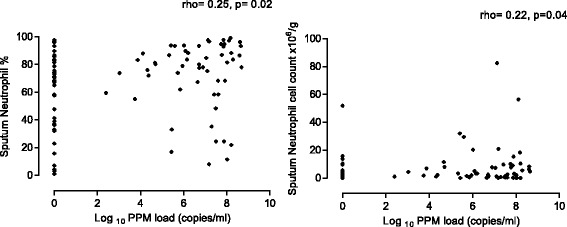
These findings indicate an inverse relationship between bacterial infection and eosinophil counts. Bacterial infection may influence corticosteroid responsiveness by altering the profile of neutrophilic and eosinophilic inflammation.
痰液和血液嗜酸性粒细胞计数可预测慢性阻塞性肺疾病(COPD)患者对皮质类固醇的反应。细菌感染会导致气道中性粒细胞炎症增加。COPD患者中嗜酸性粒细胞计数与气道细菌载量之间的关系尚不确定。我们检验了细菌载量与嗜酸性粒细胞计数呈负相关的假设。
在稳定期和急性加重期对COPD患者进行观察。对痰液进行处理,用于定量聚合酶链反应检测潜在致病微生物(PPM)流感嗜血杆菌、卡他莫拉菌和肺炎链球菌。PPM阳性定义为总载量≥1×10拷贝/ml。对痰液和全血进行细胞分类计数分析。
在基线时,细菌计数与血液嗜酸性粒细胞无关,但与PPM阴性样本相比,PPM阳性患者的痰液嗜酸性粒细胞百分比显著更低(中位数分别为0.5%和1.25%,p = 0.01)。急性加重期PPM阳性样本的患者在急性加重期时的血液嗜酸性粒细胞计数显著低于基线(中位数分别为0.17×10/L和0.23×10/L,p = 0.008),而PPM阴性样本未观察到血液嗜酸性粒细胞变化。
这些发现表明细菌感染与嗜酸性粒细胞计数之间存在负相关。细菌感染可能通过改变中性粒细胞和嗜酸性粒细胞炎症特征来影响皮质类固醇反应性。