Liang Wenjin, Liao Yong, Zhang Jing, Huang Qi, Luo Wei, Yu Jidong, Gong Jianhua, Zhou Yi, Li Xuan, Tang Bo, He Songqing, Yang Jinghong
Department of Hepatobiliary Surgery, Guilin Medical University, Affiliated Hospital, Guilin, 541004, Guangxi, People's Republic of China.
J Exp Clin Cancer Res. 2017 May 8;36(1):64. doi: 10.1186/s13046-017-0537-x.
As a relatively conservative transcriptional regulator in biological evolution, heat shock factor 1 (HSF1) is activated by, and regulates the expression of heat shock proteins (HSPs) in response to a variety of stress conditions. HSF1 also plays a key role in regulating the development of various tumors; however, its role in pancreatic cancer and the specific underlying mechanism are not clear.
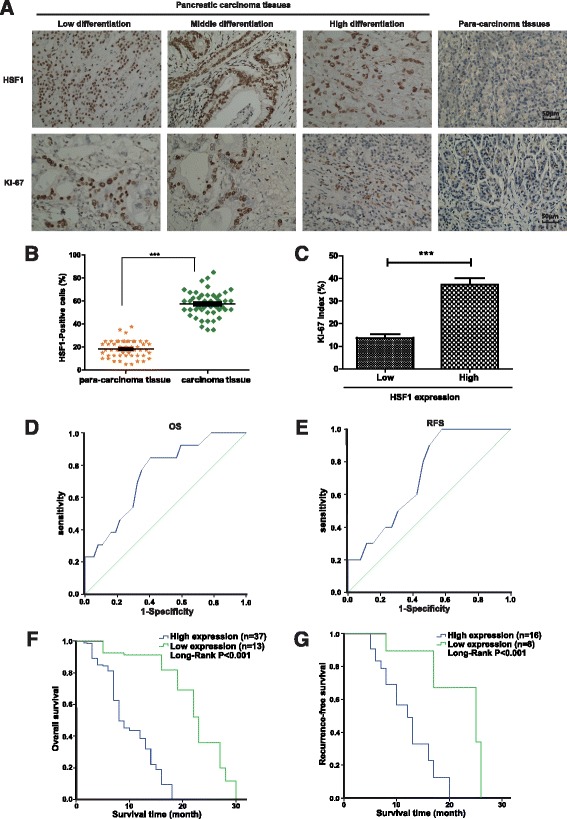
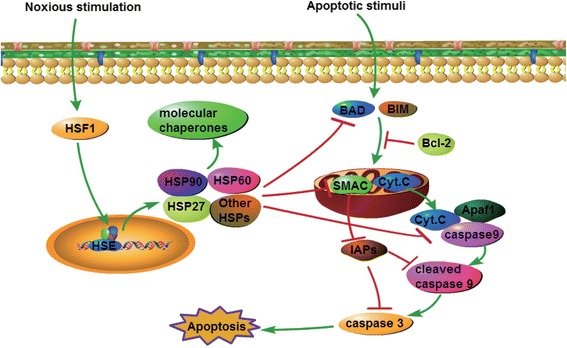
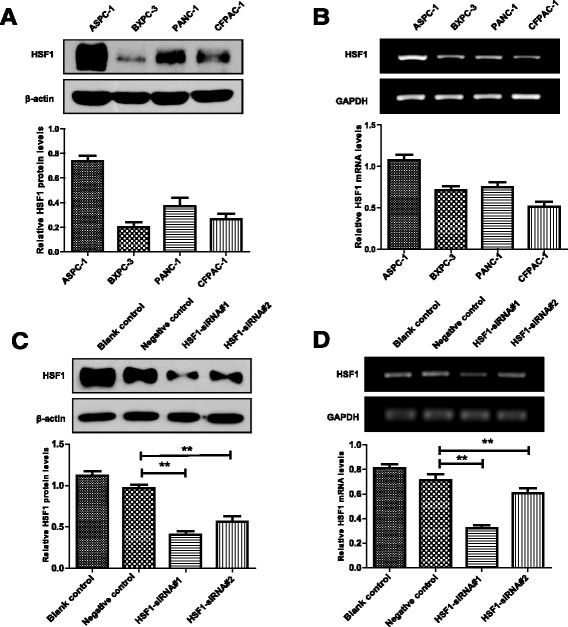
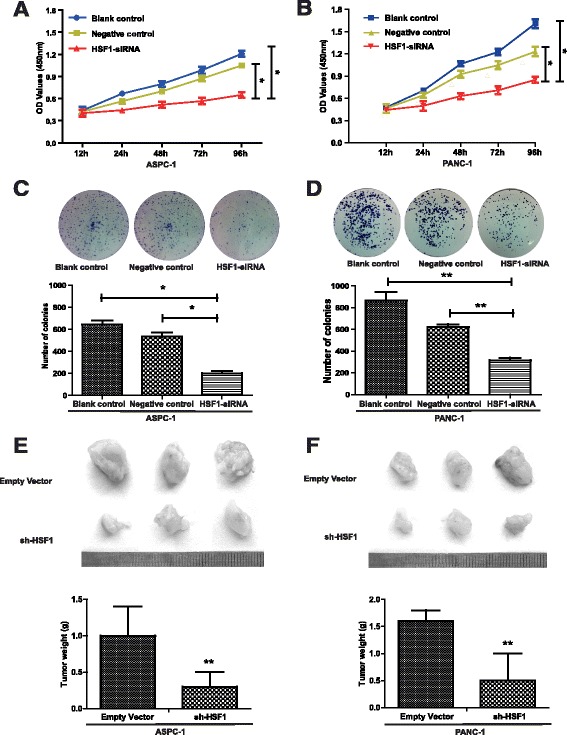
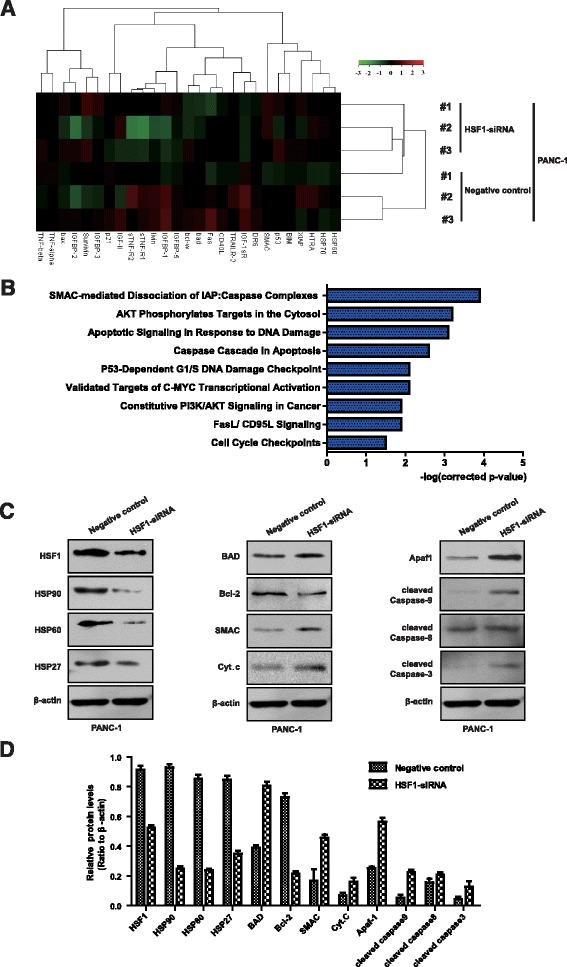
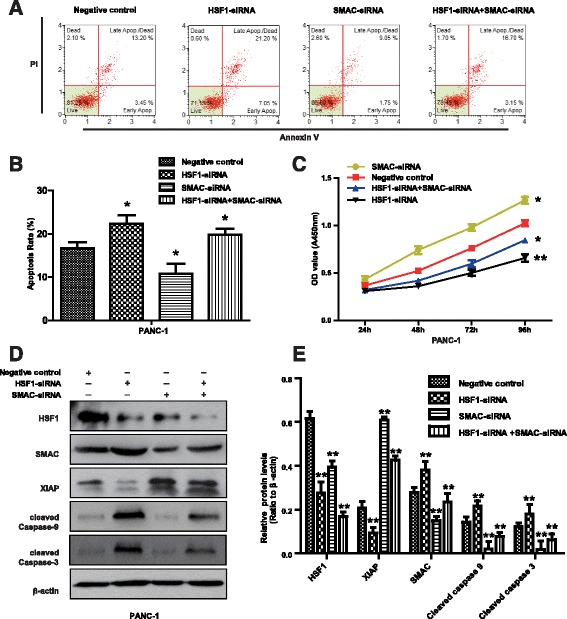
We first examined HSF1 expression in pancreatic cancer tissues by immunohistochemistry, and then studied its clinical significance. We then constructed HSF1-siRNA to investigate the potential of HSF1 to regulate apoptosis, proliferation and the cell cycle of pancreatic cancer cells and the underlying mechanism both in vitro and in vivo. Protein chip analysis was used subsequently to explore the molecular regulation pathway. Finally, second mitochondria-derived activator of caspase (SMAC)-siRNA was used to validate the signaling pathway.
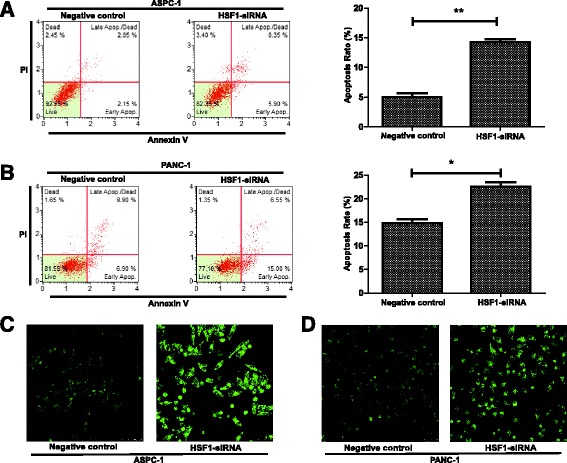
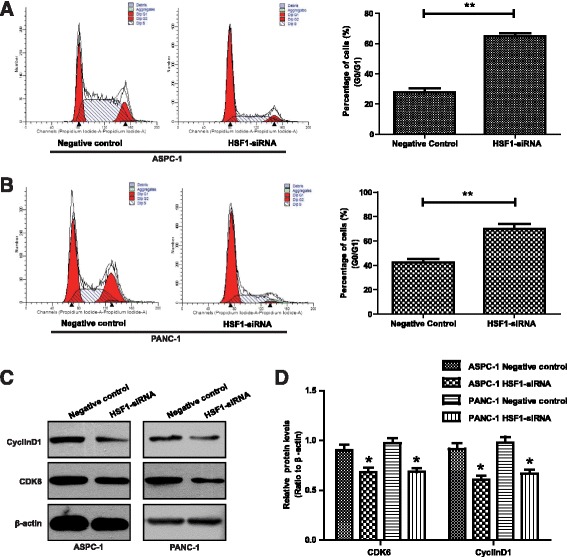
HSF1 was highly expressed in pancreatic cancer tissues and the level of upregulation was found to be closely related to the degree of pancreatic cancer differentiation and poor prognosis. After HSF1-silencing, we found that pancreatic cancer cell proliferation decreased both in vitro and in vivo and the apoptotic cell ratio increased, while the mitochondrial membrane potential decreased, and the cells were arrested at the G0/G1 phase. In terms of the molecular mechanism, we confirmed that HSF1 regulated SMAC to inhibit mitochondrial apoptosis in pancreatic cancer cells, and to promote the occurrence of pancreatic tumors. SMAC silencing reversed the effects of HSF1 silencing.
Our study provides evidence that HSF1 functions as a novel oncogene in pancreatic tumors and is implicated as a target for the diagnosis and treatment of pancreatic cancer.
热休克因子1(HSF1)作为生物进化中相对保守的转录调节因子,在多种应激条件下被激活,并调节热休克蛋白(HSPs)的表达。HSF1在多种肿瘤的发生发展中也起着关键作用;然而,其在胰腺癌中的作用及具体潜在机制尚不清楚。
我们首先通过免疫组化检测胰腺癌组织中HSF1的表达,进而研究其临床意义。随后构建HSF1-siRNA,在体外和体内研究HSF1对胰腺癌细胞凋亡、增殖及细胞周期的影响及其潜在机制。接着采用蛋白质芯片分析探索分子调控途径。最后,使用第二线粒体衍生的半胱天冬酶激活剂(SMAC)-siRNA验证信号通路。
HSF1在胰腺癌组织中高表达,其上调水平与胰腺癌分化程度及预后不良密切相关。沉默HSF1后,我们发现胰腺癌细胞在体外和体内的增殖均降低,凋亡细胞比例增加,同时线粒体膜电位降低,细胞停滞于G0/G1期。在分子机制方面,我们证实HSF1通过调节SMAC抑制胰腺癌细胞的线粒体凋亡,促进胰腺肿瘤的发生。沉默SMAC可逆转沉默HSF1的作用。
我们的研究表明,HSF1在胰腺肿瘤中作为一种新的癌基因发挥作用,有望成为胰腺癌诊断和治疗的靶点。