Lai Zih-Yin, Yeo Hsin-Yueh, Chen Ya-Tse, Chang Kuo-Ming, Chen Tze-Chien, Chuang Yung-Jen, Chang Shing-Jyh
Department of Medical Science and Institute of Bioinformatics and Structural Biology, National Tsing Hua University, Hsinchu, 30013, Taiwan (R.O.C.).
Department of Pathology, Hsinchu MacKay Memorial Hospital, Hsinchu, 30071, Taiwan (R.O.C.).
Oncotarget. 2017 Jul 11;8(28):45323-45334. doi: 10.18632/oncotarget.17335.
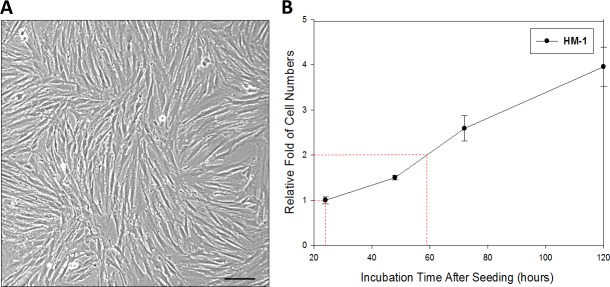
Neuroendocrine cervical carcinoma (NECC) is a rare and aggressive subtype of cervical cancer. To date, no NECC cell-based model is available, which hinders the development of new therapeutic strategies for NECC. In this study, we derived a new NECC cell line from an ex vivo biopsy and used it to explore novel drug combination approach for NECC.
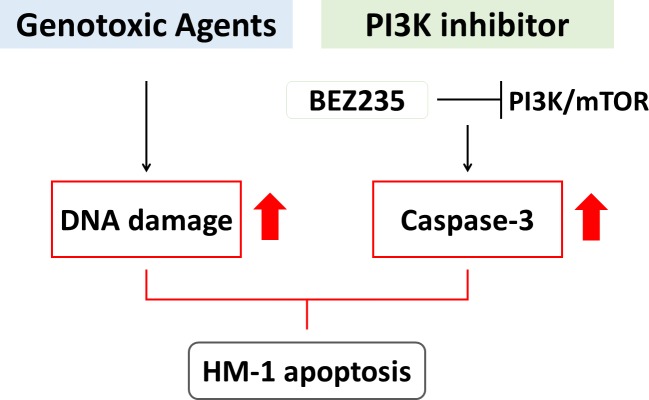
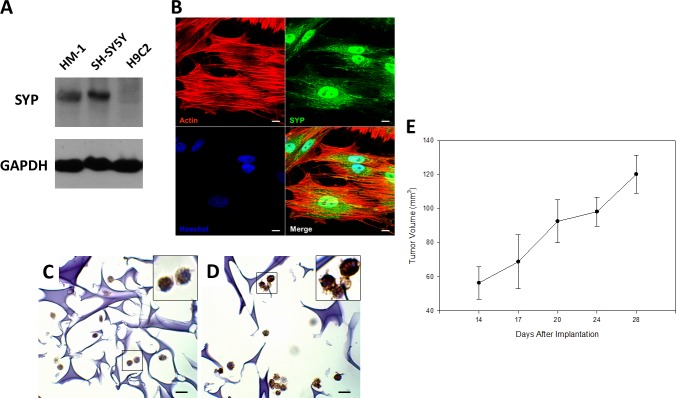
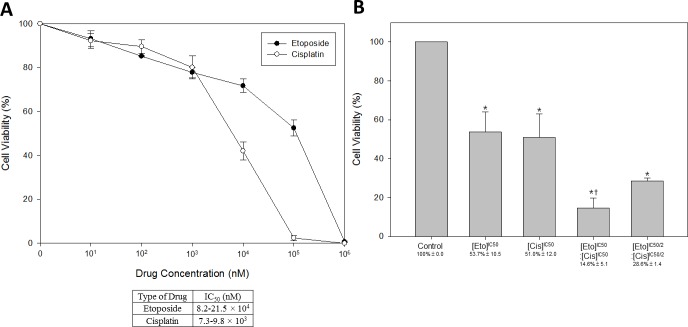
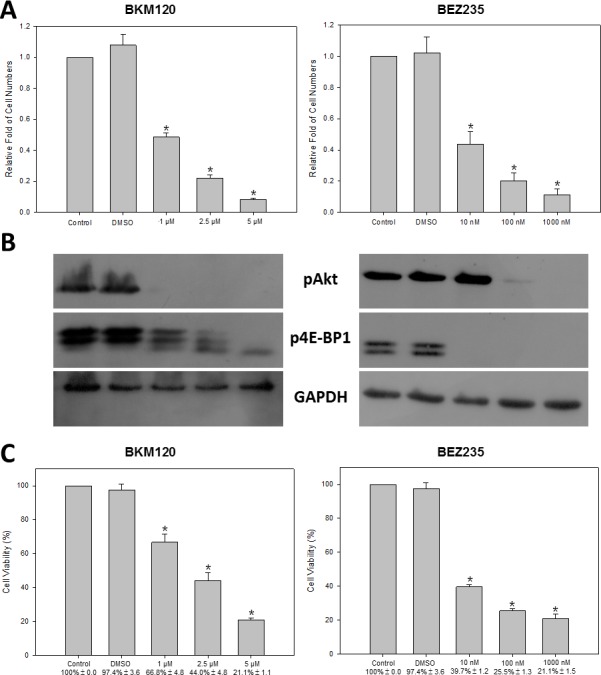
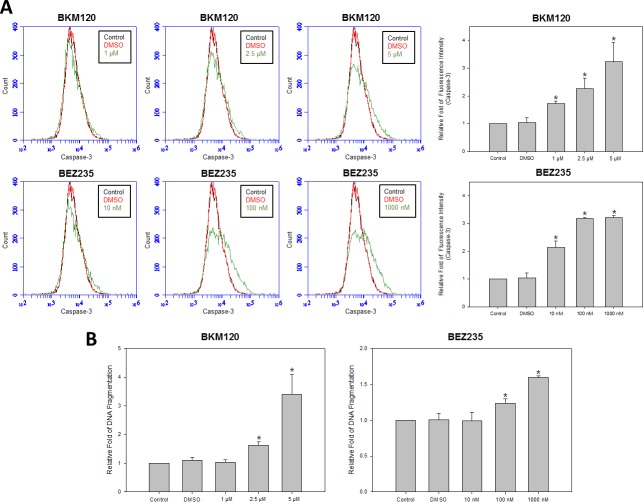
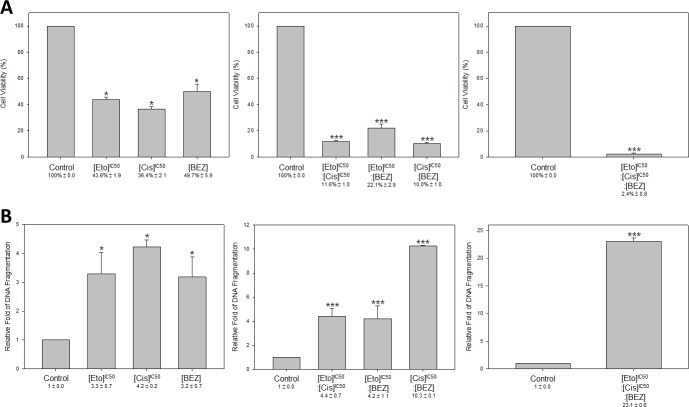
The stable HM-1 cell line displayed high expression levels of the neuroendocrine marker, synaptophysin. HM-1 cell transplantation could induce tumor growth in nude mice. As expected, the combination of etoposide and cisplatin synergistically inhibited HM-1 cell proliferation. Strikingly, when etoposide and cisplatin were combined with PI3K inhibitor BEZ235, the growth of HM-1 cells was significantly reduced. Taken together, the data implied the combination of etoposide and cisplatin with BEZ235 not only inhibited HM-1 cell proliferation but also increased cell apoptosis.
A NECC tissue sample from a 75-year-old female patient was processed to derive a primary cell line annotated as HM-1. The features of HM-1 were analyzed to establish its characteristic profile. Next, HM-1 was treated with PI3K inhibitors, BKM120 and/or BEZ235, in combination with two well-known genotoxic drugs, etoposide and/or cisplatin, to evaluate which combination could serve as a more effective treatment approach. Their inhibiting effects on HM-1 were evaluated by cell viability, apoptosis, and target kinase expression.
The newly established NECC cell line HM-1 could serve as a cell-based model for NECC research. The synergistic drug combination of PI3K inhibitor with genotoxic drugs might become a potential new treatment strategy against NECC.
神经内分泌宫颈癌(NECC)是一种罕见且侵袭性强的宫颈癌亚型。迄今为止,尚无基于NECC细胞的模型,这阻碍了NECC新治疗策略的开发。在本研究中,我们从离体活检中获得了一种新的NECC细胞系,并利用它探索NECC的新型联合用药方法。
稳定的HM-1细胞系显示神经内分泌标志物突触素的高表达水平。HM-1细胞移植可诱导裸鼠肿瘤生长。正如预期的那样,依托泊苷和顺铂联合使用可协同抑制HM-1细胞增殖。引人注目的是,当依托泊苷和顺铂与PI3K抑制剂BEZ235联合使用时,HM-1细胞的生长显著减少。综上所述,数据表明依托泊苷和顺铂与BEZ235联合使用不仅抑制HM-1细胞增殖,还增加细胞凋亡。
对一名75岁女性患者的NECC组织样本进行处理,以获得一个标注为HM-1的原代细胞系。分析HM-1的特征以建立其特征图谱。接下来,用PI3K抑制剂BKM120和/或BEZ235与两种著名的基因毒性药物依托泊苷和/或顺铂联合处理HM-1,以评估哪种联合用药可作为更有效的治疗方法。通过细胞活力、凋亡和靶激酶表达评估它们对HM-1的抑制作用。
新建立的NECC细胞系HM-1可作为NECC研究基于细胞的模型。PI3K抑制剂与基因毒性药物的协同联合用药可能成为对抗NECC的潜在新治疗策略。