Warren Brandon L, Suto Nobuyoshi, Hope Bruce T
Behavioral Neuroscience Branch, Intramural Research Program (IRP), National Institute on Drug Abuse (NIDA), National Institutes of Health (NIH), Department of Health and Human Services (DHHS)Baltimore, MD, USA.
Department of Molecular and Cellular Neuroscience, The Scripps Research InstituteLa Jolla, CA, USA.
Front Neural Circuits. 2017 Apr 24;11:28. doi: 10.3389/fncir.2017.00028. eCollection 2017.
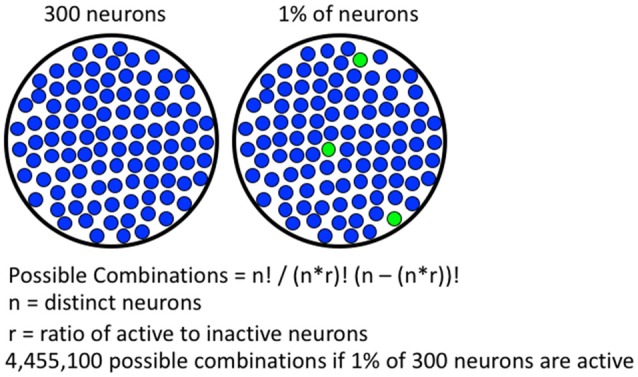
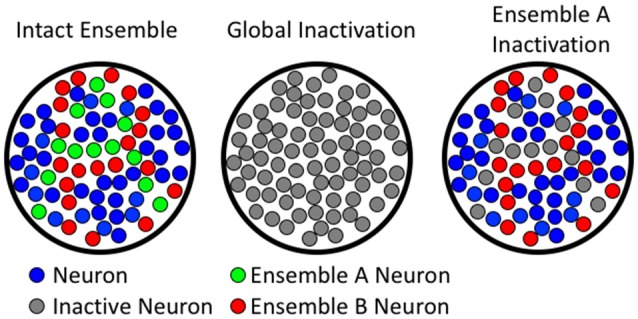
Many learned behaviors are directed by complex sets of highly specific stimuli or cues. The neural mechanisms mediating learned associations in these behaviors must be capable of storing complex cue information and distinguishing among different learned associations-we call this general concept "mechanistic resolution". For many years, our understanding of the circuitry of these learned behaviors has been based primarily on inactivation of specific cell types or whole brain areas regardless of which neurons were activated during the cue-specific behaviors. However, activation of all cells or specific cell types in a brain area do not have enough mechanistic resolution to encode or distinguish high-resolution learned associations in these behaviors. Instead, these learned associations are likely encoded within specific patterns of sparsely distributed neurons called neuronal ensembles that are selectively activated by the cues. This review article focuses on studies of neuronal ensembles in operant learned responding to obtain food or drug rewards. These studies suggest that the circuitry of operant learned behaviors may need to be re-examined using ensemble-specific manipulations that have the requisite level of mechanistic resolution.
许多习得行为是由复杂的高度特异性刺激或线索所引导的。介导这些行为中习得关联的神经机制必须能够存储复杂的线索信息,并区分不同的习得关联——我们将这个一般概念称为“机制分辨率”。多年来,我们对这些习得行为的神经回路的理解主要基于特定细胞类型或整个脑区的失活,而不管在线索特异性行为期间哪些神经元被激活。然而,脑区中所有细胞或特定细胞类型的激活并不具有足够的机制分辨率来编码或区分这些行为中的高分辨率习得关联。相反,这些习得关联可能编码在称为神经元集群的稀疏分布神经元的特定模式中,这些神经元集群由线索选择性激活。这篇综述文章聚焦于对操作性习得反应以获取食物或药物奖励中神经元集群的研究。这些研究表明,可能需要使用具有必要机制分辨率水平的集群特异性操作来重新审视操作性习得行为的神经回路。