Herron Jane E
Cardiff University Brain Research Imaging Centre (CUBRIC), School of Psychology, Cardiff University, Cardiff, CF24 4HQ, Wales, UK.
Cogn Affect Behav Neurosci. 2017 Aug;17(4):737-753. doi: 10.3758/s13415-017-0509-9.
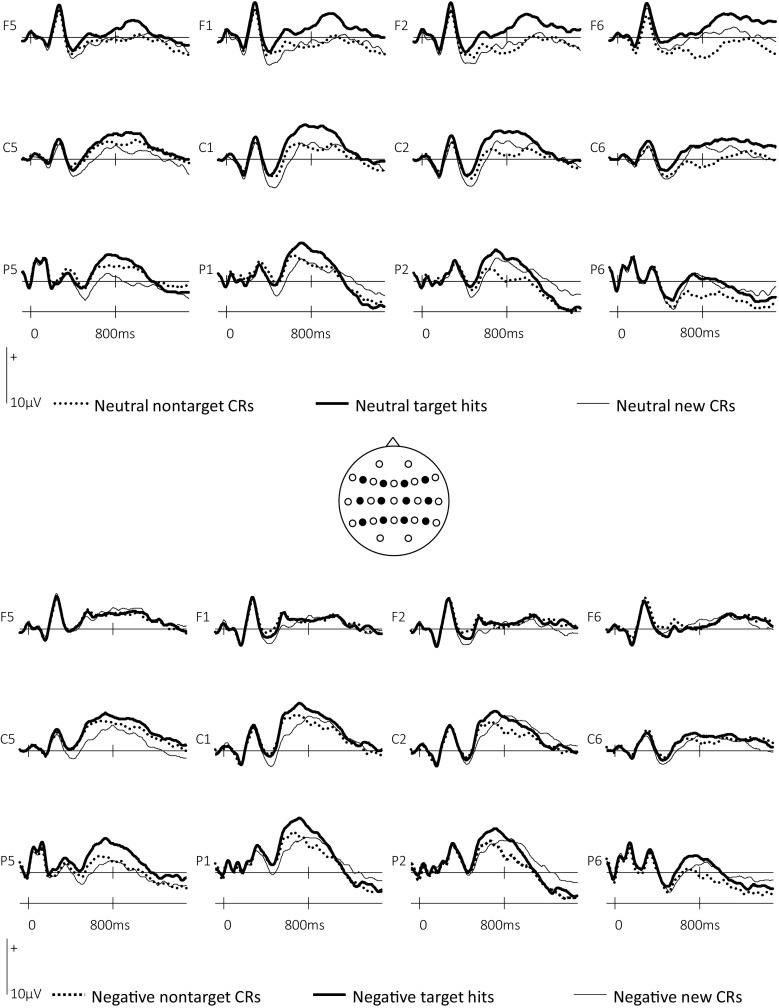
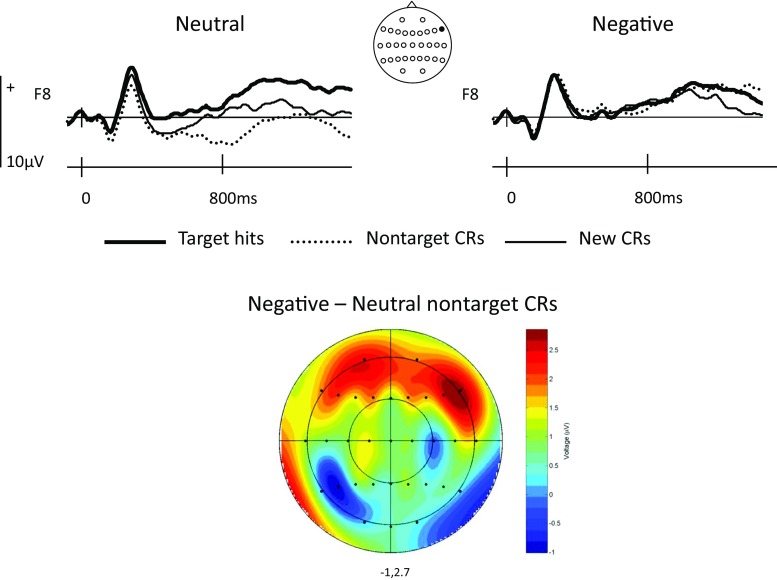
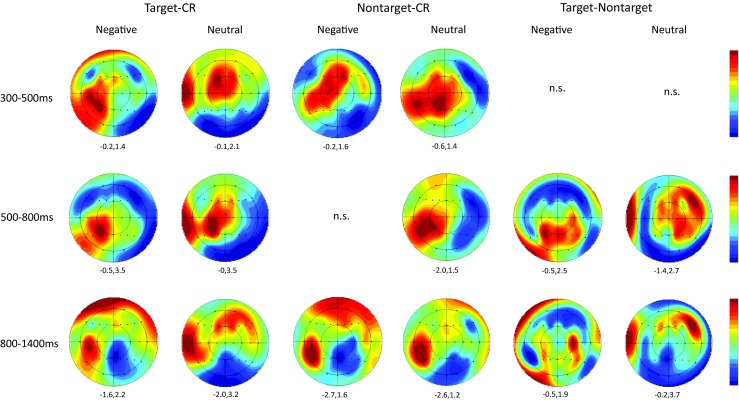
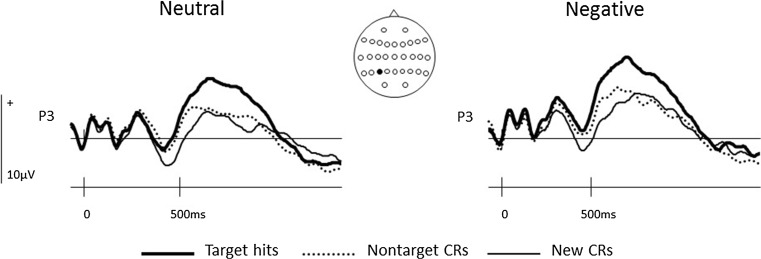
Neural evidence for the strategic retrieval of task-relevant 'target' memories at the expense of less relevant 'nontarget' memories has been demonstrated across a wide variety of studies. In ERP studies, this evidence consists of the ERP correlate of recollection (i.e. the 'left parietal old/new effect') being evident for targets and attenuated for nontargets. It is not yet known, however, whether this degree of strategic control can be extended to emotionally valenced words, or whether these items instead reactivate associated memories. The present study used a paradigm previously employed to demonstrate the strategic retrieval of neutral words (Herron & Rugg, Psychonomic Bulletin and & Review, 10(3), 703--710, 2003b) to assess the effects of stimulus valence on behavioural and event-related potential (ERP) measures of strategic retrieval. While response accuracy and reaction times associated with targets were unaffected by valence, negative nontargets and new items were both associated with an elevated false alarm rate and longer RTs than their neutral equivalents. Both neutral and negative targets and nontargets elicited early old/new effects between 300 and 500 ms. Critically, whereas neutral and negative targets elicited robust and statistically equivalent left parietal old/new effects between 500 and 800 ms, these were absent for neutral and negative nontargets. A right frontal positivity associated with postretrieval monitoring was evident for neutral targets versus nontargets, for negative versus neutral nontargets, and for targets versus new items. It can therefore be concluded that the recollection of negatively valenced words is subject to strategic control during retrieval, and that postretrieval monitoring processes are influenced by emotional valence.
在众多研究中都已证明,存在神经学证据表明,人们会策略性地检索与任务相关的“目标”记忆,而牺牲相关性较低的“非目标”记忆。在ERP研究中,这一证据表现为,回忆的ERP相关指标(即“左顶叶新旧效应”)在目标记忆中明显,而在非目标记忆中减弱。然而,目前尚不清楚这种策略控制程度是否能扩展到带有情感效价的词语,或者这些词语是否反而会重新激活相关记忆。本研究采用了一种先前用于证明中性词策略性检索的范式(赫伦和拉格,《心理onomic公报与评论》,10(3),703 - 710,2003b),以评估刺激效价对策略性检索的行为和事件相关电位(ERP)测量的影响。虽然与目标相关的反应准确性和反应时间不受效价影响,但与中性等价词相比,负性非目标词和新项目都与更高的误报率和更长的反应时间相关。中性和负性目标词与非目标词在300到500毫秒之间都引发了早期新旧效应。关键的是,虽然中性和负性目标词在500到800毫秒之间引发了强烈且在统计学上相当的左顶叶新旧效应,但中性和负性非目标词却没有。对于中性目标词与非目标词、负性与中性非目标词以及目标词与新项目,与检索后监测相关的右额叶正波很明显。因此可以得出结论,在检索过程中,负性效价词语的回忆受到策略控制,并且检索后监测过程受到情感效价的影响。