Guadagni Stefano, Fiorentini Giammaria, Clementi Marco, Palumbo Giancarlo, Masedu Francesco, Deraco Marcello, De Manzoni Giovanni, Chiominto Alessandro, Valenti Marco, Pellegrini Cristina
Departments of aApplied Clinical Sciences and Biotechnology bLife, Health and Environmental Sciences, University of L'Aquila cDepartment of Pathology, S. Salvatore Hospital, L'Aquila dDepartment of Oncology and Hematology, Azienda Ospedaliera 'Ospedali Riuniti Marche Nord', Pesaro eIstituto Tumori Milano, Milano fDepartment of Surgical Sciences, University of Verona, Verona, Italy.
Melanoma Res. 2017 Oct;27(5):439-447. doi: 10.1097/CMR.0000000000000367.
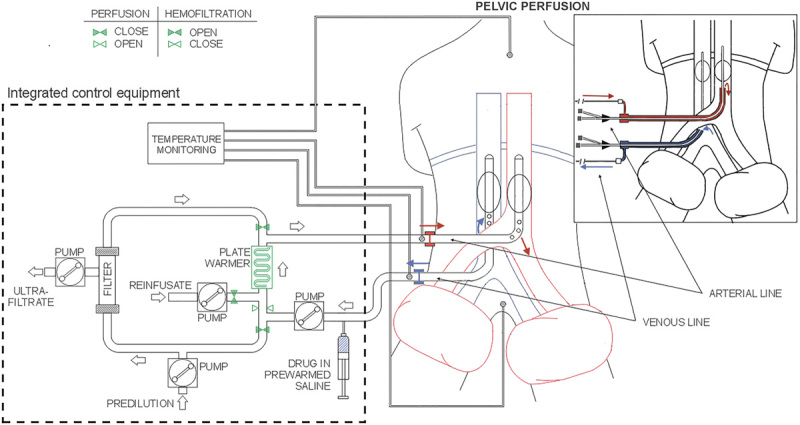
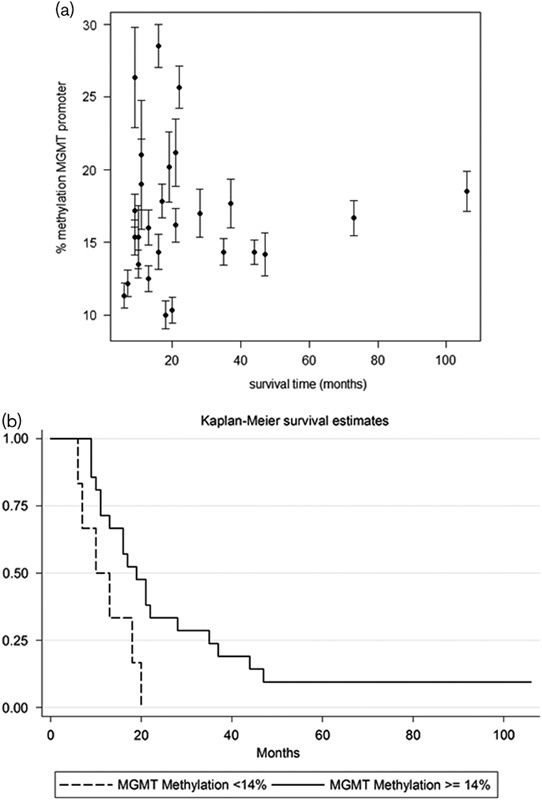
Approximately 25% of melanoma patients with locoregional metastases are nonresponsive to new molecular target therapy and immunotherapy. When metastases are located in the pelvis, melphalan hypoxic perfusion can be an optional treatment. Because methylation of MGMT promoter increases the efficacy of alkylating agents, studies on melanoma outcome of patients treated with melphalan regional chemotherapy should consider this epigenetic change. This study aims to evaluate whether the survival of stage III melanoma patients treated with melphalan regional chemotherapy may be correlated with MGMT methylation status. The metastatic tissues of 27 stage III melanoma patients with locoregional metastases located in the pelvis subjected to melphalan hypoxic pelvic perfusion were examined. The methylation status of the MGMT promoter was investigated by MS-MLPA probes analysis and the presence of the BRAF V600E mutation was analyzed by CAST-PCR. The median survival times were estimated using the Kaplan-Meier curves and were stratified according to the clinicopathological characteristics of patients and lesions. The overall median survival time was 17 months. The 1-year, 3-year, and 5-year survival rates were 66.7, 18.5, and 7.4%, respectively. Disease stage, burden, and percentage of MGMT methylation significantly affected survival. We estimated an MGMT promoter methylation cut-off of at least 14%, which was significantly associated with a longer survival after melphalan regional chemotherapy. Our data suggest that MGMT promoter methylation could be an important factor in determining which melanoma patients should receive melphalan regional chemotherapy, but its prognostic significance in the routine clinical setting needs to be clarified in a larger study.
大约25%的局部区域转移黑色素瘤患者对新的分子靶向治疗和免疫治疗无反应。当转移灶位于骨盆时,美法仑低氧灌注可作为一种选择治疗方法。由于MGMT启动子甲基化可提高烷化剂的疗效,因此关于接受美法仑区域化疗的黑色素瘤患者预后的研究应考虑这种表观遗传变化。本研究旨在评估接受美法仑区域化疗的III期黑色素瘤患者的生存是否可能与MGMT甲基化状态相关。对27例接受美法仑低氧盆腔灌注、局部区域转移位于骨盆的III期黑色素瘤患者的转移组织进行了检查。通过MS-MLPA探针分析研究MGMT启动子的甲基化状态,并通过CAST-PCR分析BRAF V600E突变的存在情况。使用Kaplan-Meier曲线估计中位生存时间,并根据患者和病变的临床病理特征进行分层。总体中位生存时间为17个月。1年、3年和5年生存率分别为66.7%、18.5%和7.4%。疾病分期、负荷和MGMT甲基化百分比显著影响生存。我们估计MGMT启动子甲基化临界值至少为14%,这与美法仑区域化疗后更长的生存期显著相关。我们的数据表明,MGMT启动子甲基化可能是决定哪些黑色素瘤患者应接受美法仑区域化疗的一个重要因素,但其在常规临床环境中的预后意义需要在更大规模的研究中加以阐明。