van der Wardt Veronika, Harrison Jennifer K, Welsh Tomas, Conroy Simon, Gladman John
aDivision of Rehabilitation and Ageing, School of Medicine, University of Nottingham, Nottingham bCentre for Cognitive Ageing and Cognitive Epidemiology & The Alzheimer Scotland Dementia Research Centre, Royal Infirmary of Edinburgh, Edinburgh cRICE (Research Institute for the Care of Older People), Royal United Hospital, Bath dDepartment of Health Sciences, University of Leicester, Leicester, United Kingdom.
J Hypertens. 2017 Sep;35(9):1742-1749. doi: 10.1097/HJH.0000000000001405.
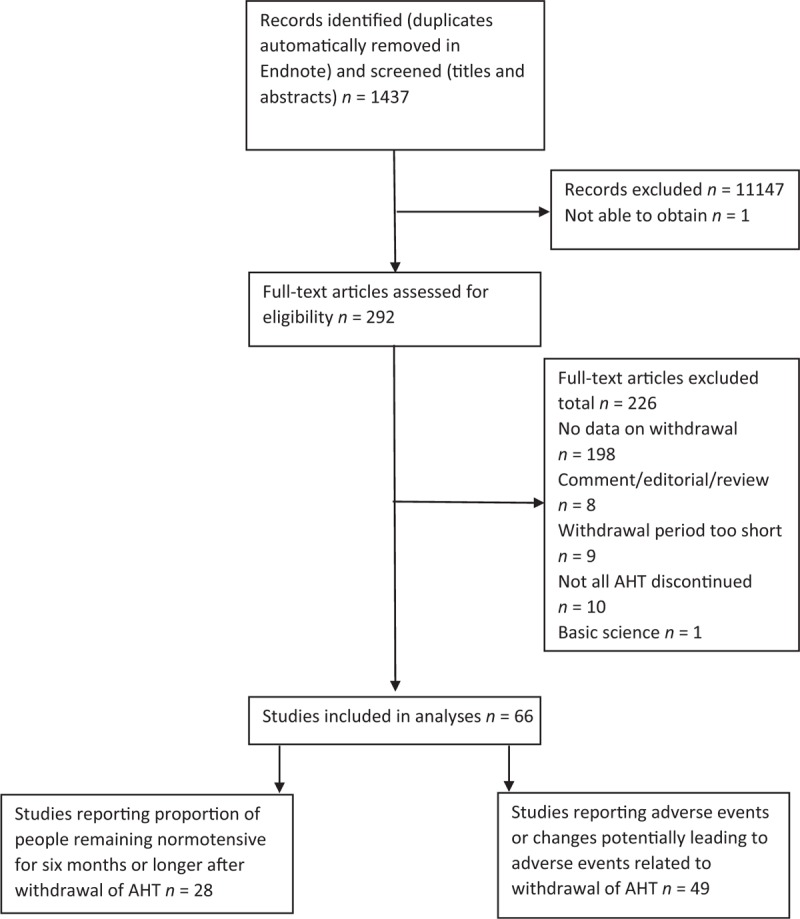
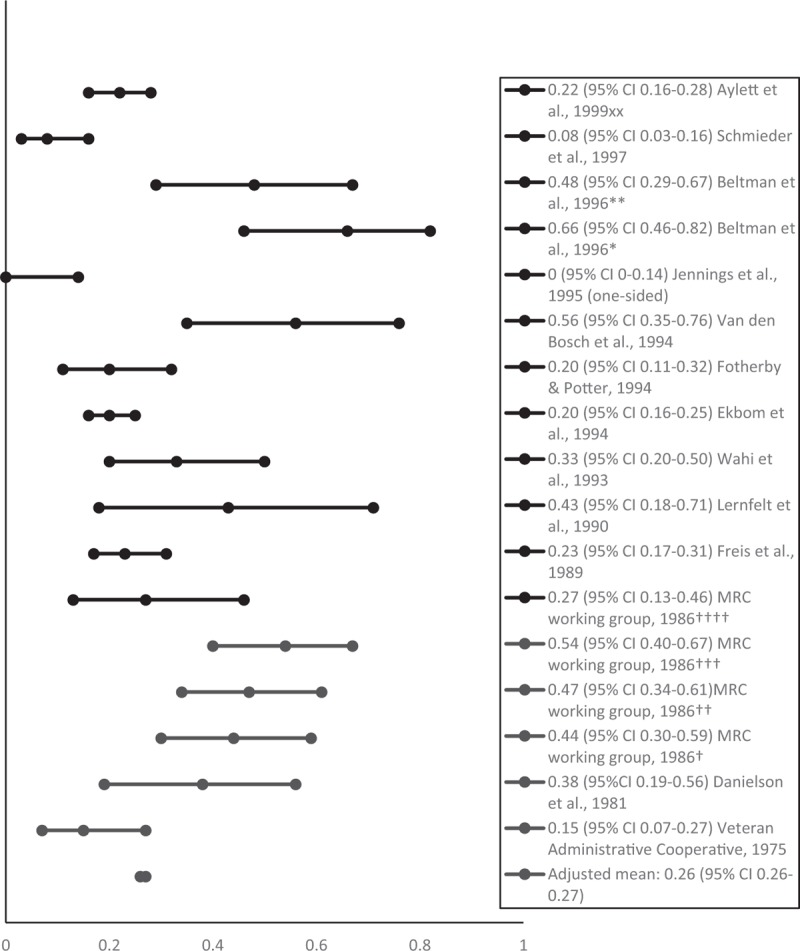
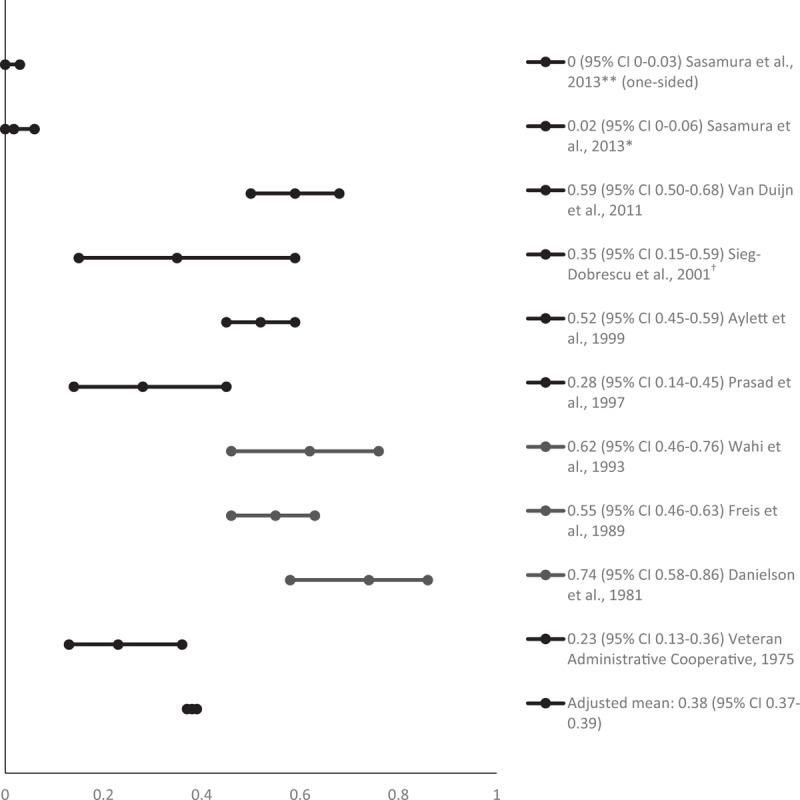
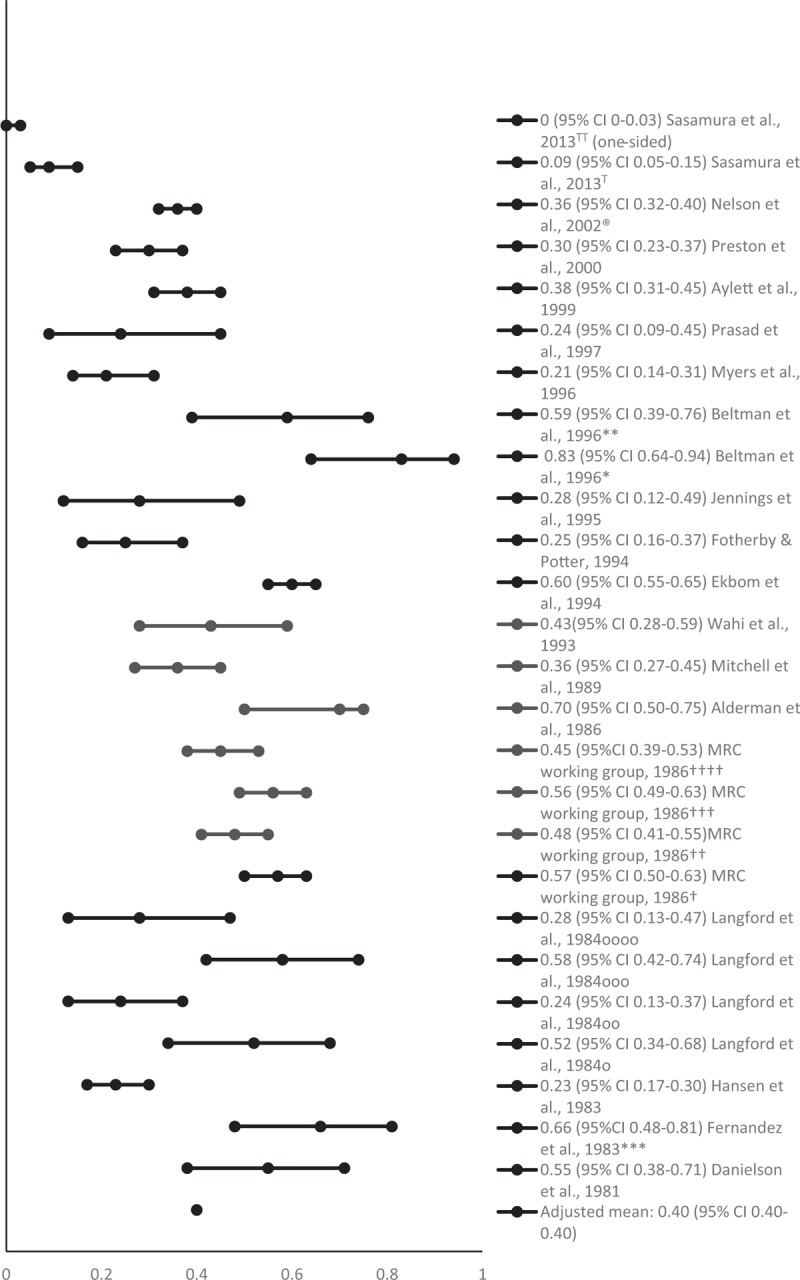
: Although antihypertensive medication is usually continued indefinitely, observations during wash-out phases in hypertension trials have shown that withdrawal of antihypertensive medication might be well tolerated to do in a considerable proportion of people. A systematic review was completed to determine the proportion of people remaining normotensive for 6 months or longer after cessation of antihypertensive therapy and to investigate the safety of withdrawal. The mean proportion adjusted for sample size of people remaining below each study's threshold for hypertension treatment was 0.38 at 6 months [95% confidence interval (CI) 0.37-0.49; 912 participants], 0.40 at 1 year (95% CI 0.40-0.40; 2640 participants) and 0.26 at 2 years or longer (95% CI 0.26-0.27; 1262 participants). Monotherapy, lower blood pressure before withdrawal and body weight were reported as predictors for successful withdrawal. Adverse events were more common in those who withdrew but were minor and included headache, joint pain, palpitations, oedema and a general feeling of being unwell. Prescribers should consider offering patients with well controlled hypertension a trial of withdrawal of antihypertensive treatment with subsequent regular blood pressure monitoring.
虽然抗高血压药物通常需无限期持续服用,但高血压试验洗脱期的观察表明,相当一部分人停用抗高血压药物后耐受性良好。本研究进行了一项系统评价,以确定停止抗高血压治疗后血压正常6个月或更长时间的人群比例,并调查停药的安全性。按样本量调整后,6个月时血压仍低于各研究高血压治疗阈值的人群平均比例为0.38(95%置信区间[CI]0.37 - 0.49;912名参与者),1年时为0.40(95%CI 0.40 - 0.40;2640名参与者),2年或更长时间时为0.26(95%CI 0.26 - 0.27;1262名参与者)。单药治疗、停药前血压较低和体重被报告为成功停药的预测因素。停药者不良事件更常见,但较轻微,包括头痛、关节痛、心悸、水肿和全身不适。处方医生应考虑为血压控制良好的患者提供停用抗高血压治疗的试验,并随后定期监测血压。