Fitzpatrick Christopher J, Morrow Jonathan D
Neuroscience Graduate Program, University of Michigan, 204 Washtenaw Ave, Ann Arbor, MI 48109, USA.
Neuroscience Graduate Program, University of Michigan, 204 Washtenaw Ave, Ann Arbor, MI 48109, USA; Department of Psychiatry, University of Michigan, 4250 Plymouth Rd, Ann Arbor, MI 48109, USA.
Brain Behav Immun. 2017 Oct;65:222-229. doi: 10.1016/j.bbi.2017.05.003. Epub 2017 May 6.
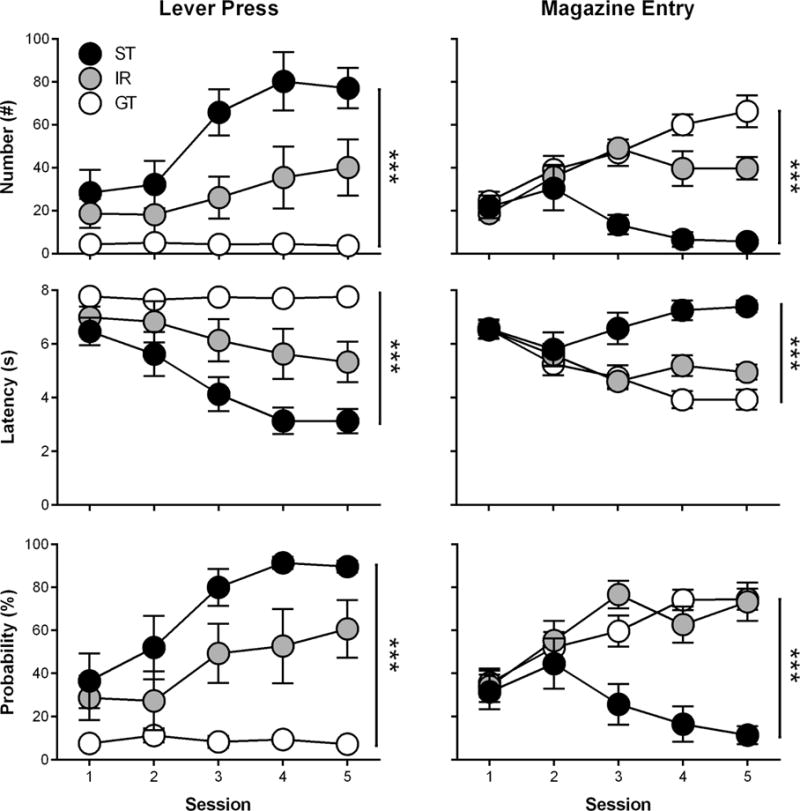
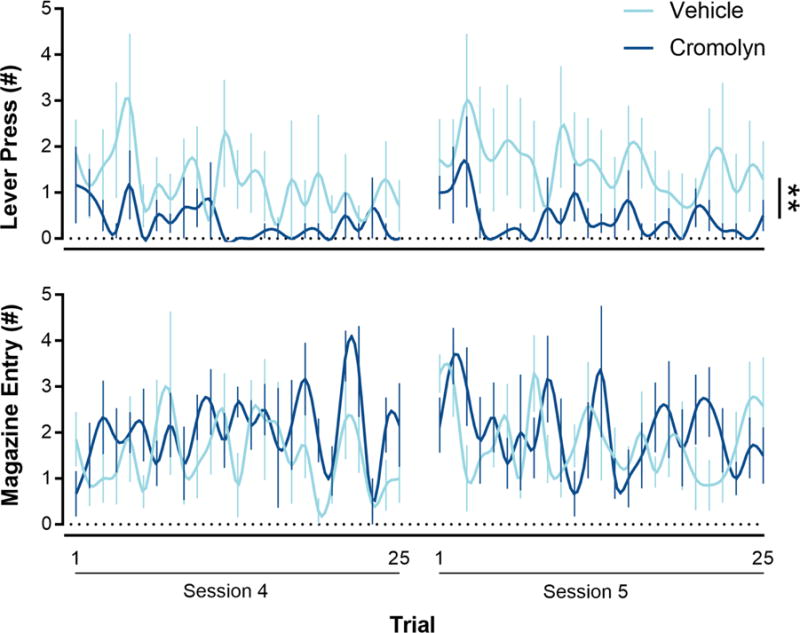
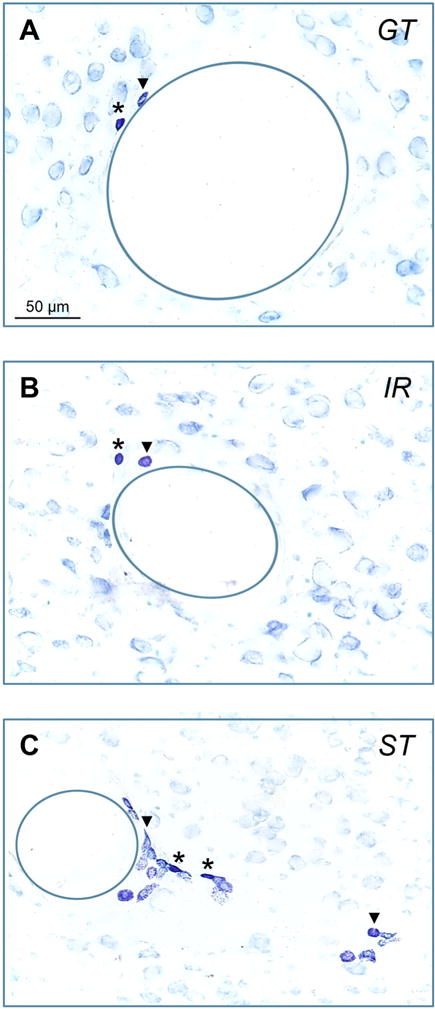
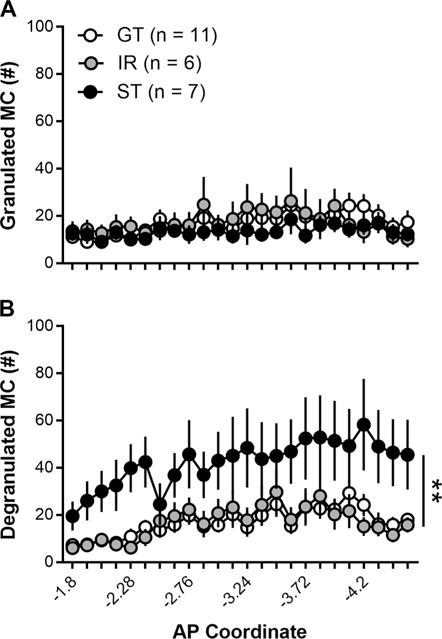
Mast cells are resident immune cells in the thalamus that can degranulate and release hundreds of signaling molecules (i.e., monoamines, growth factors, and cytokines) both basally and in response to environmental stimuli. Interestingly, mast cell numbers in the brain show immense individual variation in both rodents and humans. We used a Pavlovian conditioned approach (PCA) procedure to examine whether mast cells are associated with individual variation in the attribution of incentive-motivational value to reward-related cues. During the PCA procedure, a lever response-independently predicts the delivery of a food pellet into a magazine, and over training sessions three conditioned responses (CRs) develop: sign-tracking (lever-directed CRs), goal-tracking (magazine-directed CRs), and an intermediate response (both CRs). In Experiment 1, we measured thalamic mast cell number/activation using toluidine blue and demonstrated that sign-trackers have increased degranulated (activated) but not granulated (inactive) mast cells. In Experiment 2, we infused the mast cell inhibitor, cromolyn (200µg/rat; i.c.v.), immediately before five daily PCA training sessions and demonstrated that mast cell inhibition selectively impairs the acquisition of sign-tracking behavior. Taken together, these results demonstrate that thalamic mast cells contribute to the attribution of incentive-motivational value to reward-related cues and suggest that mast cell inhibition may be a novel target for addiction treatment.
肥大细胞是丘脑内的常驻免疫细胞,其既能在基础状态下,也能在对环境刺激作出反应时脱颗粒并释放数百种信号分子(即单胺、生长因子和细胞因子)。有趣的是,大脑中的肥大细胞数量在啮齿动物和人类中均表现出极大的个体差异。我们采用经典条件反射法(PCA)来研究肥大细胞是否与奖励相关线索的动机激励价值归因中的个体差异有关。在PCA过程中,杠杆反应独立预测食物颗粒投递至食盒,经过多次训练会形成三种条件反应(CRs):信号追踪(指向杠杆的CRs)、目标追踪(指向食盒的CRs)以及中间反应(两种CRs都有)。在实验1中,我们用甲苯胺蓝测量丘脑肥大细胞数量/激活情况,结果表明信号追踪者的脱颗粒(激活)肥大细胞增加,但颗粒化(未激活)肥大细胞未增加。在实验2中,我们在每日5次PCA训练前立即注射肥大细胞抑制剂色甘酸钠(200µg/大鼠;脑室内注射),结果表明抑制肥大细胞会选择性损害信号追踪行为的习得。综上所述,这些结果表明丘脑肥大细胞有助于奖励相关线索的动机激励价值归因,并提示抑制肥大细胞可能是成瘾治疗的一个新靶点。