Tytgat Institute for Liver and Intestinal Research & Department of Gastroenterology and Hepatology, Academic Medical Center, University of Amsterdam, Amsterdam, The Netherlands.
Sci Rep. 2017 May 10;7(1):1646. doi: 10.1038/s41598-017-01602-w.
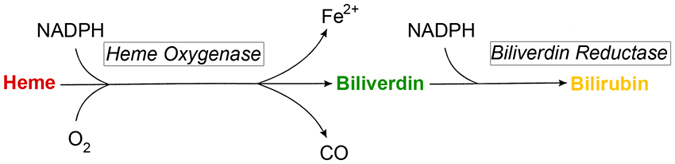
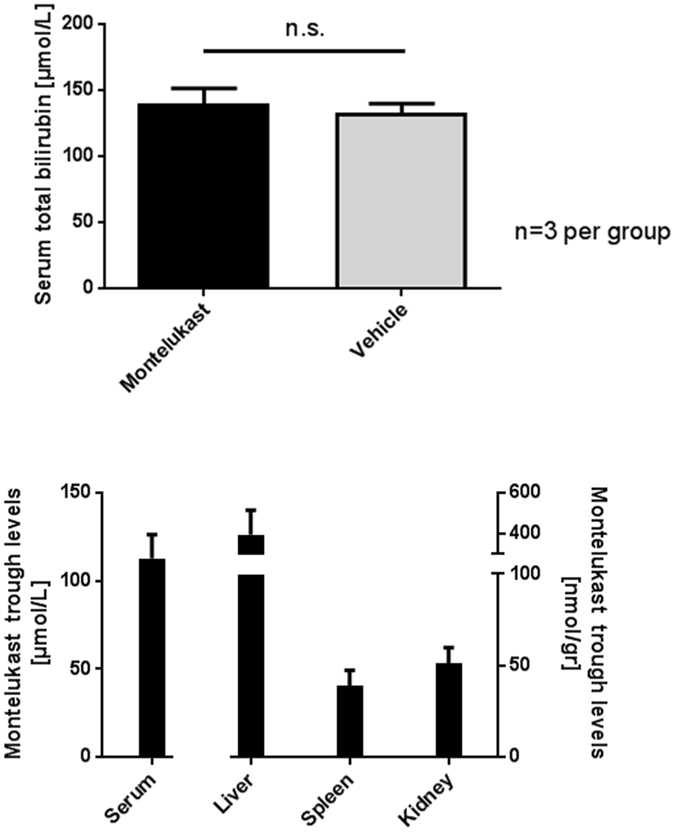
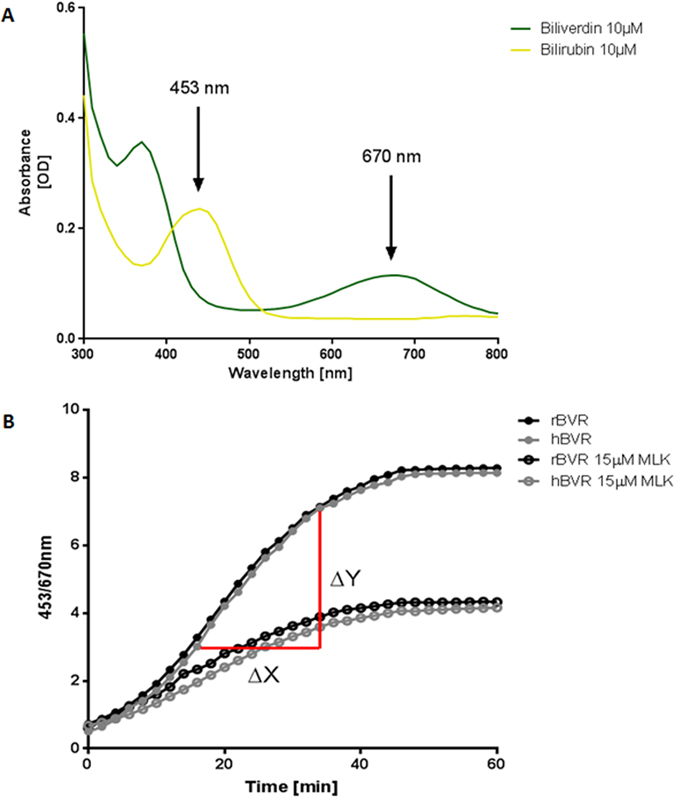
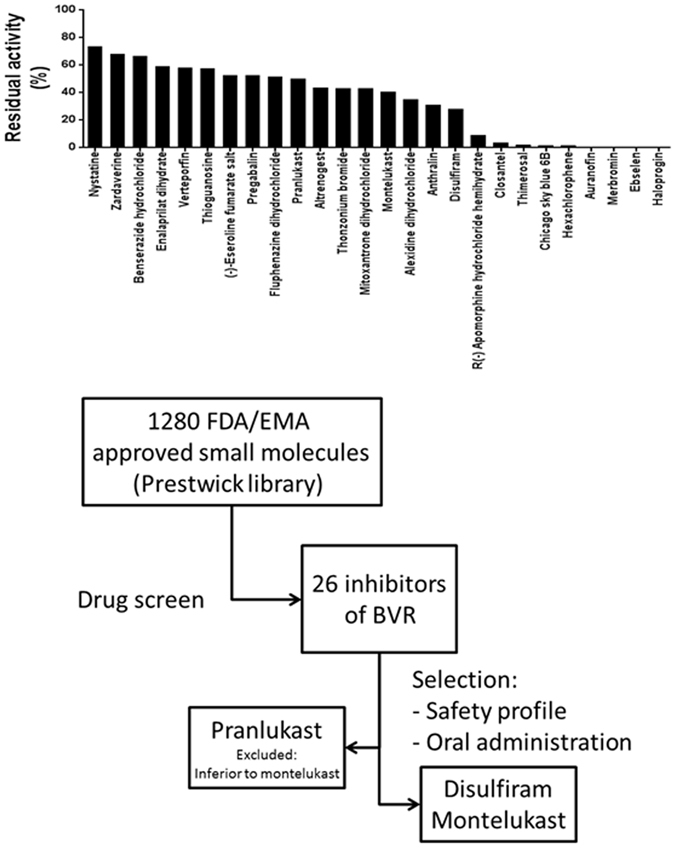
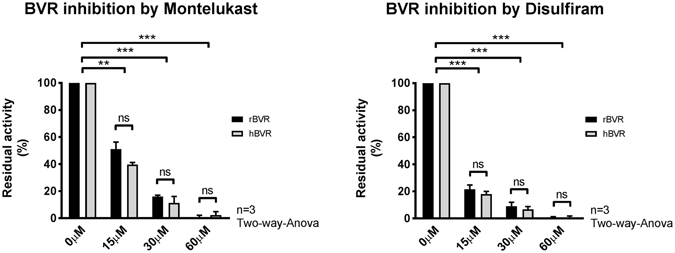
We aimed to identify potent biliverdin reductase (BVRA) inhibitors as a novel concept for the treatment of severe unconjugated hyperbilirubinemia. 1280 FDA-approved compounds were screened in vitro for their ability to inhibit human and rat BVRA activity and 26 compounds were identified as BVRA inhibitors. Montelukast and Disulfiram were selected as potentially clinically applicable drugs and tested to reduce serum unconjugated bilirubin (UCB) levels in the Ugt1a1-deficient rat, a model for chronic unconjugated hyperbilirubinemia. Oral administration of Disulfiram was toxic in the Ugt1a1-deficient rat (weight loss, transaminase elevation). Oral Montelukast administration led to low serum concentrations and did not alter serum UCB levels. Intraperitoneal injections of Montelukast resulted in concentrations up to 110 μmol/L in serum and 400 μmol/L in the liver. Still, serum UCB levels remained unaltered. This first study on biliverdin reductase inhibition as a novel concept for treatment of unconjugated hyperbilirubinemia identified putative in vitro BVRA inhibitors. Montelukast, the clinically most suitable inhibitor, did not result in reduction of serum UCB in the Ugt1a1-deficient rat. The proposed treatment strategy will not result in amelioration of severe unconjugated hyperbilirubinemia in humans without the identification or development of more potent BVRA inhibitors.
我们旨在寻找有效的胆红素还原酶(BVRA)抑制剂,作为治疗严重非结合高胆红素血症的一种新方法。我们筛选了 1280 种经 FDA 批准的化合物,以评估它们抑制人源和大鼠源 BVRA 活性的能力,发现其中 26 种化合物具有抑制作用。孟鲁司特和双硫仑被选为具有潜在临床应用价值的药物,并在 Ugt1a1 缺陷大鼠模型中(慢性非结合高胆红素血症模型)进行了测试,以降低血清中非结合胆红素(UCB)水平。双硫仑在 Ugt1a1 缺陷大鼠中的口服给药具有毒性(体重减轻、转氨酶升高)。孟鲁司特的口服给药导致血清浓度较低,且不能改变血清 UCB 水平。孟鲁司特的腹腔内注射可使血清浓度达到 110μmol/L,肝脏浓度达到 400μmol/L,但血清 UCB 水平仍未改变。这是第一项关于胆红素还原酶抑制作为治疗非结合高胆红素血症新方法的研究,鉴定了潜在的体外 BVRA 抑制剂。孟鲁司特是最具临床应用前景的抑制剂,但在 Ugt1a1 缺陷大鼠中并未降低血清 UCB 水平。如果没有发现或开发出更有效的 BVRA 抑制剂,那么这种治疗策略将无法改善人类严重的非结合高胆红素血症。