Department of Surgery, Cancer Research Institute and Transplant Institute, Beth Israel Deaconess Medical Center and Harvard Medical School, Boston, MA, United States.
Brain Tumor Center and Neuro-Oncology Unit, Beth Israel Deaconess Medical Center, Boston, MA, United States.
Front Immunol. 2020 Jan 31;11:66. doi: 10.3389/fimmu.2020.00066. eCollection 2020.
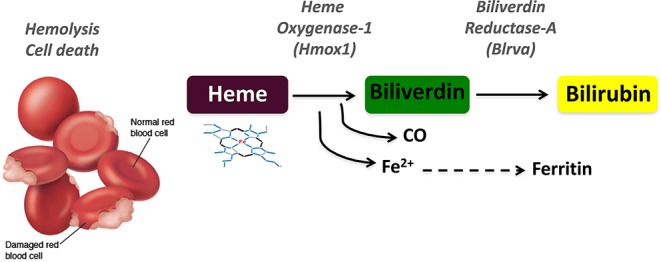
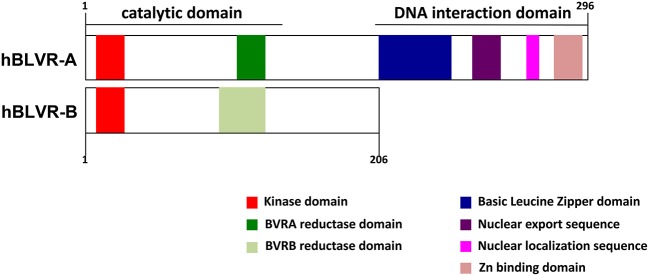
Heme is one of the most abundant molecules in the body acting as the functional core of hemoglobin/myoglobin involved in the O/CO carrying in the blood and tissues, redox enzymes and cytochromes in mitochondria. However, free heme is toxic and therefore its removal is a significant priority for the host. Heme is a well-established danger-associated molecular pattern (DAMP), which binds to toll-like receptor 4 (TLR4) to induce immune responses. Heme-derived metabolites including the bile pigments, biliverdin (BV) and bilirubin (BR), were first identified as toxic drivers of neonatal jaundice in 1800 but have only recently been appreciated as endogenous drivers of multiple signaling pathways involved in protection from oxidative stress and regulators of immune responses. The tissue concentration of heme, BV and BR is tightly controlled. Heme oxygenase-1 (HO-1, encoded by ) produces BV by heme degradation, while biliverdin reductase-A (BLVR-A) generates BR by the subsequent conversion of BV. BLVR-A is a fascinating protein that possesses a classical protein kinase domain, which is activated in response to BV binding to its enzymatic site and initiates the downstream mitogen-activated protein kinases (MAPK) and phosphatidylinositol 3-kinase (PI3K) pathways. This links BLVR-A activity to cell growth and survival pathways. BLVR-A also contains a bZip DNA binding domain and a nuclear export sequence (NES) and acts as a transcription factor to regulate the expression of immune modulatory genes. Here we will discuss the role of heme-related immune response and the potential for targeting the heme system for therapies directed toward hepatitis and cancer.
血红素是体内含量最丰富的分子之一,作为血红蛋白/肌红蛋白的功能核心,参与血液和组织中的 O/CO 携带、线粒体中的氧化还原酶和细胞色素。然而,游离血红素是有毒的,因此去除它是宿主的重要优先事项。血红素是一种成熟的危险相关分子模式(DAMP),它与 Toll 样受体 4(TLR4)结合,诱导免疫反应。血红素衍生的代谢物,包括胆色素胆红素(BV)和胆红素(BR),于 1800 年首次被确定为新生儿黄疸的毒性驱动因素,但直到最近才被认为是参与氧化应激保护和免疫反应调节剂的多种信号通路的内源性驱动因素。血红素、BV 和 BR 的组织浓度受到严格控制。血红素加氧酶-1(HO-1,由 编码)通过血红素降解产生 BV,而胆红素还原酶-A(BLVR-A)通过随后将 BV 转化生成 BR。BLVR-A 是一种迷人的蛋白质,具有经典的蛋白激酶结构域,该结构域在 BV 结合其酶活性部位时被激活,并启动下游丝裂原活化蛋白激酶(MAPK)和磷脂酰肌醇 3-激酶(PI3K)途径。这将 BLVR-A 活性与细胞生长和存活途径联系起来。BLVR-A 还包含一个 bZip DNA 结合结构域和一个核输出序列(NES),并作为转录因子调节免疫调节基因的表达。在这里,我们将讨论血红素相关免疫反应的作用以及针对血红素系统进行靶向治疗的潜力,以针对肝炎和癌症。