Nanyang Technological University, 50 Nanyang Ave, Singapore, 639798, Singapore.
Bournemouth University, Fern Barrow, Poole, BH12 5BB, UK.
Sci Rep. 2017 May 10;7(1):1683. doi: 10.1038/s41598-017-01917-8.
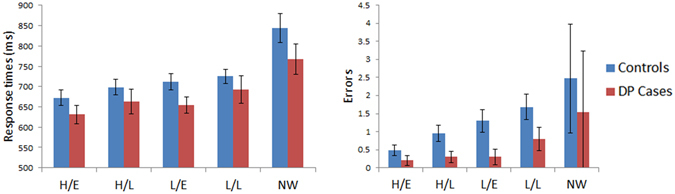
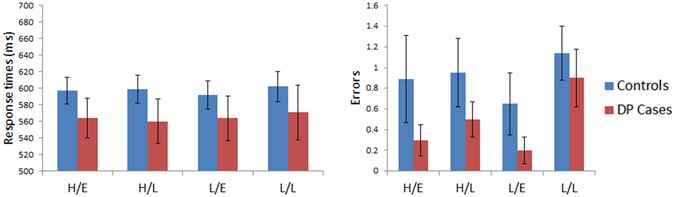
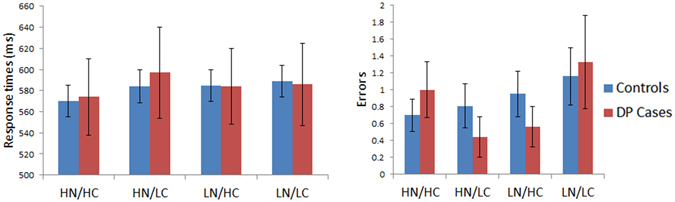
A wealth of evidence from behavioural, neuropsychological and neuroimaging research supports the view that face recognition is reliant upon a domain-specific network that does not process words. In contrast, the recent many-to-many model of visual recognition posits that brain areas involved in word and face recognition are functionally integrated. Developmental prosopagnosia (DP) is characterised by severe deficits in the recognition of faces, which the many-to-many model predicts should negatively affect word recognition. Alternatively, domain-specific accounts suggest that impairments in face and word processing need not go hand in hand. To test these possibilities, we ran a battery of 7 tasks examining word processing in a group of DP cases and controls. One of our prosopagnosia cases exhibited a severe reading impairment with delayed response times during reading aloud tasks, but not lexical decision tasks. Overall, however, we found no evidence of global word processing deficits in DP, consistent with a dissociation account for face and word processing.
大量来自行为、神经心理学和神经影像学研究的证据支持这样一种观点,即人脸识别依赖于一个不处理单词的特定领域的网络。相比之下,最近的视觉识别多对多模型则假定参与单词和人脸识别的大脑区域在功能上是整合的。发展性面孔失认症(DP)的特征是严重的面孔识别缺陷,多对多模型预测这会对面词识别产生负面影响。或者,特定领域的解释表明,面孔和单词处理的损伤不一定同时发生。为了验证这些可能性,我们进行了一系列 7 项任务的测试,检查了一组 DP 病例和对照组的单词处理能力。我们的一个面孔失认症病例在朗读任务中表现出严重的阅读障碍,反应时间延迟,但在词汇判断任务中则没有。然而,总的来说,我们在 DP 中没有发现单词处理整体缺陷的证据,这与面孔和单词处理的分离解释一致。