Maw Katherine Jane, Beattie Geoffrey, Burns Edwin
Edge Hill University, Ormskirk, UK.
Swansea University, Swansea, UK.
Q J Exp Psychol (Hove). 2024 Aug 13;78(8):17470218241275977. doi: 10.1177/17470218241275977.
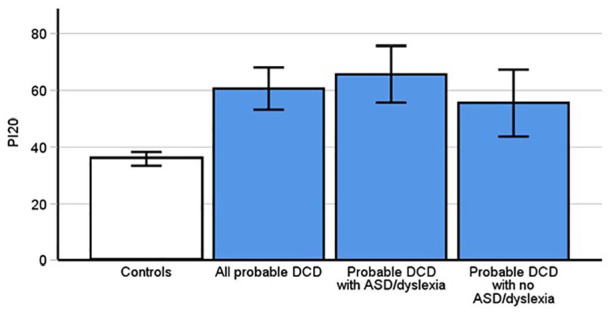
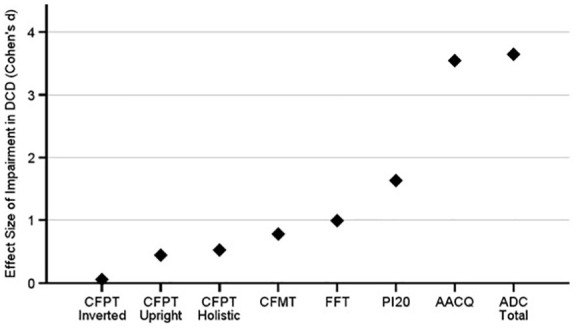
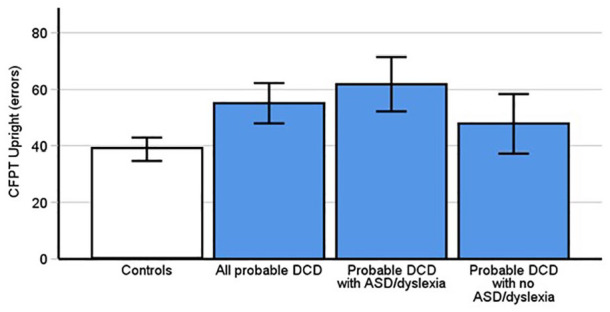
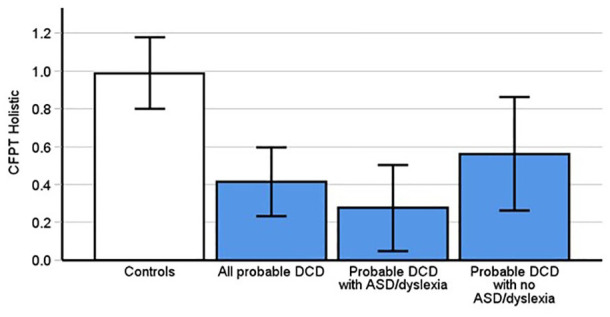
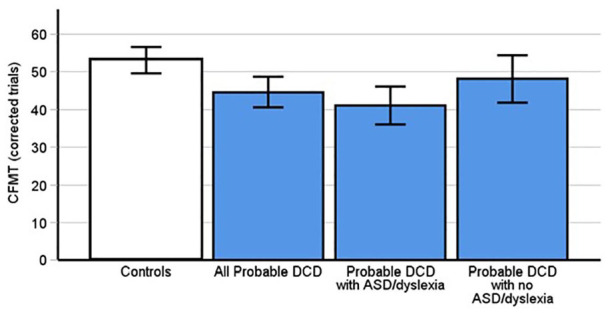
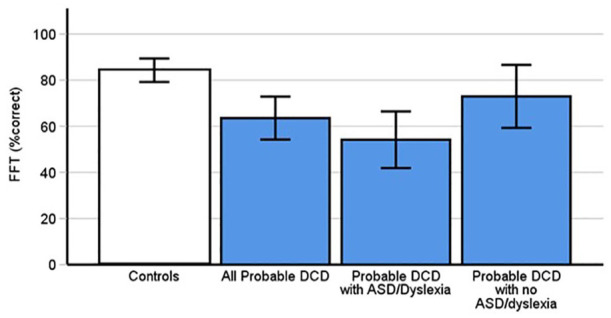
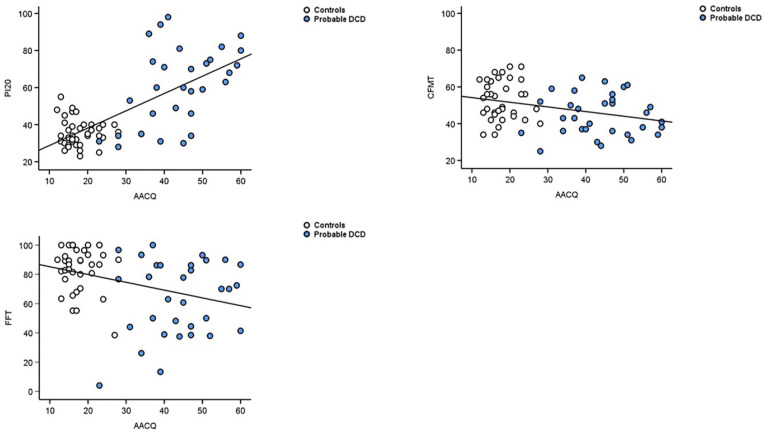
Developmental co-ordination disorder (DCD) is characterised by difficulties in motor control and coordination from early childhood. While problems processing facial identity are often associated with neurodevelopmental conditions, such issues have never been directly tested in adults with DCD. We tested this possibility through a range of tasks and assessed the prevalence of developmental prosopagnosia (i.e. lifelong difficulties with faces), in a group comprising individuals who self-reported a diagnosis of, or suspected that they had, DCD. Strikingly, we found 56% of this probable DCD group met recently recommended criteria for a diagnosis of prosopagnosia, with 22% acquiring a diagnosis using traditional cognitive task-based methods. Moreover, their problems with faces were apparent on both unfamiliar and familiar face memory tests, as well as on a facial perception task (i.e. could they tell faces apart). Positive correlations were found between self-report measures assessing movement and coordination problems, and objective difficulties on experimental face identity processing tasks, suggesting widespread neurocognitive disruption in DCD. Importantly, some issues in identity processing in our probable DCD group remained even after excluding participants with comorbid conditions traditionally associated with difficulties in face recognition, that is, autism and dyslexia. We recommend that any diagnostic test for DCD should include an assessment for prosopagnosia. Given the high prevalence of prosopagnosia in our probable DCD group, and the positive correlations between DCD and prosopagnosia symptoms, there may be a stronger link between movement and facial identity abilities than previously thought.
发育性协调障碍(DCD)的特征是从幼儿期就存在运动控制和协调困难。虽然面部识别处理问题通常与神经发育状况有关,但这些问题从未在患有DCD的成年人中直接进行过测试。我们通过一系列任务测试了这种可能性,并在一组自我报告已被诊断或怀疑患有DCD的个体中评估了发育性面孔失认症(即终身存在的面部识别困难)的患病率。令人惊讶的是,我们发现这个可能患有DCD的群体中有56%符合最近推荐的面孔失认症诊断标准,其中22%是通过传统的基于认知任务的方法被诊断出来的。此外,他们在陌生和熟悉面孔记忆测试以及面部感知任务(即他们能否区分面孔)中都存在面部识别问题。在评估运动和协调问题的自我报告测量与实验性面部识别处理任务中的客观困难之间发现了正相关,这表明DCD中存在广泛的神经认知障碍。重要的是,即使排除了传统上与面部识别困难相关的共病情况(即自闭症和诵读困难)的参与者,我们这个可能患有DCD的群体在身份识别处理方面的一些问题仍然存在。我们建议,任何针对DCD的诊断测试都应包括对面孔失认症的评估。鉴于我们这个可能患有DCD的群体中面孔失认症的高患病率,以及DCD与面孔失认症症状之间的正相关,运动能力与面部识别能力之间的联系可能比以前认为的更强。