Azamar-Llamas Daniel, Hernández-Molina Gabriela, Ramos-Ávalos Bárbara, Furuzawa-Carballeda Janette
Department of Immunology and Rheumatology, Instituto Nacional de Ciencias Médicas y Nutrición, Salvador Zubirán, Vasco de Quiroga No. 15, Col. Belisario Domínguez, Sección XVI, 14080 Mexico City, Mexico.
Mediators Inflamm. 2017;2017:5468023. doi: 10.1155/2017/5468023. Epub 2017 Apr 8.
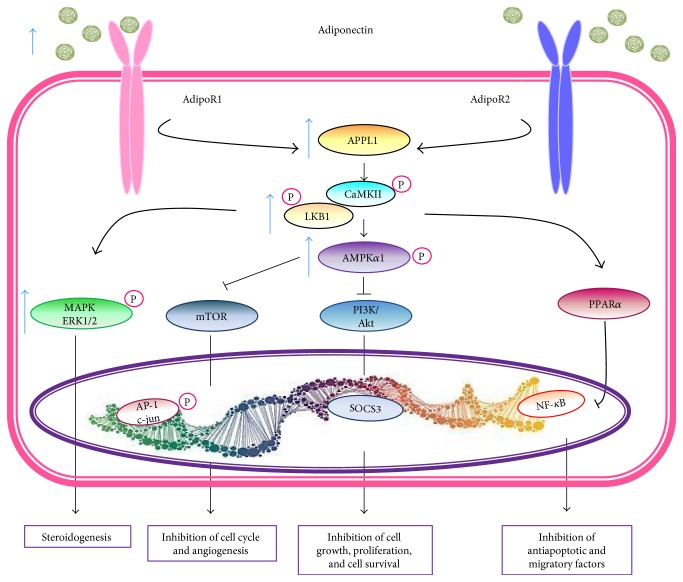
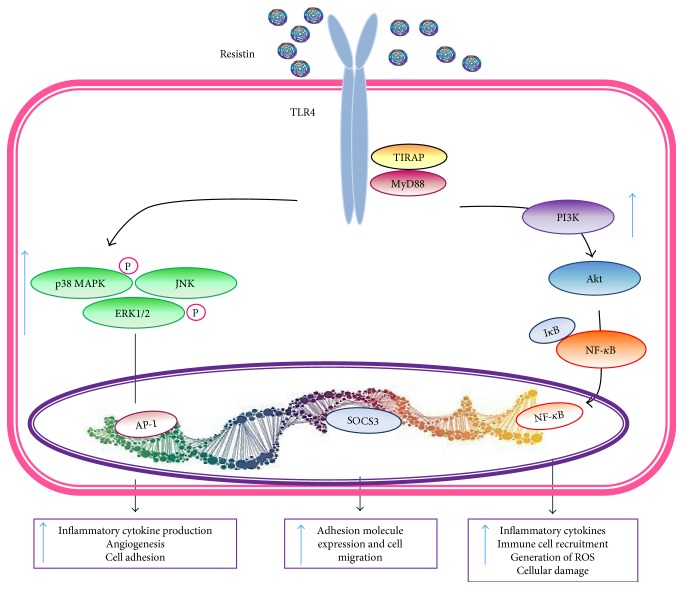
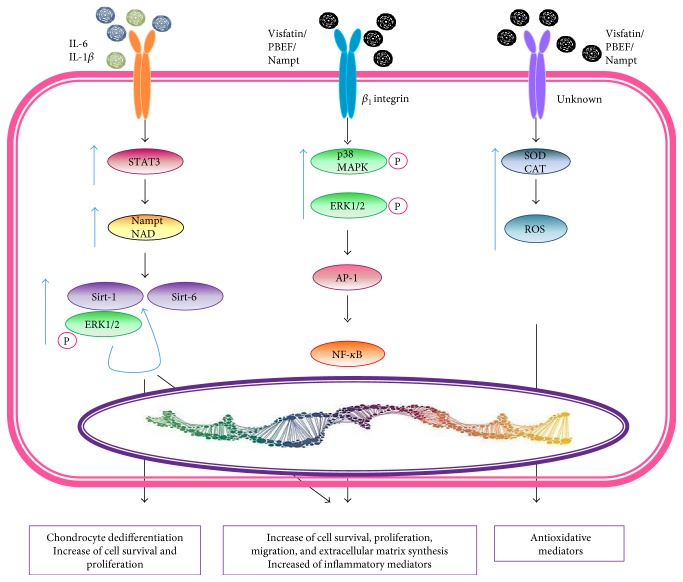
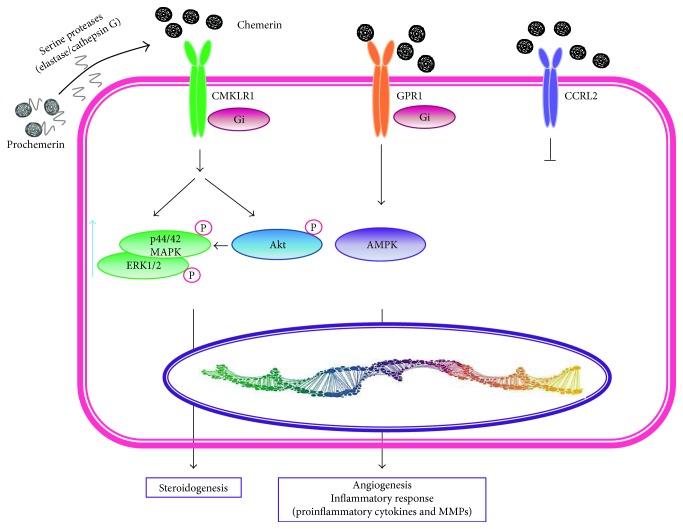
Recent studies have shown that overweight and obesity play an important role in the development of osteoarthritis (OA). However, joint overload is not the only risk factor in this disease. For instance, the presence of OA in non-weight-bearing joints such as the hand suggests that metabolic factors may also contribute to its pathogenesis. Recently, white adipose tissue (WAT) has been recognized not only as an energy reservoir but also as an important secretory organ of adipokines. In this regard, adipokines have been closely associated with obesity and also play an important role in bone and cartilage homeostasis. Furthermore, drugs such as rosuvastatin or rosiglitazone have demonstrated chondroprotective and anti-inflammatory effects in cartilage explants from patients with OA. Thus, it seems that adipokines are important factors linking obesity, adiposity, and inflammation in OA. In this review, we are focused on establishing the physiological mechanisms of adipokines on cartilage homeostasis and evaluating their role in the pathophysiology of OA based on evidence derived from experimental research as well as from clinical-epidemiological studies.
最近的研究表明,超重和肥胖在骨关节炎(OA)的发展中起着重要作用。然而,关节负荷过重并不是这种疾病的唯一危险因素。例如,手部等非负重关节出现OA表明,代谢因素可能也会导致其发病机制。最近,白色脂肪组织(WAT)不仅被认为是一个能量储存库,而且还是脂肪因子的一个重要分泌器官。在这方面,脂肪因子与肥胖密切相关,并且在骨骼和软骨的稳态中也起着重要作用。此外,瑞舒伐他汀或罗格列酮等药物已在OA患者的软骨外植体中显示出软骨保护和抗炎作用。因此,脂肪因子似乎是OA中连接肥胖、肥胖症和炎症的重要因素。在这篇综述中,我们专注于基于实验研究以及临床流行病学研究得出的证据,确立脂肪因子对软骨稳态的生理机制,并评估它们在OA病理生理学中的作用。