Wilkins Heather M, Weidling Ian W, Ji Yan, Swerdlow Russell H
Department of Neurology, University of Kansas Medical Center, Kansas City, KS, USA.
University of Kansas Alzheimer's Disease Center, Kansas City, KS, USA.
Front Immunol. 2017 Apr 26;8:508. doi: 10.3389/fimmu.2017.00508. eCollection 2017.
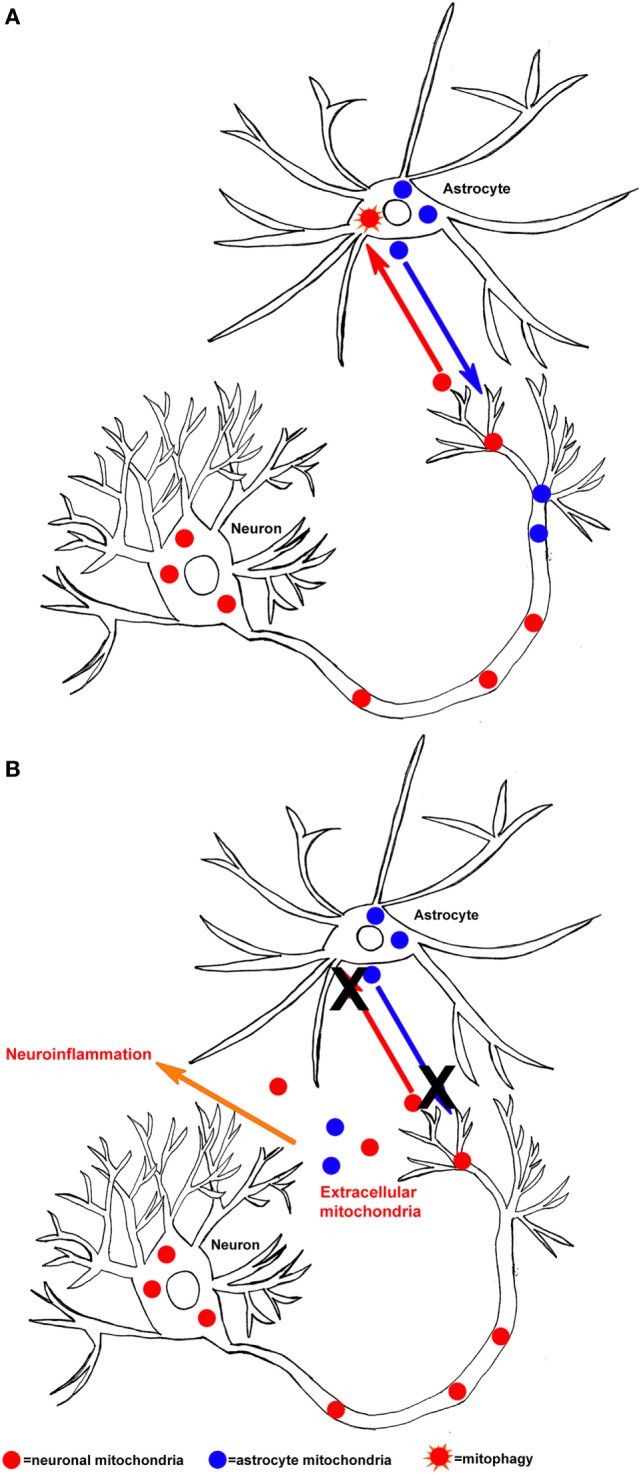
Inflammation is increasingly implicated in neurodegenerative disease pathology. As no acquired pathogen appears to drive this inflammation, the question of what does remains. Recent advances indicate damage-associated molecular pattern (DAMP) molecules, which are released by injured and dying cells, can cause specific inflammatory cascades. Inflammation, therefore, can be endogenously induced. Mitochondrial components induce inflammatory responses in several pathological conditions. Due to evidence such as this, a number of mitochondrial components, including mitochondrial DNA, have been labeled as DAMP molecules. In this review, we consider the contributions of mitochondrial-derived DAMPs to inflammation observed in neurodegenerative diseases.
炎症在神经退行性疾病病理学中的作用日益受到关注。由于似乎没有后天病原体驱动这种炎症,那么究竟是什么引发炎症的问题依然存在。最近的研究进展表明,由受损和垂死细胞释放的损伤相关分子模式(DAMP)分子可引发特定的炎症级联反应。因此,炎症可以由内源性因素诱导。线粒体成分在多种病理条件下可诱导炎症反应。基于此类证据,包括线粒体DNA在内的多种线粒体成分已被标记为DAMP分子。在本综述中,我们探讨了线粒体衍生的DAMP在神经退行性疾病中所观察到的炎症反应中的作用。