Yoo Yo-Han, Nalini Chandran Anil K, Park Jong-Chan, Gho Yun-Shil, Lee Sang-Won, An Gynheung, Jung Ki-Hong
Graduate School of Biotechnology & Crop Biotech Institute, Kyung Hee UniversityYongin, South Korea.
Front Plant Sci. 2017 Apr 26;8:580. doi: 10.3389/fpls.2017.00580. eCollection 2017.
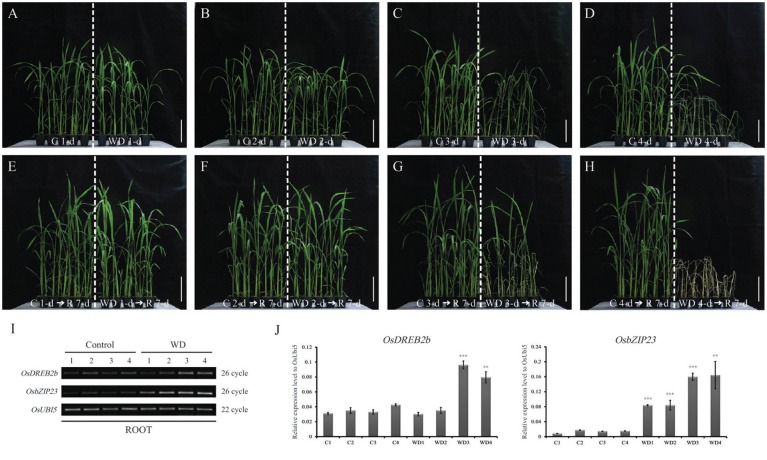
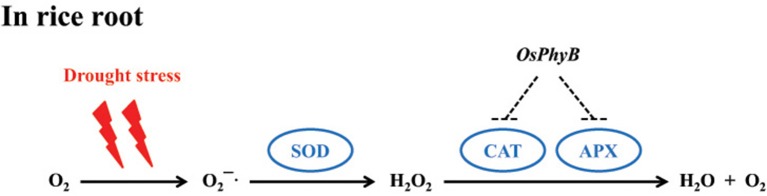
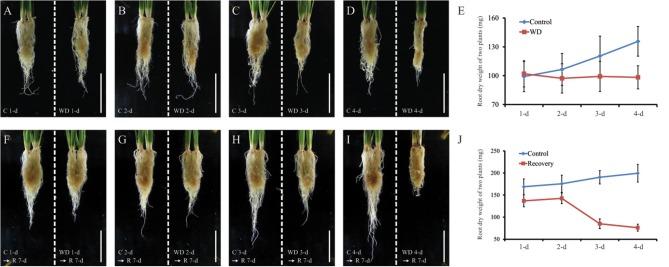
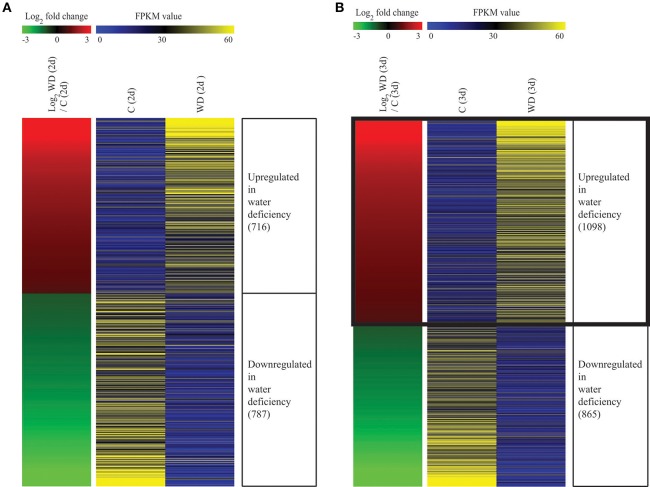
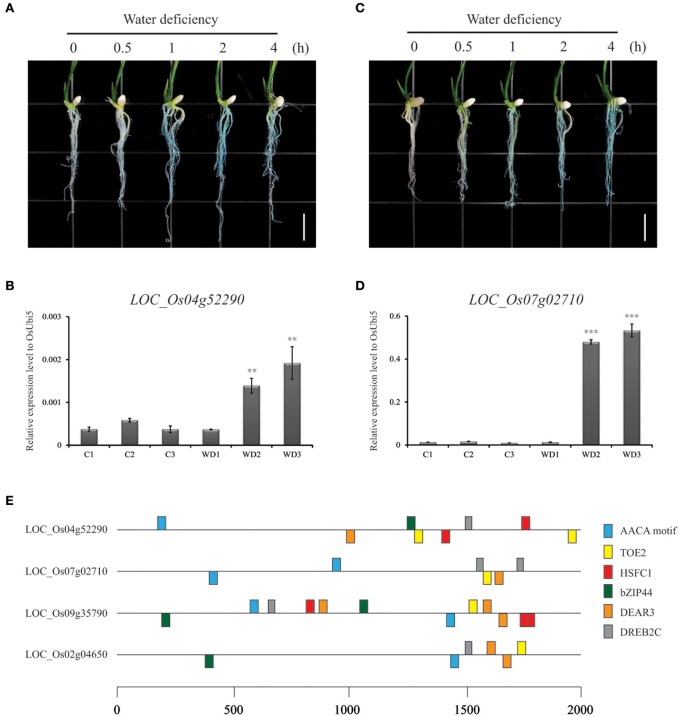
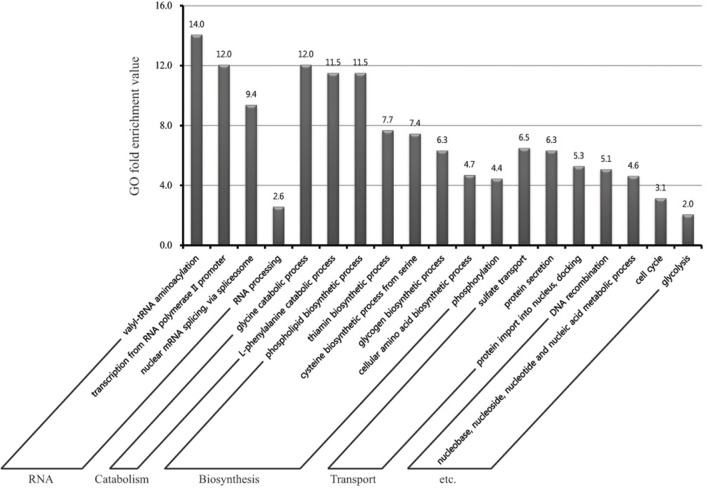
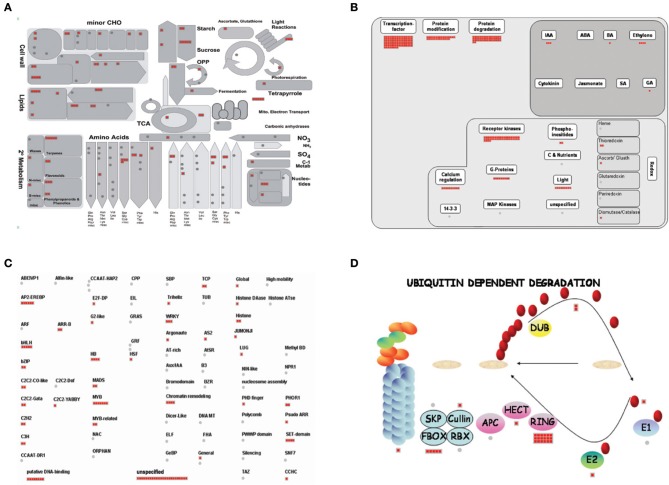
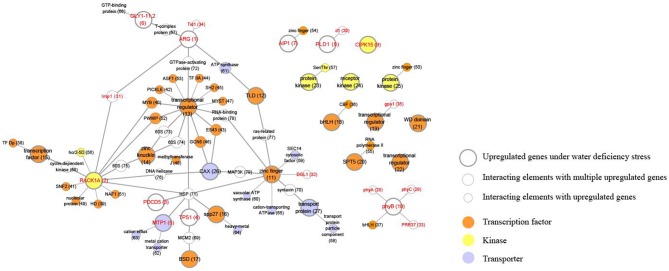
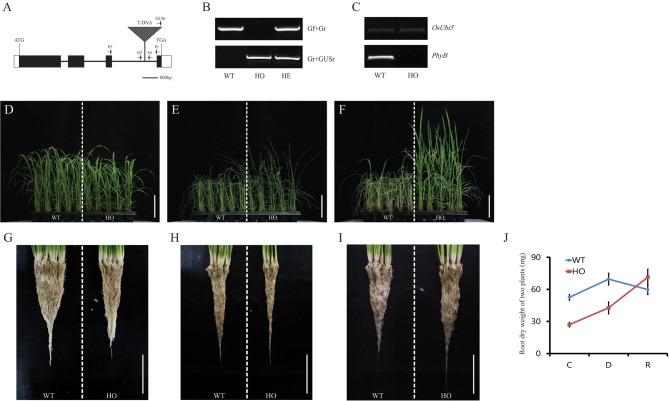
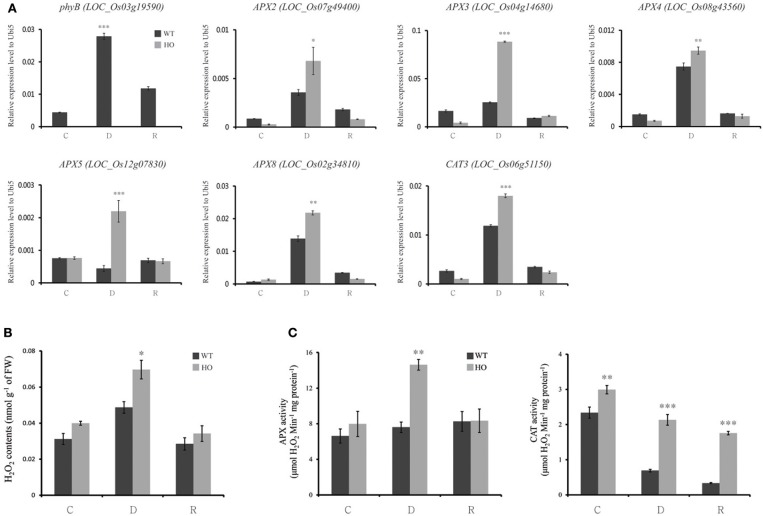
Water deficiencies are one of the most serious challenges to crop productivity. To improve our understanding of soil moisture stress, we performed RNA-Seq analysis using roots from 4-week-old rice seedlings grown in soil that had been subjected to drought conditions for 2-3 d. In all, 1,098 genes were up-regulated in response to soil moisture stress for 3 d, which causes severe damage in root development after recovery, unlikely that of 2 d. Comparison with previous transcriptome data produced in drought condition indicated that more than 68% of our candidate genes were not previously identified, emphasizing the novelty of our transcriptome analysis for drought response in soil condition. We then validated the expression patterns of two candidate genes using a promoter-GUS reporter system in planta and monitored the stress response with novel molecular markers. An integrating omics tool, MapMan analysis, indicated that RING box E3 ligases in the ubiquitin-proteasome pathways are significantly stimulated by induced drought. We also analyzed the functions of 66 candidate genes that have been functionally investigated previously, suggesting the primary roles of our candidate genes in resistance or tolerance relating traits including drought tolerance (29 genes) through literature searches besides diverse regulatory roles of our candidate genes for morphological traits (15 genes) or physiological traits (22 genes). Of these, we used a T-DNA insertional mutant of that negatively regulates a plant's degree of tolerance to water deficiencies through the control of total leaf area and stomatal density based on previous finding. Unlike previous result, we found that represses the activity of ascorbate peroxidase and catalase mediating reactive oxygen species (ROS) processing machinery required for drought tolerance of roots in soil condition, suggesting the potential significance of remaining uncharacterized candidate genes for manipulating drought tolerance in rice.
水分不足是作物生产力面临的最严峻挑战之一。为了增进我们对土壤水分胁迫的理解,我们使用在干旱条件下处理2 - 3天的土壤中生长的4周龄水稻幼苗的根系进行了RNA测序分析。总共1098个基因在土壤水分胁迫3天后上调,这会在恢复后对根系发育造成严重损害,与2天的情况不同。与之前在干旱条件下产生的转录组数据比较表明,我们超过68%的候选基因此前未被鉴定,这突出了我们对土壤条件下干旱响应转录组分析的新颖性。然后,我们在植物中使用启动子 - GUS报告系统验证了两个候选基因的表达模式,并使用新型分子标记监测胁迫响应。一种综合组学工具MapMan分析表明,泛素 - 蛋白酶体途径中的RING盒E3连接酶在诱导干旱时受到显著刺激。我们还分析了66个之前已进行功能研究的候选基因的功能,通过文献检索表明我们的候选基因在与抗性或耐受性相关的性状中起主要作用,包括耐旱性(29个基因),此外我们的候选基因对形态性状(15个基因)或生理性状(22个基因)具有多种调节作用。其中,基于之前的发现,我们使用了一个T - DNA插入突变体,它通过控制总叶面积和气孔密度来负向调节植物对水分不足的耐受程度。与之前的结果不同,我们发现它抑制了抗坏血酸过氧化物酶和过氧化氢酶的活性,这些酶介导了土壤条件下根系耐旱性所需的活性氧(ROS)处理机制,这表明其余未表征的候选基因在操纵水稻耐旱性方面具有潜在意义。