School of Integrative Plant Science, Plant Pathology & Plant-Microbe Biology Section, Cornell University, Geneva, NY, 14456, USA.
College of Tropical Agriculture and Human Resources, Department of Tropical Plant and Soil Sciences, University of Hawaii at Manoa, Honolulu, HI, 96822, USA.
Sci Rep. 2017 May 11;7(1):1726. doi: 10.1038/s41598-017-01929-4.
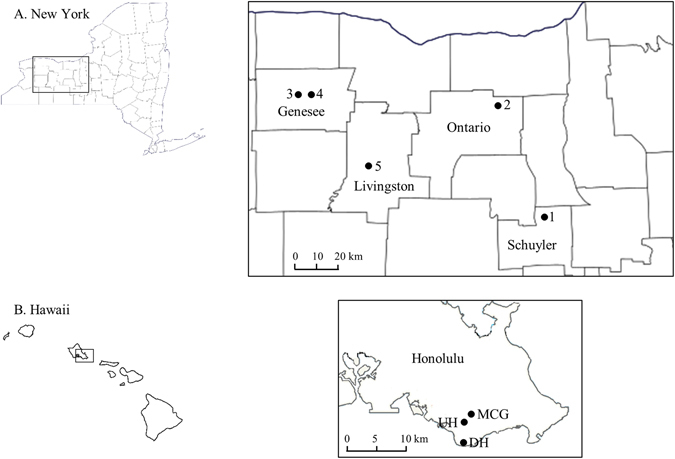
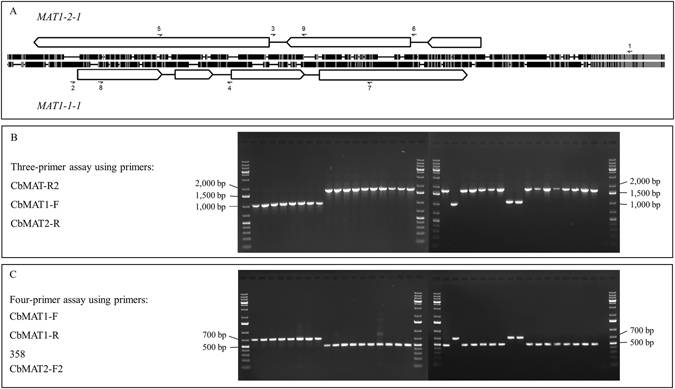
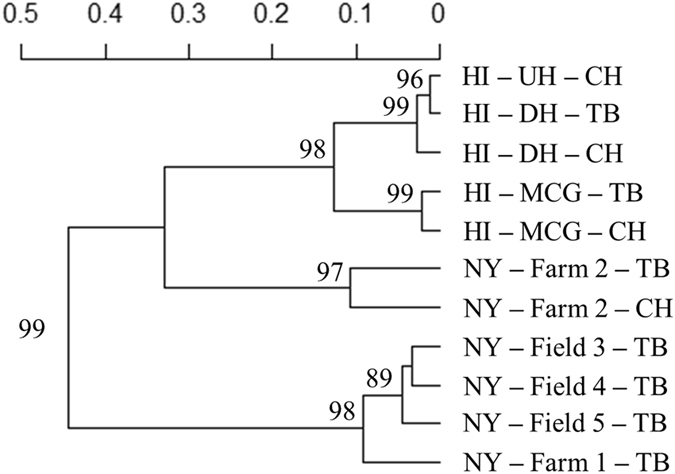
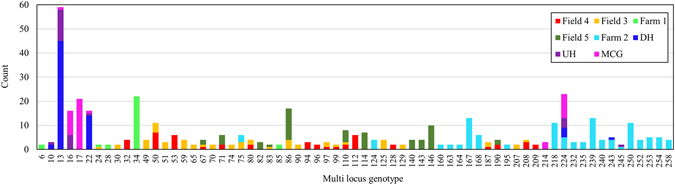
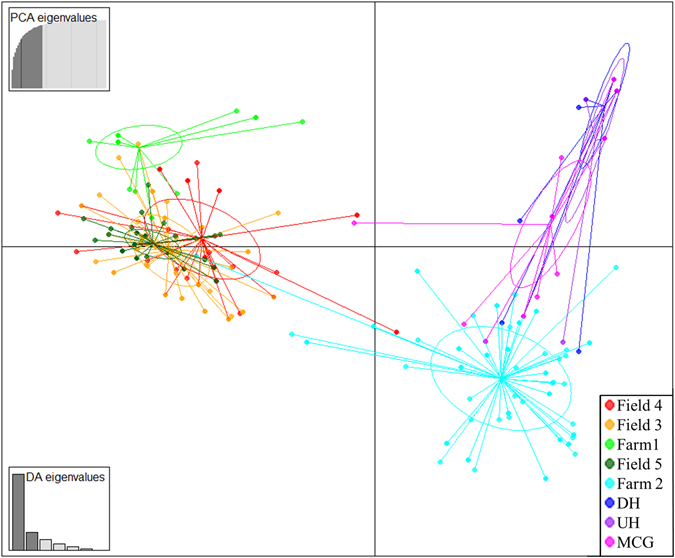
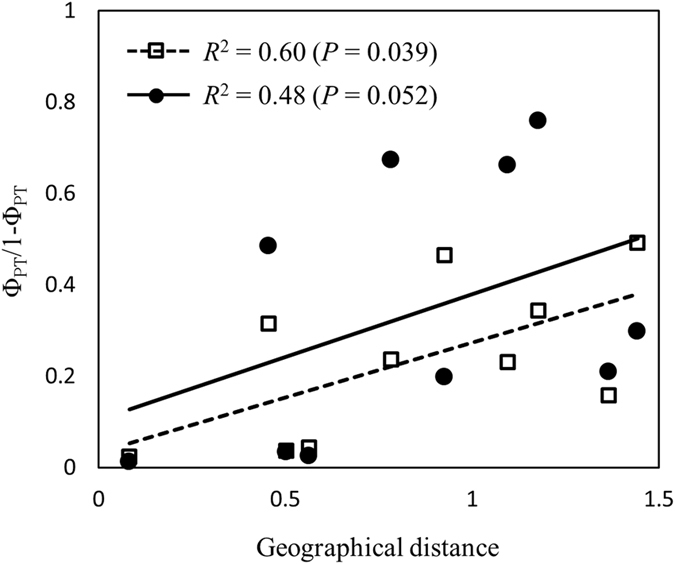
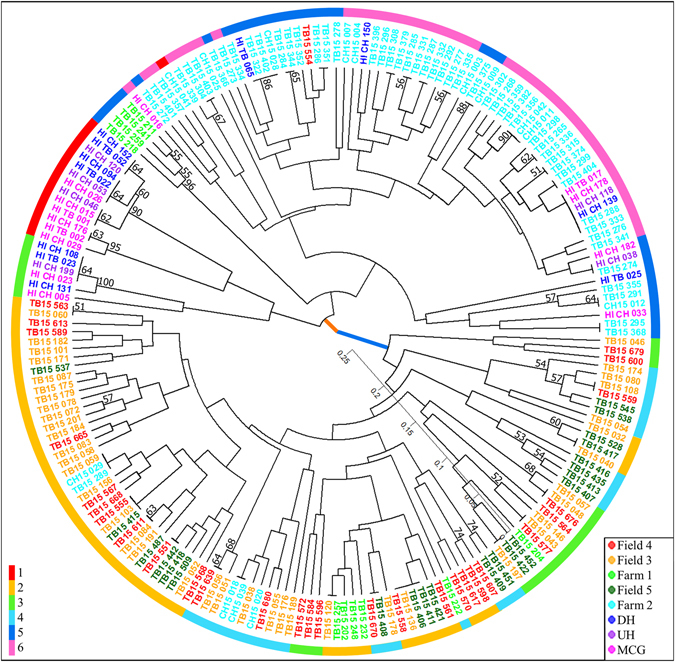
Cercospora leaf spot (CLS), caused by Cercospora beticola, is a major disease of Beta vulgaris worldwide. No sexual stage is known for C. beticola but in its asexual form it overwinters on infected plant debris as pseudostromata, and travels short distances by rain splash-dispersed conidiospores. Cercospora beticola infects a broad range of host species and may be seedborne. The relative contribution of these inoculum sources to CLS epidemics on table beet is not well understood. Pathogen isolates collected from table beet, Swiss chard and common lambsquarters in mixed-cropping farms and monoculture fields in New York and Hawaii, USA, were genotyped (n = 600) using 12 microsatellite markers. All isolates from CLS symptoms on lambsquarters were identified as C. chenopodii. Sympatric populations of C. beticola derived from Swiss chard and table beet were not genetically differentiated. Results suggested that local (within field) inoculum sources may be responsible for the initiation of CLS epidemics in mixed-cropping farms, whereas external sources of inoculum may be contributing to CLS epidemics in the monoculture fields in New York. New multiplex PCR assays were developed for mating-type determination for C. beticola. Implications of these findings for disease management are discussed.
菜豆尾孢叶斑病(CLS)由菜豆尾孢菌(Cercospora beticola)引起,是一种世界性的重要病害,影响着藜科植物。菜豆尾孢菌的有性阶段尚未被发现,但在无性阶段,它会以假孢盘的形式在感染的植物残体上越冬,并通过雨滴飞溅分散的分生孢子进行短距离传播。菜豆尾孢菌感染广泛的宿主物种,可能是通过种子传播的。这些接种源对菜豆上 CLS 流行的相对贡献尚未得到很好的理解。从美国纽约和夏威夷的混作农场和单作田的糖甜菜、瑞士甜菜和普通野葵中采集的菜豆尾孢菌分离物(n=600),使用 12 个微卫星标记进行了基因型分析。从野葵上 CLS 症状中分离出的所有菌株均鉴定为 C. chenopodii。来自瑞士甜菜和糖甜菜的 CLS 共生种群在遗传上没有分化。结果表明,局部(田间)接种源可能是导致混作农场 CLS 流行的原因,而外部接种源可能是导致纽约单作田 CLS 流行的原因。还为菜豆尾孢菌的交配型测定开发了新的多重 PCR 检测方法。讨论了这些发现对疾病管理的意义。