Saha Subbroto Kumar, Yin Yingfu, Kim Kyeongseok, Yang Gwang-Mo, Dayem Ahmed Abdal, Choi Hye Yeon, Cho Ssang-Goo
Department of Stem Cell and Regenerative Biotechnology, Incurable Disease Animal Model & Stem Cell Institute (IDASI), Konkuk University, Seoul 05029, Korea.
Int J Mol Sci. 2017 May 12;18(5):1048. doi: 10.3390/ijms18051048.
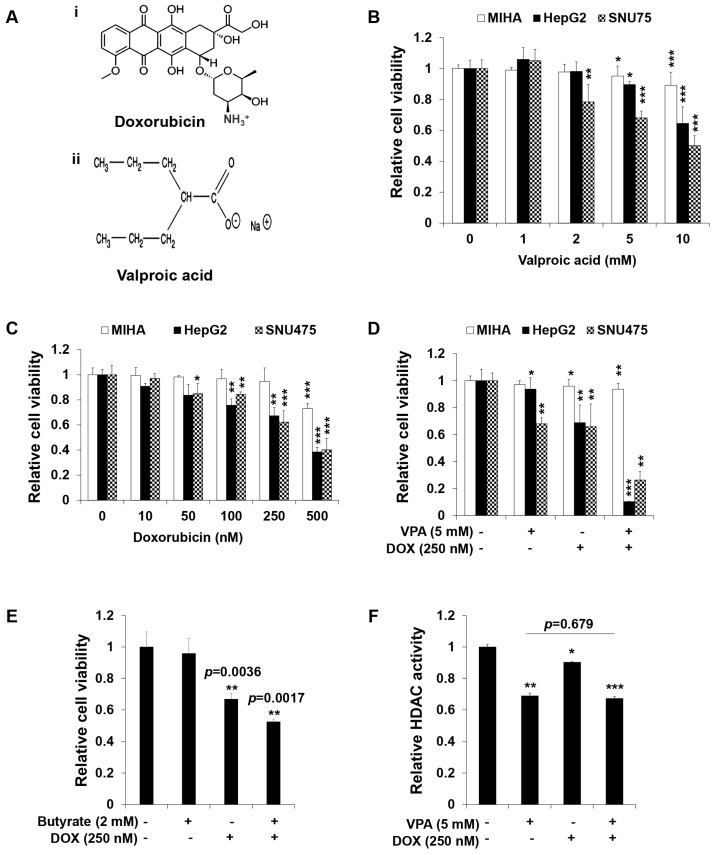
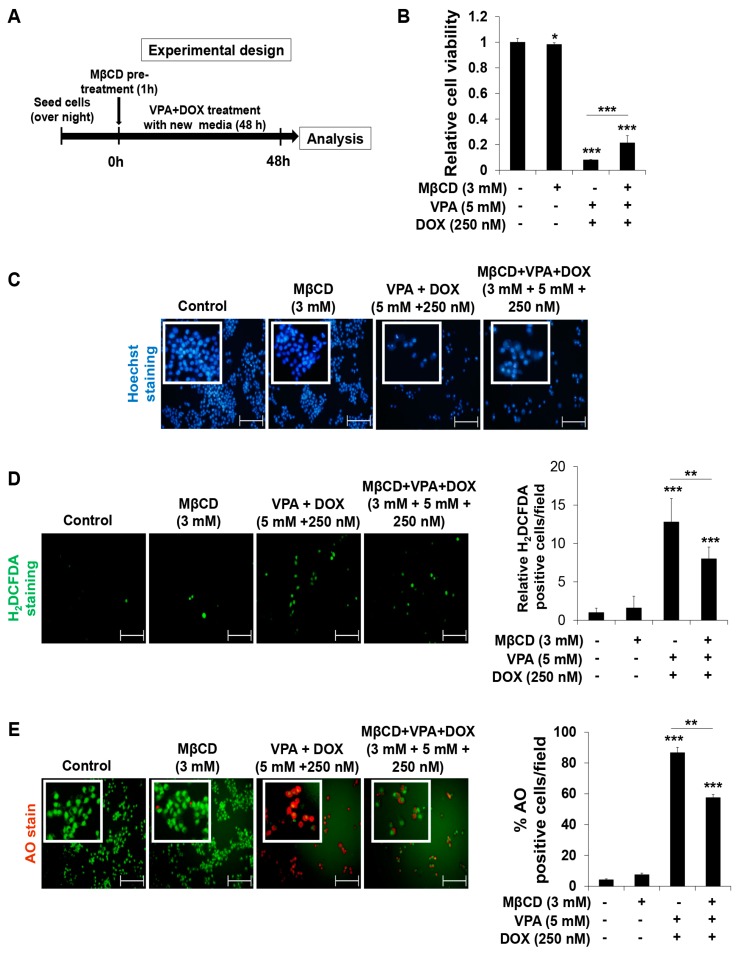
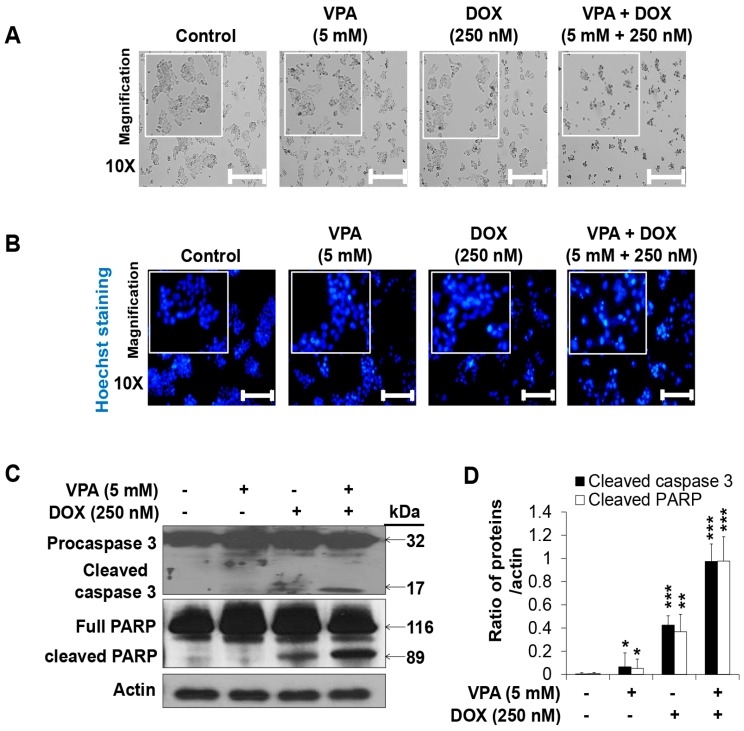
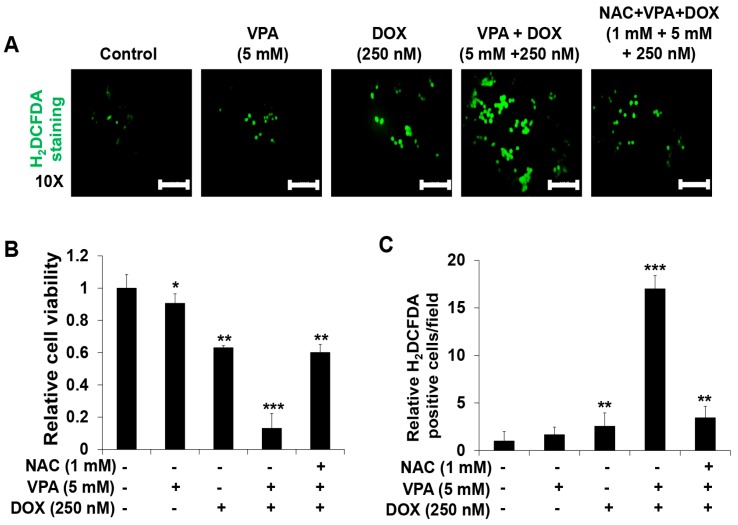
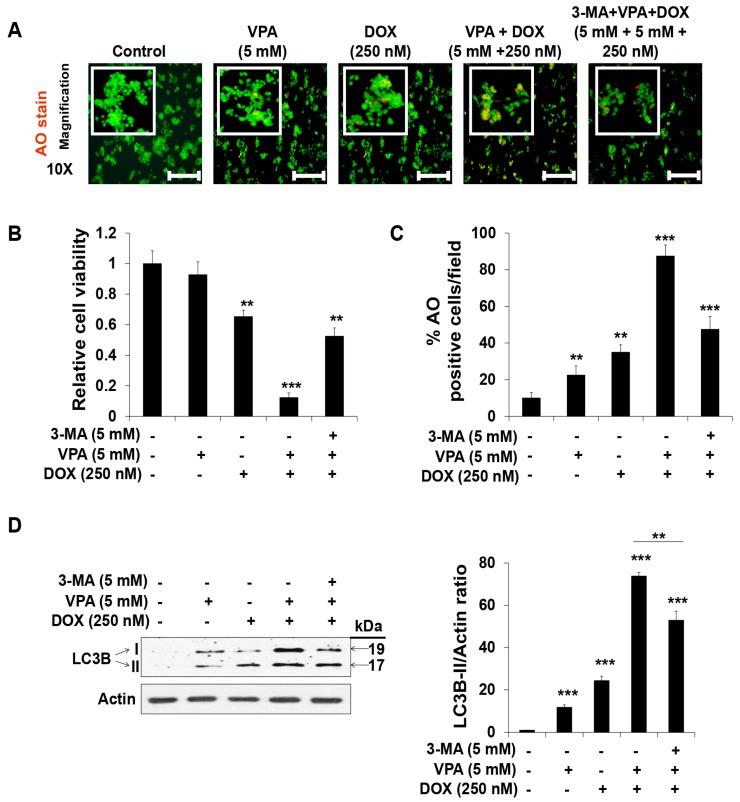
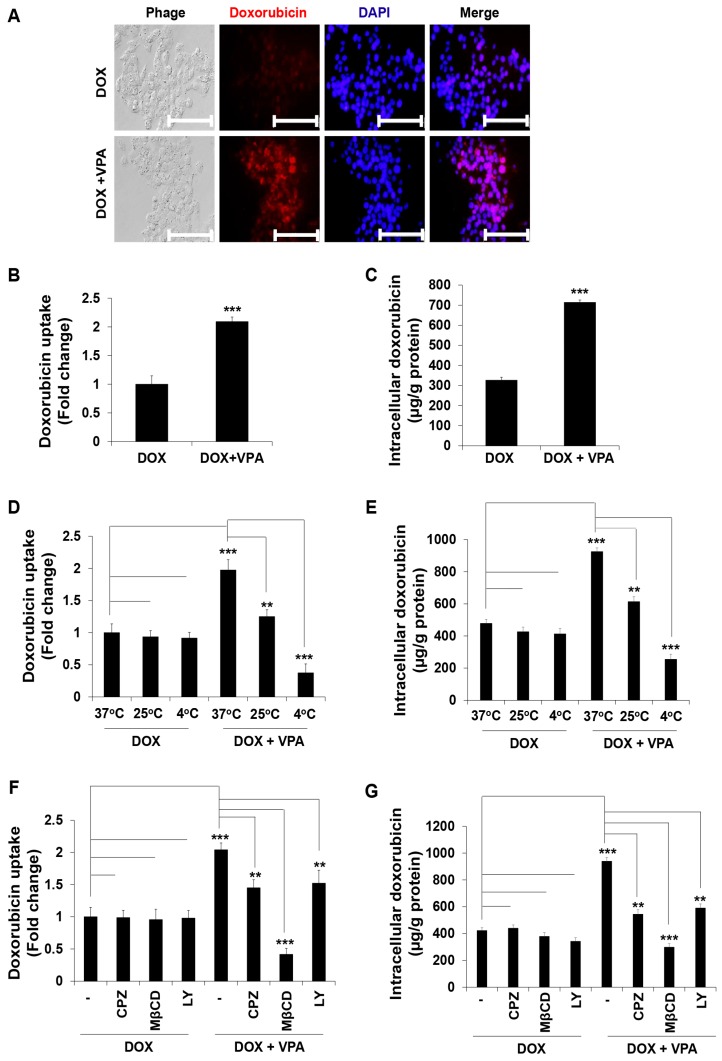
Valproic acid (VPA), a well-known histone deacetylase (HDAC) inhibitor, is used as an anti-cancer drug for various cancers, but the synergistic anti-cancer effect of VPA and doxorubicin (DOX) combination treatment and its potential underlying mechanism in hepatocellular carcinoma (HCC) remain to be elucidated. Here, we evaluate the mono- and combination-therapy effects of VPA and DOX in HCC and identify a specific and efficient, synergistic anti-proliferative effect of the VPA and DOX combination in HCC cells, especially HepG2 cells; this effect was not apparent in MIHA cells, a normal hepatocyte cell line. The calculation of the coefficient of drug interaction confirmed the significant synergistic effect of the combination treatment. Concurrently, the synergistic apoptotic cell death caused by the VPA and DOX combination treatment was confirmed by Hoechst nuclear staining and Western blot analysis of caspase-3 and poly (ADP-ribose) polymerase (PARP) activation. Co-treatment with VPA and DOX enhanced reactive oxygen species (ROS) generation and autophagy, which were clearly attenuated by ROS and autophagy inhibitors, respectively. Furthermore, as an indication of the mechanism underlying the synergistic effect, we observed that DOX internalization, which was induced in the VPA and DOX combination-treated group, occurred via by the caveolae-mediated endocytosis pathway. Taken together, our study uncovered the potential effect of the VPA and DOX combination treatment with regard to cell death, including induction of cellular ROS, autophagy, and the caveolae-mediated endocytosis pathway. Therefore, these results present novel implications in drug delivery research for the treatment of HCC.
丙戊酸(VPA)是一种著名的组蛋白去乙酰化酶(HDAC)抑制剂,被用作治疗多种癌症的抗癌药物,但VPA与阿霉素(DOX)联合治疗在肝细胞癌(HCC)中的协同抗癌作用及其潜在机制仍有待阐明。在此,我们评估了VPA和DOX对HCC的单一治疗和联合治疗效果,并确定了VPA与DOX联合对HCC细胞,尤其是HepG2细胞具有特异性且高效的协同抗增殖作用;而在正常肝细胞系MIHA细胞中未观察到这种效果。药物相互作用系数的计算证实了联合治疗具有显著的协同效应。同时,通过Hoechst核染色以及对caspase-3和聚(ADP-核糖)聚合酶(PARP)激活的蛋白质印迹分析,证实了VPA与DOX联合治疗可协同诱导细胞凋亡性死亡。VPA与DOX联合处理可增强活性氧(ROS)生成和自噬,而ROS和自噬抑制剂分别可明显减弱这种作用。此外,作为协同效应潜在机制的一个指标,我们观察到在VPA与DOX联合处理组中诱导的DOX内化是通过小窝介导的内吞途径发生的。综上所述,我们的研究揭示了VPA与DOX联合治疗在细胞死亡方面的潜在作用,包括诱导细胞ROS、自噬以及小窝介导的内吞途径。因此,这些结果为HCC治疗的药物递送研究提供了新的启示。