Manne Rajesh Kumar, Agrawal Yashika, Bargale Anil, Patel Asha, Paul Debasish, Gupta Neha Anilkumar, Rapole Srikanth, Seshadri Vasudevan, Subramanyam Deepa, Shetty Praveenkumar, Santra Manas Kumar
National Centre for Cell Science, Pune University Campus, Ganesh khind, Pune, 411 007, Maharashtra, India.
Department of Biochemistry/Central Research Laboratory, SDM College of Medical Sciences & Hospital, Dharwad, Karnataka, India.
Neoplasia. 2017 Jun;19(6):483-495. doi: 10.1016/j.neo.2017.02.013. Epub 2017 May 10.
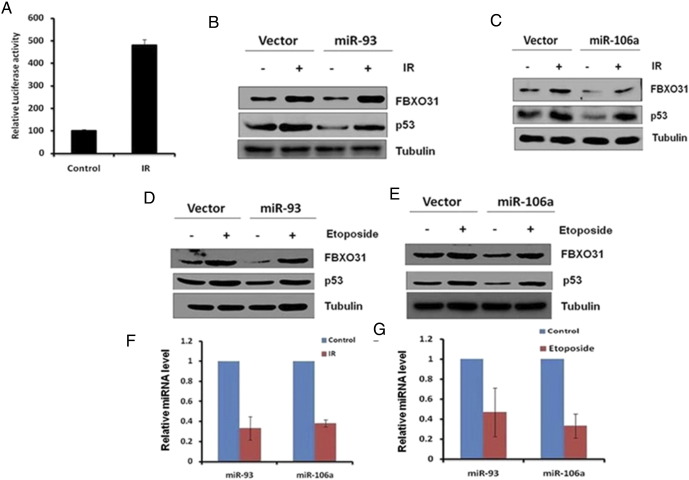
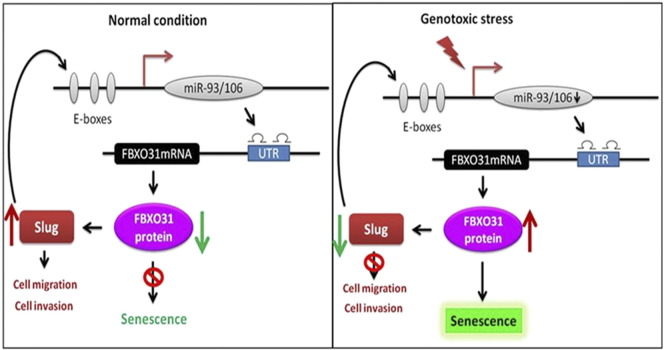
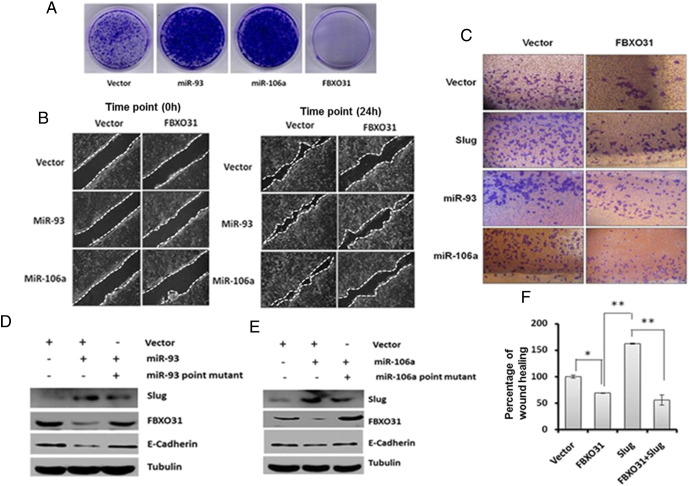
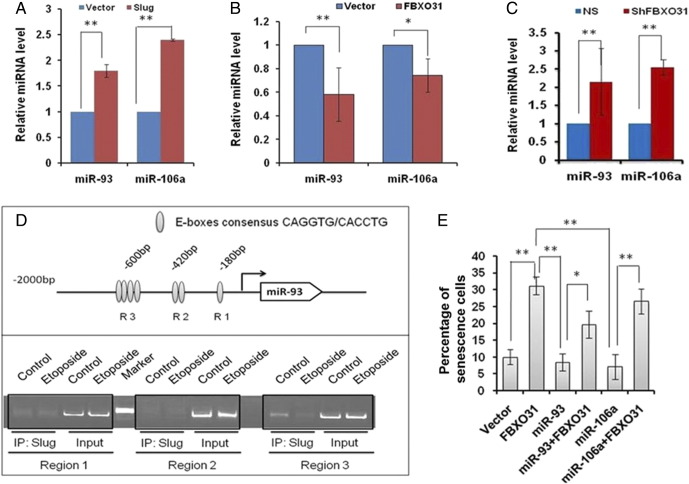
The transformation of a normal cell to cancer requires the derail of multiple pathways. Normal signaling in a cell is regulated at multiple stages by the presence of feedback loops, calibration of levels of proteins by their regulated turnover, and posttranscriptional regulation, to name a few. The tumor suppressor protein FBXO31 is a component of the SCF E3 ubiquitin ligase and is required to arrest cells at G1 following genotoxic stresses. Due to its growth-suppression activity, it is underexpressed in many cancers. However, the molecular mechanism underlying the translational regulation of FBXO31 remains unclear. Here we show that the oncogenic microRNAs miR-93 and miR-106a repress FBXO31, resulting in the upregulation of Slug, which is involved in epithelial-mesenchymal transition and cell invasion. FBXO31 targets and ubiquitylates Slug for proteasomal degradation. However, this mechanism is repressed in breast tumors where miR-93 and miR-106a are overexpressed. Our study further unravels an interesting mechanism whereby Slug drives the expression of miR-93 and miR-106a, thus establishing a positive feedback loop to maintain an invasive phenotype. Together, these results establish the presence of interplay between microRNAs and the ubiquitination machinery, which together regulate cancer cell invasion.
正常细胞转变为癌细胞需要多个信号通路出现紊乱。细胞中的正常信号传导在多个阶段受到调控,例如存在反馈回路、通过调节蛋白质周转来校准蛋白质水平以及转录后调控等。肿瘤抑制蛋白FBXO31是SCF E3泛素连接酶的一个组成部分,在基因毒性应激后,它能使细胞停滞在G1期。由于其生长抑制活性,它在许多癌症中表达下调。然而,FBXO31翻译调控的分子机制仍不清楚。在这里,我们表明致癌性微小RNA miR-93和miR-106a抑制FBXO31,导致参与上皮-间质转化和细胞侵袭的Slug上调。FBXO31靶向Slug并使其泛素化以便蛋白酶体降解。然而,在miR-93和miR-106a过表达的乳腺肿瘤中,这种机制受到抑制。我们的研究进一步揭示了一种有趣的机制,即Slug驱动miR-93和miR-106a的表达,从而建立一个正反馈回路以维持侵袭性表型。总之,这些结果证实了微小RNA与泛素化机制之间存在相互作用,它们共同调节癌细胞的侵袭。