Hao Da-Cheng, He Chun-Nian, Shen Jie, Xiao Pei-Gen
1Biotechnology Institute, School of Environment and Chemical Engineering, Dalian Jiaotong University, Dalian 116028, China; 2Institute of Medicinal Plant Development, Chinese Academy of Medical Sciences, Beijing 100193, China.
Curr Genomics. 2017 Feb;18(1):39-59. doi: 10.2174/1389202917666160803151752.
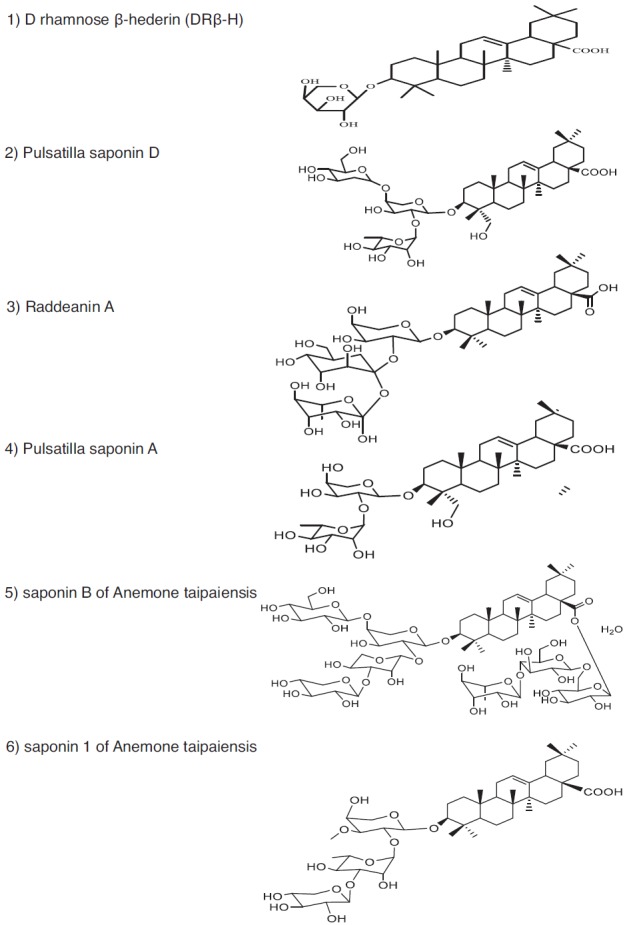
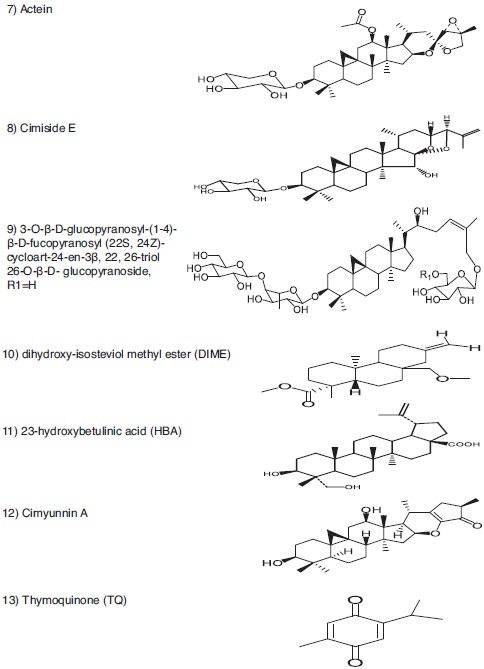
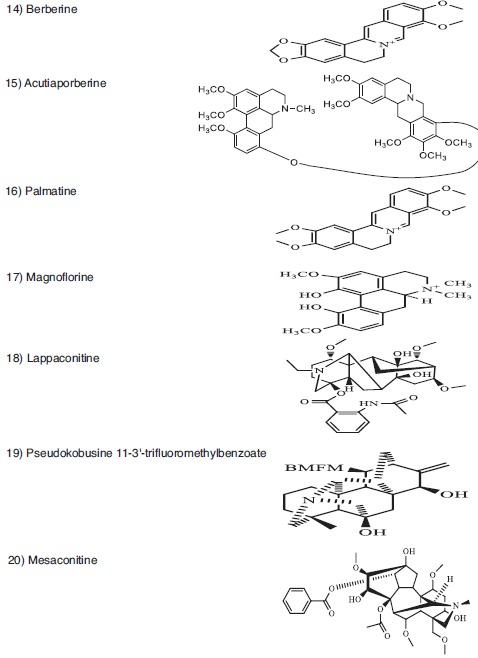
The buttercup family, Ranunculaceae, comprising more than 2,200 species in at least 62 genera, mostly herbs, has long been used in folk medicine and worldwide ethnomedicine since the beginning of human civilization. Various medicinal phytometabolites have been found in Ranunculaceae plants, many of which, such as alkaloids, terpenoids, saponins, and polysaccharides, have shown anti-cancer activities in vitro and in vivo. Most concerns have been raised for two epiphany molecules, the monoterpene thymoquinone and the isoquinoline alkaloid berberine. At least 17 genera have been enriched with anti-cancer phytometabolites. Some Ranunculaceae phytometabolites induce the cell cycle arrest and apoptosis of cancer cells or enhance immune activities, while others inhibit the proliferation, invasion, angiogenesis, and metastasis, or reverse the multi-drug resistance of cancer cells thereby regulating all known hallmarks of cancer. These phytometabolites could exert their anti-cancer activities via multiple signaling pathways. In addition, absorption, distribution, metabolism, and excretion/toxicity properties and structure/activity relationships of some phytometabolites have been revealed assisting in the early drug discovery and development pipelines. However, a comprehensive review of the molecular mechanisms and functions of Ranunculaceae anti-cancer phytometabolites is lacking. Here, we summarize the recent progress of the anti-cancer chemo- and pharmacological diversity of Ranunculaceae medicinal plants, focusing on the emerging molecular machineries and functions of anti-cancer phytometabolites. Gene expression profiling and relevant omics platforms (e.g. genomics, transcriptomics, proteomics, and metabolomics) could reveal differential effects of phytometabolites on the phenotypically heterogeneous cancer cells.
毛茛科植物长期以来一直被用于民间医学和世界各地的民族医学,自人类文明伊始,该科就包含至少62个属的2200多种植物,大多为草本植物。在毛茛科植物中发现了各种药用植物代谢物,其中许多,如生物碱、萜类化合物、皂苷和多糖,在体外和体内均显示出抗癌活性。人们最为关注的是两种具有显著作用的分子,即单萜类百里醌和异喹啉生物碱黄连素。至少有17个属富含抗癌植物代谢物。一些毛茛科植物代谢物可诱导癌细胞的细胞周期停滞和凋亡,或增强免疫活性,而另一些则抑制癌细胞的增殖、侵袭、血管生成和转移,或逆转癌细胞的多药耐药性,从而调节所有已知的癌症特征。这些植物代谢物可通过多种信号通路发挥其抗癌活性。此外,还揭示了一些植物代谢物的吸收、分布、代谢和排泄/毒性特性以及结构/活性关系,有助于早期药物发现和开发流程。然而,目前缺乏对毛茛科抗癌植物代谢物的分子机制和功能的全面综述。在此,我们总结了毛茛科药用植物抗癌化学和药理学多样性的最新进展,重点关注抗癌植物代谢物新出现的分子机制和功能。基因表达谱分析和相关的组学平台(如基因组学、转录组学、蛋白质组学和代谢组学)可以揭示植物代谢物对表型异质性癌细胞的不同影响。