Khatun Khadiza, Robin Arif Hasan Khan, Park Jong-In, Nath Ujjal Kumar, Kim Chang Kil, Lim Ki-Byung, Nou Ill Sup, Chung Mi-Young
Department of Agricultural Industry Economy and Education, Sunchon National University, 413 Jungangno, Suncheon, Jeonnam 540-950, Korea.
Department of Horticulture, Sunchon National University, 413 Jungangno, Suncheon, Jeonnam 540-950, Korea.
Int J Mol Sci. 2017 May 13;18(5):1056. doi: 10.3390/ijms18051056.
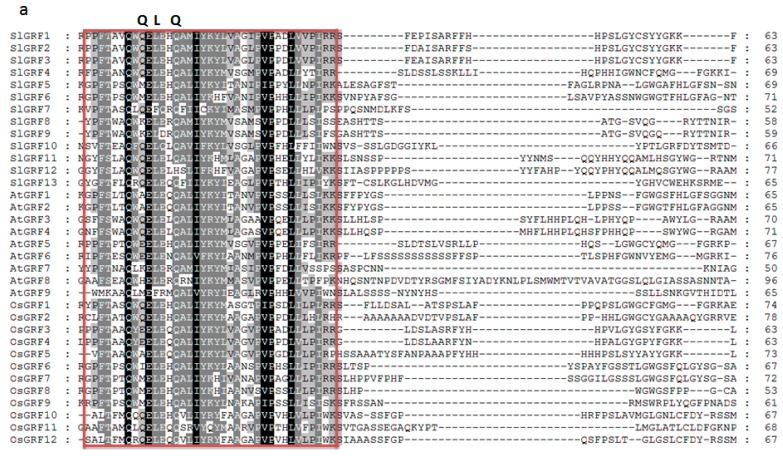
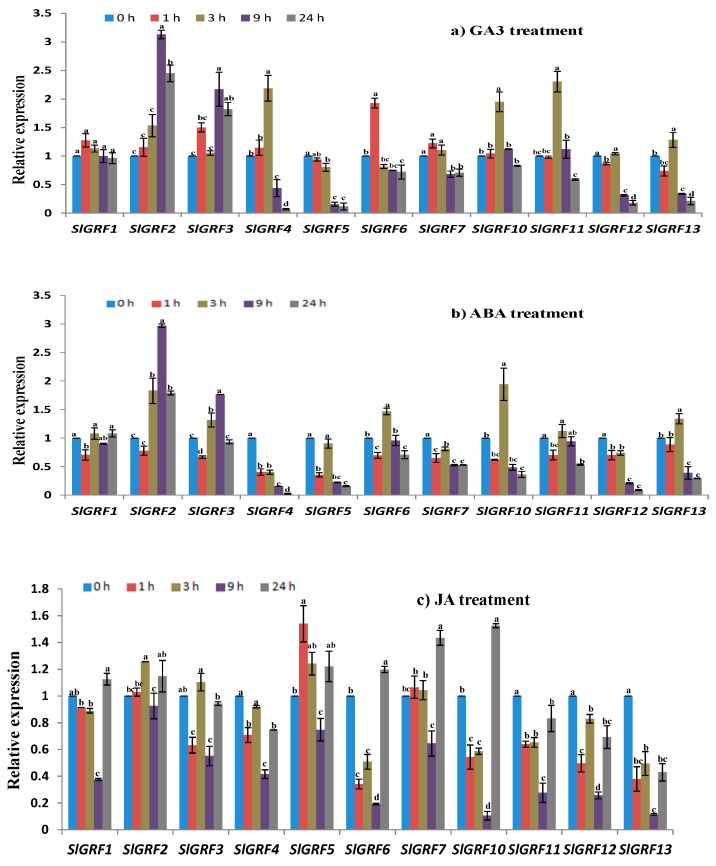
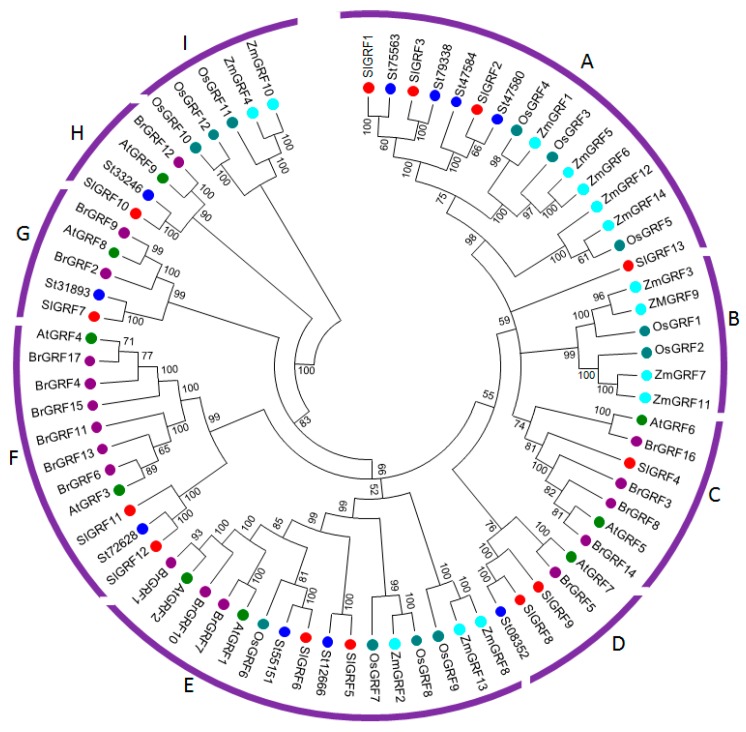
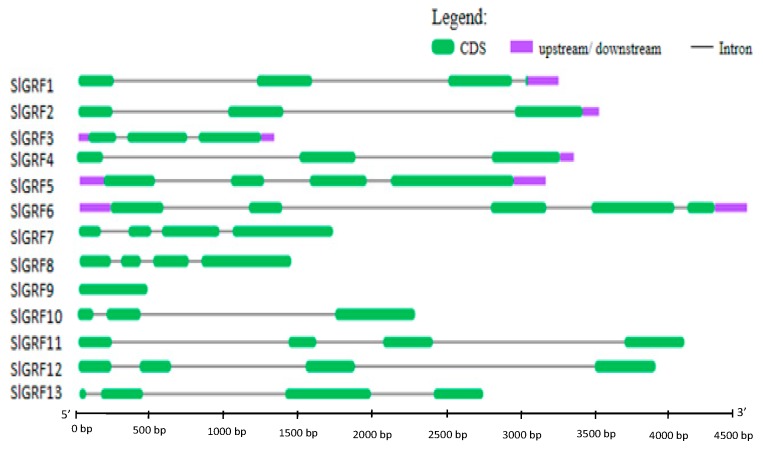
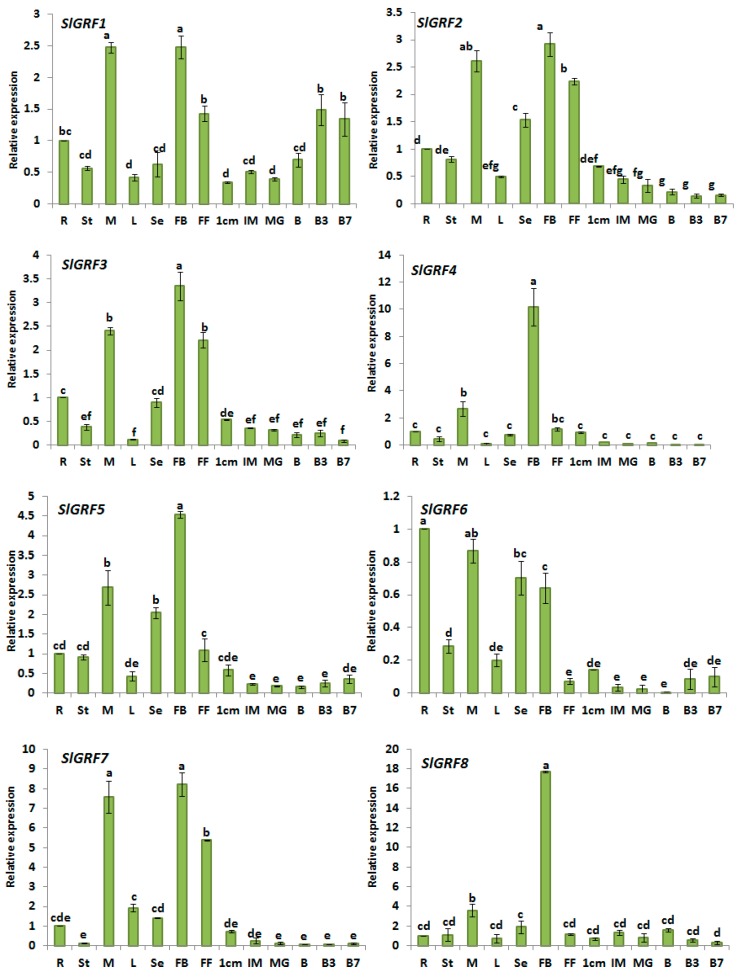
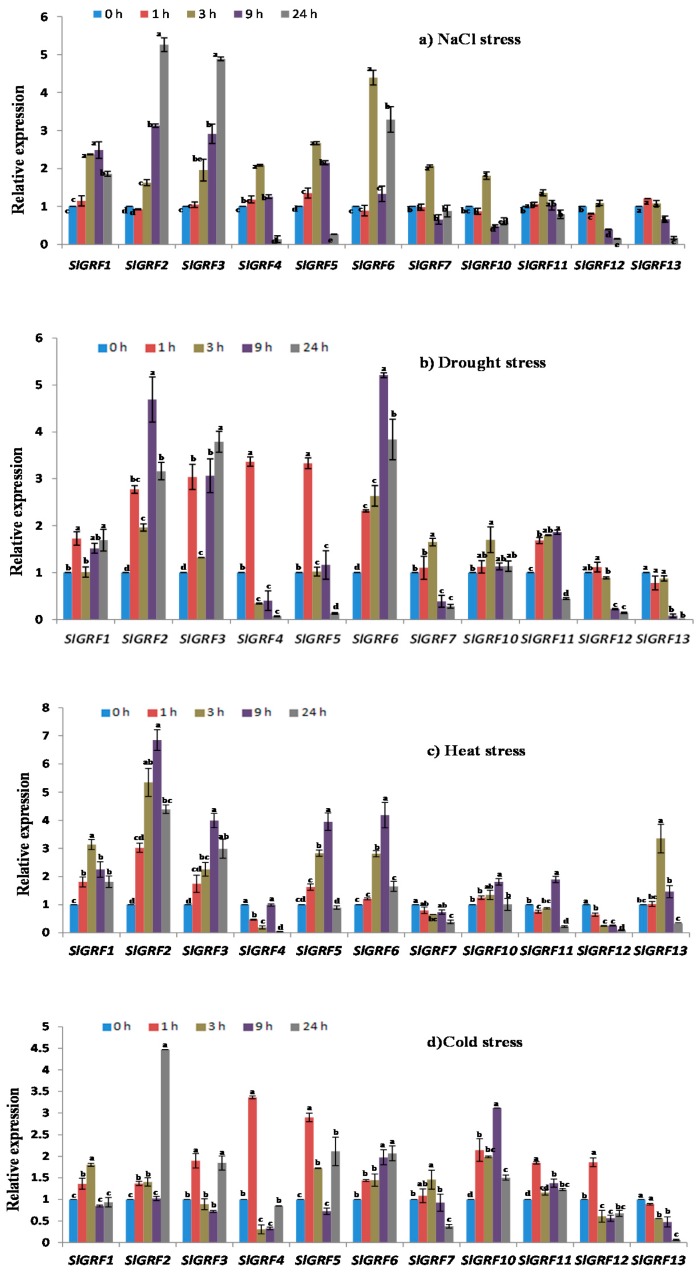
Growth regulating factors (GRFs) are plant-specific transcription factors that are involved in diverse biological and physiological processes, such as growth, development and stress and hormone responses. However, the roles of GRFs in vegetative and reproductive growth, development and stress responses in tomato () have not been extensively explored. In this study, we characterized the 13 genes. In silico analysis of protein motif organization, intron-exon distribution, and phylogenetic classification confirmed the presence of GRF proteins in tomato. The tissue-specific expression analysis revealed that most of the genes were preferentially expressed in young and growing tissues such as flower buds and meristems, suggesting that are important during growth and development of these tissues. Some of the genes were preferentially expressed in fruits at distinct developmental stages suggesting their involvement in fruit development and the ripening process. The strong and differential expression of different under NaCl, drought, heat, cold, abscisic acid (ABA), and jasmonic acid (JA) treatment, predict possible functions for these genes in stress responses in addition to their growth regulatory functions. Further, differential expression of genes upon gibberellic acid GA3) treatment indicates their probable function in flower development and stress responses through a gibberellic acid GA)-mediated pathway. The results of this study provide a basis for further functional analysis and characterization of this important gene family in tomato.
生长调节因子(GRFs)是植物特有的转录因子,参与多种生物学和生理过程,如生长、发育以及对胁迫和激素的响应。然而,GRFs在番茄营养生长和生殖生长、发育及胁迫响应中的作用尚未得到广泛研究。在本研究中,我们对13个GRF基因进行了特征分析。通过对蛋白质基序组织、内含子-外显子分布和系统发育分类的电子分析,证实了番茄中存在GRF蛋白。组织特异性表达分析表明,大多数GRF基因在花芽和分生组织等幼嫩生长组织中优先表达,这表明GRFs在这些组织的生长和发育过程中很重要。一些GRF基因在不同发育阶段的果实中优先表达,表明它们参与果实发育和成熟过程。不同GRF基因在NaCl、干旱、高温、低温、脱落酸(ABA)和茉莉酸(JA)处理下的强烈且差异表达,预示着这些基因除了具有生长调节功能外,在胁迫响应中可能也发挥作用。此外,GRF基因在赤霉素(GA3)处理后的差异表达表明,它们可能通过赤霉素(GA)介导的途径在花发育和胁迫响应中发挥作用。本研究结果为进一步对番茄中这个重要基因家族进行功能分析和特征鉴定提供了基础。