Zhang Jiazhen, Macartney Thomas, Peggie Mark, Cohen Philip
MRC Protein Phosphorylation and Ubiquitylation Unit, School of Life Sciences, University of Dundee, Dundee DD1 5EH, U.K.
Biochem J. 2017 Jun 26;474(13):2235-2248. doi: 10.1042/BCJ20170288.
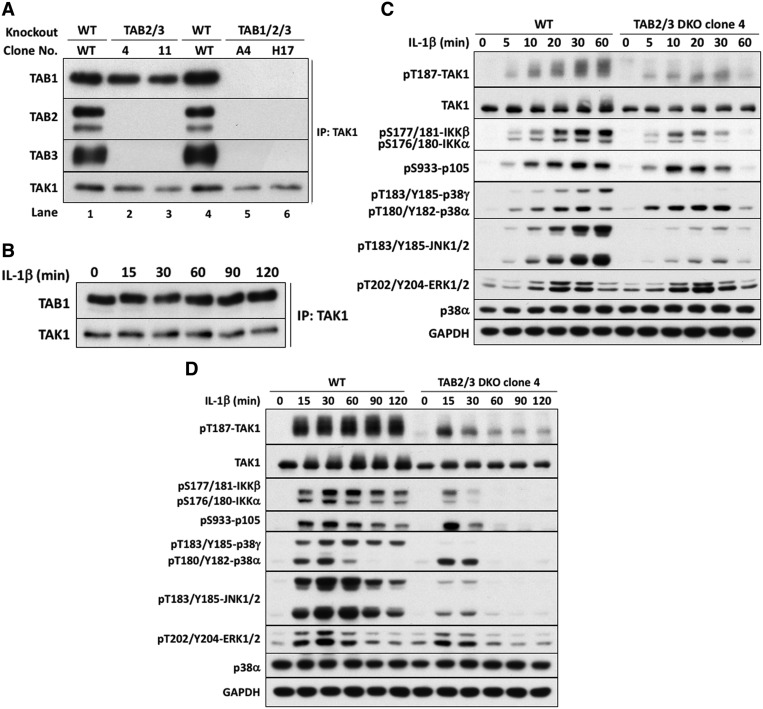
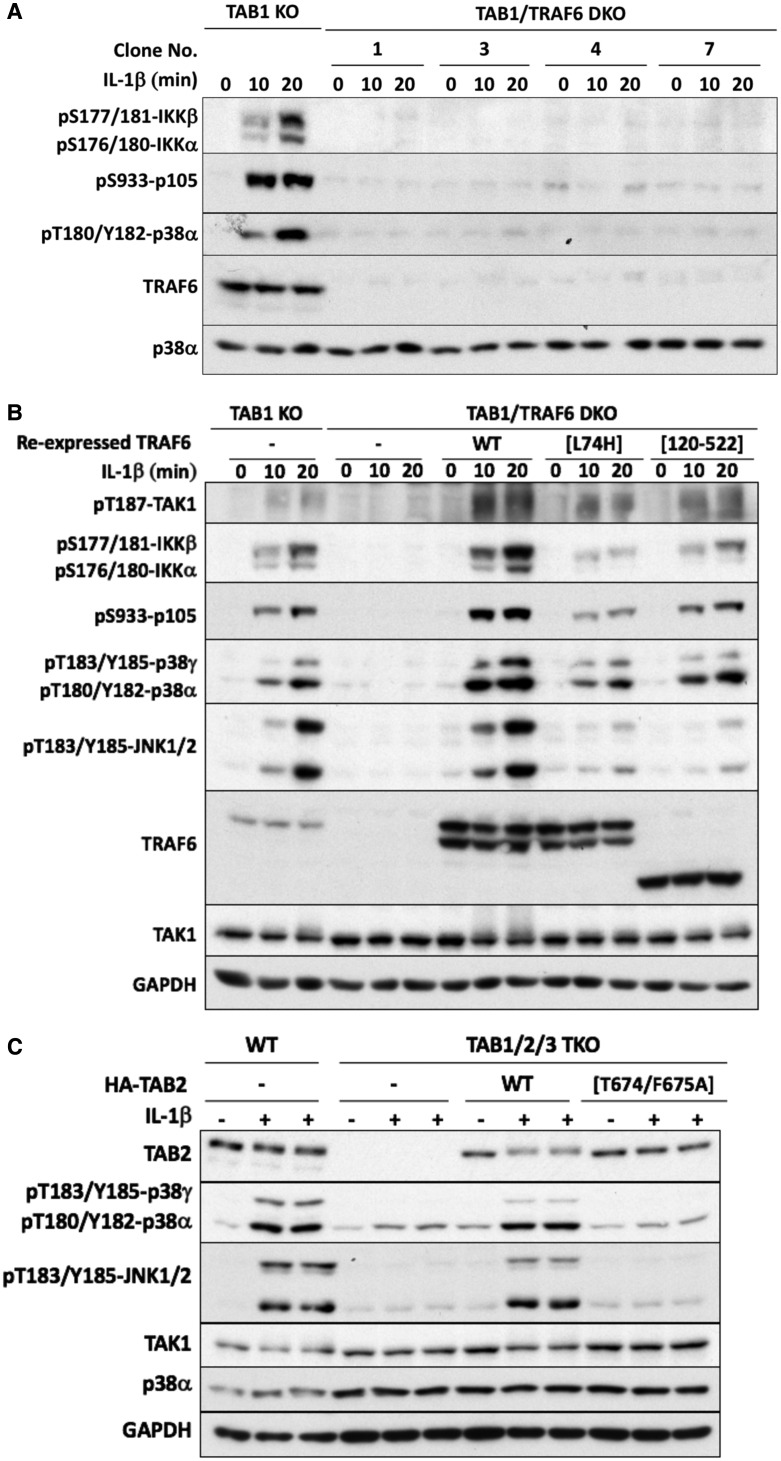
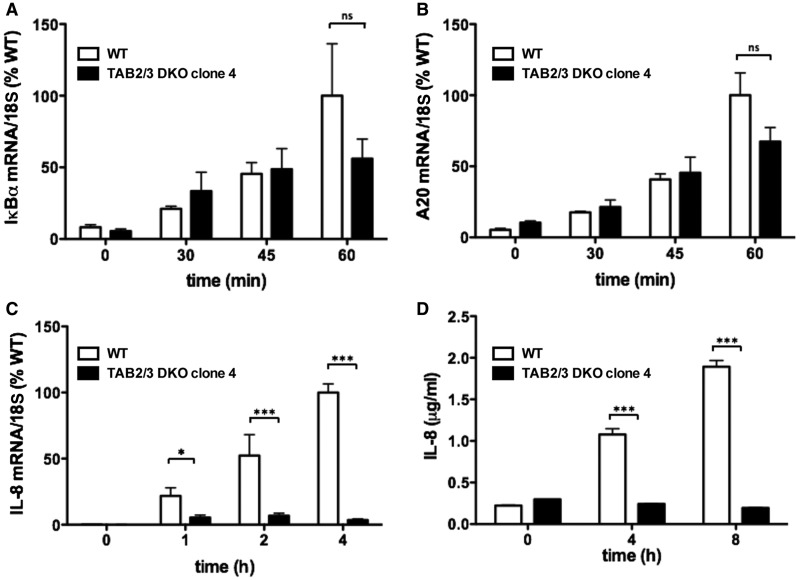
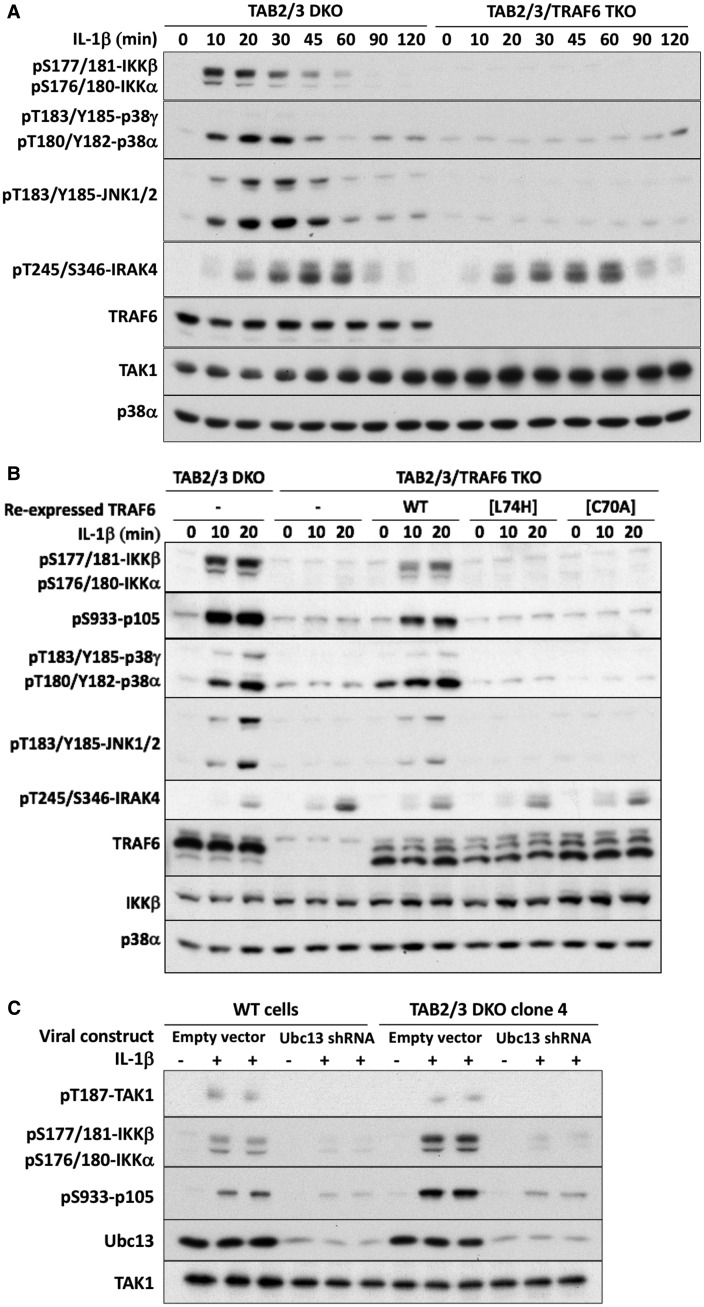
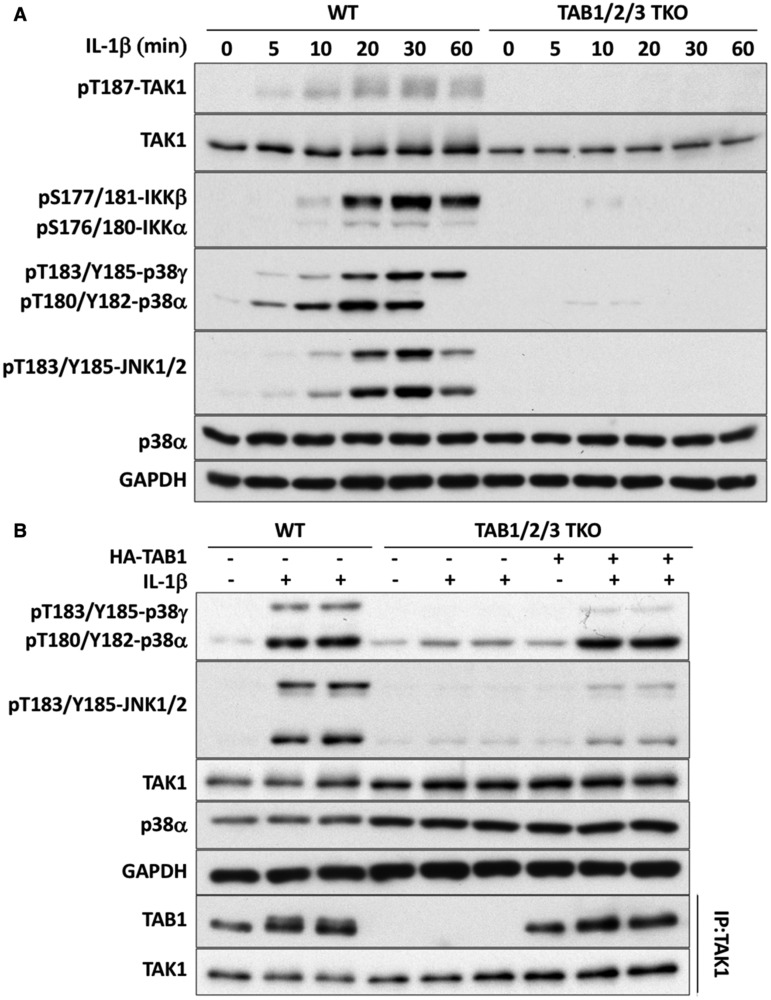
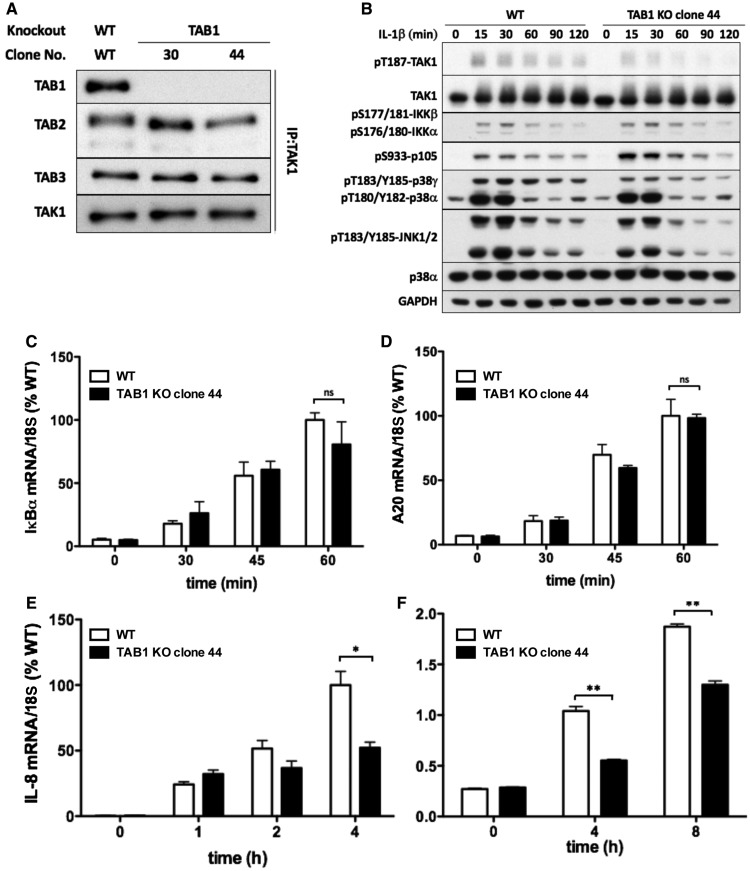
Interleukin-1 (IL-1) signaling induces the formation of Lys63-linked ubiquitin (K63-Ub) chains, which are thought to activate the 'master' protein kinase TGFβ-activated kinase 1 (TAK1) by interacting with its TAK1-binding 2 (TAB2) and TAB3 subunits. Here, we report that IL-1β can also activate the TAB1-TAK1 heterodimer present in TAB2/TAB3 double knockout (DKO) IL-1 receptor-expressing cells. The IL-1β-dependent activation of the TAB1-TAK1 heterodimer in TAB2/3 DKO cells is required for the expression and E3 ligase activity of tumor necrosis factor receptor-associated factor 6 (TRAF6) and is reduced by the small interfering RNA (siRNA) knockdown of ubiquitin conjugating 13 (Ubc13), an E2-conjugating enzyme that directs the formation of K63-Ub chains. IL-1β signaling was restored to TAB1/2/3 triple KO cells by the re-expression of either TAB1 or TAB2, but not by an ubiquitin binding-defective mutant of TAB2. We conclude that IL-1β can induce the activation of TAK1 in two ways, only one of which requires the binding of K63-Ub chains to TAB2/3. The early IL-1β-stimulated, TAK1-dependent activation of p38α mitogen-activated protein (MAP) kinase and the canonical IκB kinase (IKK) complex, as well as the NF-κB-dependent transcription of immediate early genes, was similar in TAB2/3 DKO cells and TAB2/3-expressing cells. However, in contrast with TAB2/3-expressing cells, IL-1β signaling was transient in TAB2/3 DKO cells, and the activation of c-Jun N-terminal kinase 1 (JNK1), JNK2 and p38γ was greatly reduced at all times. These observations indicate a role for TAB2/3 in directing the TAK1-dependent activation of MAP kinase kinases that switch on JNK1/2 and p38γ MAP kinases. These observations and the transient activation of the TAB1-TAK1 heterodimer may explain why IL-1β-dependent IL-8 mRNA formation was abolished in TAB2/3 DKO cells.
白细胞介素-1(IL-1)信号传导诱导形成赖氨酸63连接的泛素(K63-Ub)链,人们认为这些链通过与其TAK1结合蛋白2(TAB2)和TAB3亚基相互作用来激活“主”蛋白激酶TGFβ激活激酶1(TAK1)。在此,我们报告IL-1β还可以激活存在于表达TAB2/TAB3双敲除(DKO)IL-1受体的细胞中的TAB1-TAK1异二聚体。TAB2/3 DKO细胞中TAB1-TAK1异二聚体的IL-1β依赖性激活是肿瘤坏死因子受体相关因子6(TRAF6)的表达和E3连接酶活性所必需的,并且通过泛素缀合酶13(Ubc13)的小干扰RNA(siRNA)敲低而降低,Ubc13是一种指导K63-Ub链形成的E2缀合酶。通过重新表达TAB1或TAB2,IL-1β信号传导恢复到TAB1/2/3三敲除细胞,但通过TAB2的泛素结合缺陷突变体则不能恢复。我们得出结论,IL-1β可以通过两种方式诱导TAK1的激活,其中只有一种方式需要K63-Ub链与TAB2/3结合。在TAB2/3 DKO细胞和表达TAB2/3的细胞中,早期IL-1β刺激的、TAK1依赖性的p38α丝裂原活化蛋白(MAP)激酶和经典IκB激酶(IKK)复合物的激活,以及立即早期基因的NF-κB依赖性转录是相似的。然而,与表达TAB2/3的细胞相反,IL-1β信号传导在TAB2/3 DKO细胞中是短暂的,并且c-Jun N末端激酶1(JNK1)、JNK2和p38γ的激活在所有时间都大大降低。这些观察结果表明TAB2/3在指导开启JNK1/2和p38γ MAP激酶的MAP激酶激酶的TAK1依赖性激活中起作用。这些观察结果以及TAB1-TAK1异二聚体的短暂激活可能解释了为什么在TAB2/3 DKO细胞中IL-1β依赖性IL-8 mRNA形成被消除。