Wehenkel Marie, Corr Maripat, Guy Clifford S, Edwards Benjamin A, Castellaw Ashley H, Calabrese Christopher, Pagès Gilles, Pouysségur Jacques, Vogel Peter, McGargill Maureen A
Department of Immunology, St. Jude Children's Research Hospital, Memphis, TN, USA.
Division of Rheumatology, Allergy, and Immunology, University of California San Diego, La Jolla, CA, USA.
Front Immunol. 2017 May 1;8:482. doi: 10.3389/fimmu.2017.00482. eCollection 2017.
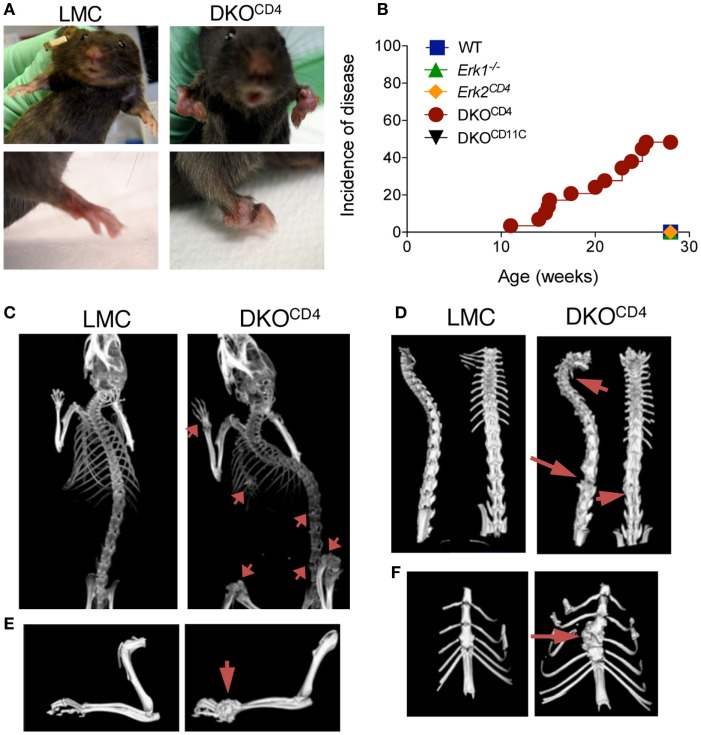
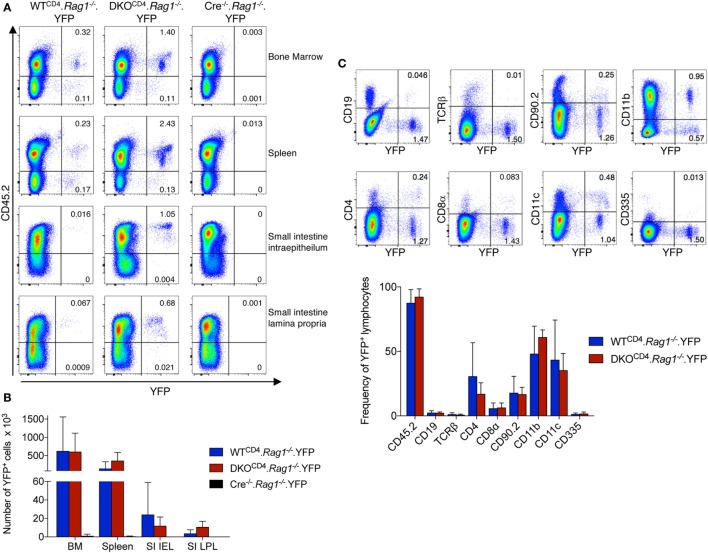
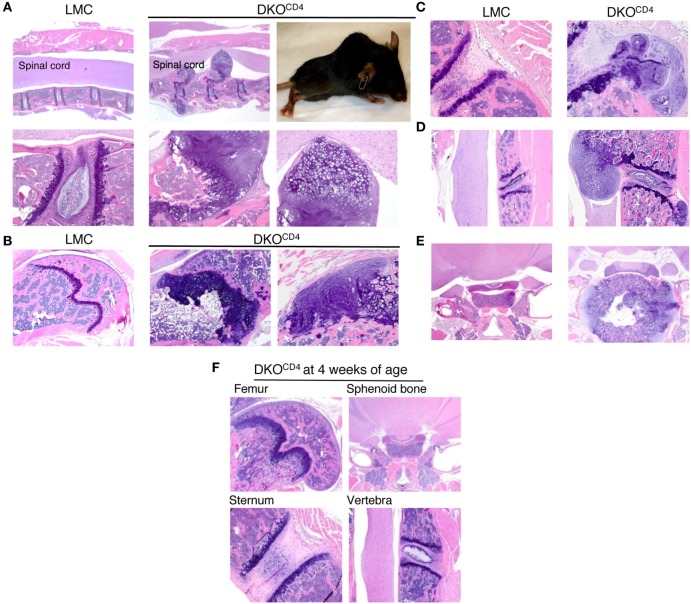
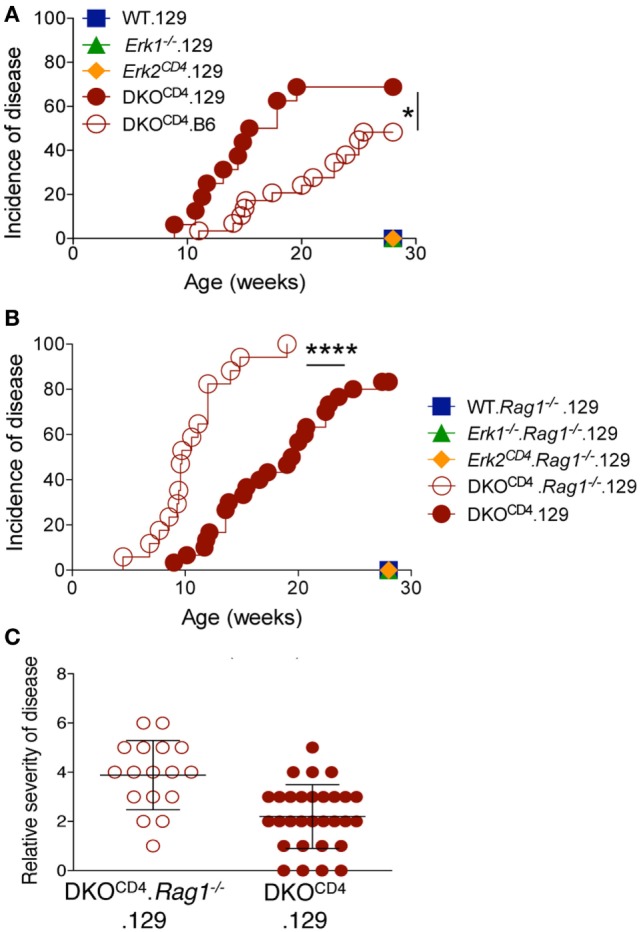
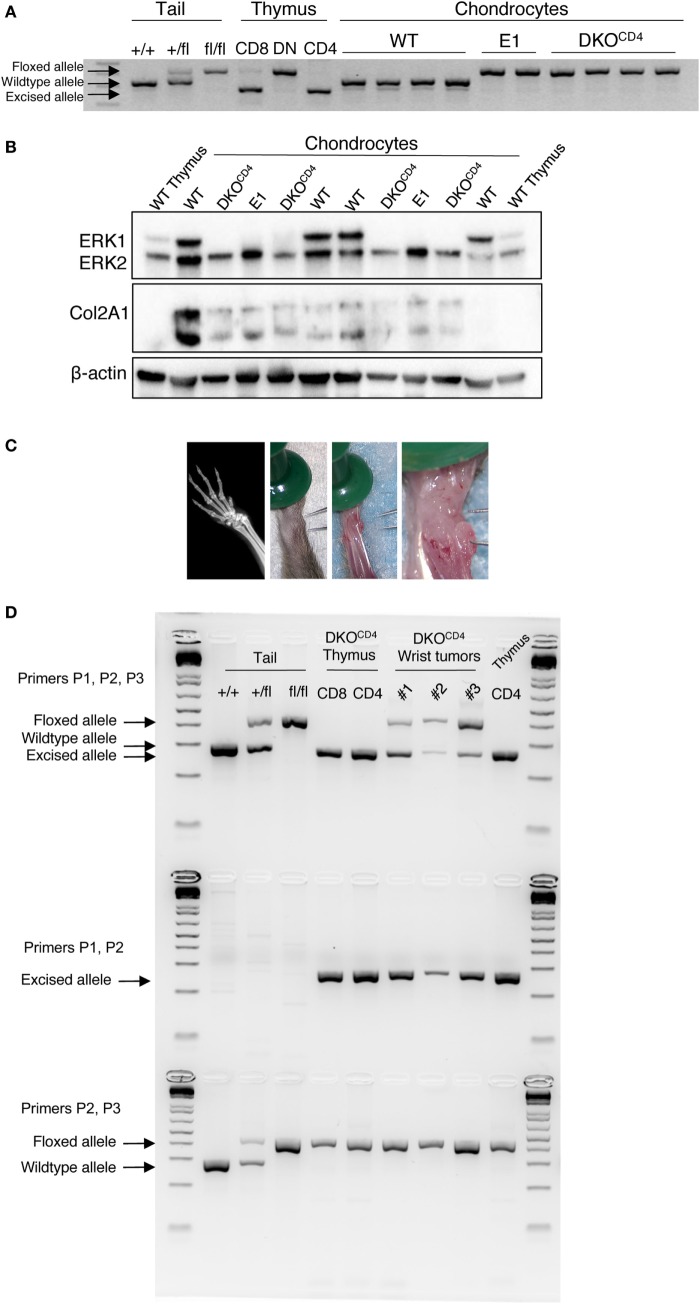
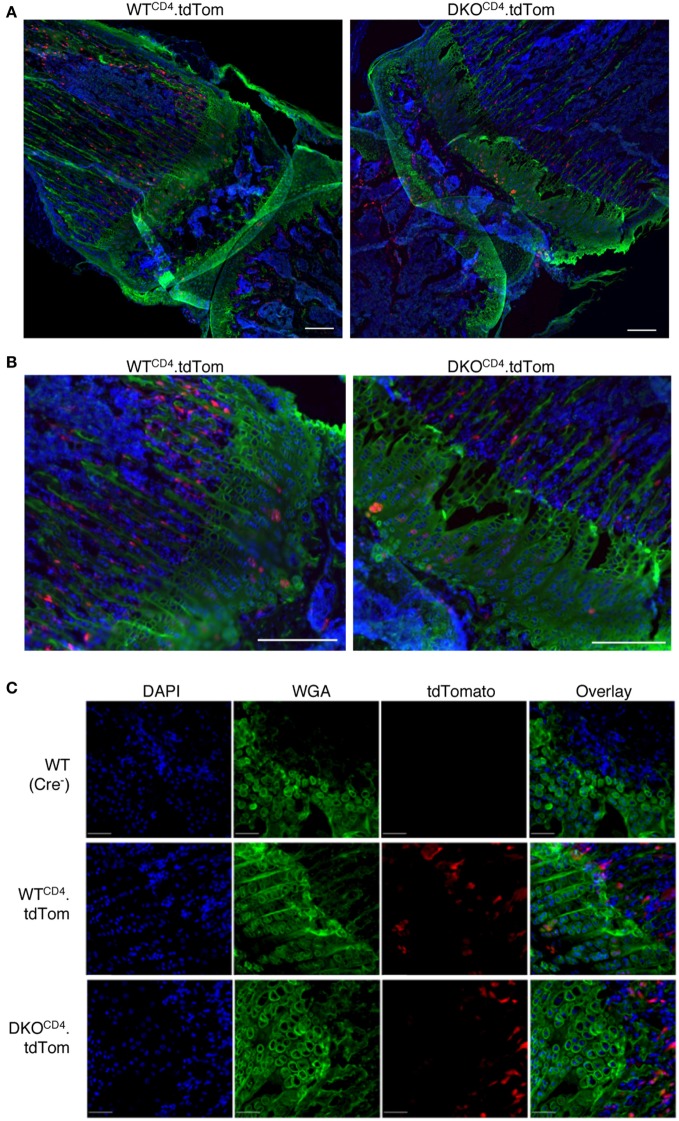
Defects in cartilage homeostasis can give rise to various skeletal disorders including osteochondromas. Osteochondromas are benign bone tumors caused by excess accumulation of chondrocytes, the main cell type of cartilage. The extracellular signal-regulated kinase (ERK) pathway is a major signaling node that functions within chondrocytes to regulate their growth and differentiation. However, it is not known whether the ERK pathway in other cell types regulates cartilage homeostasis. We show here that mice with a germline deficiency of and a conditional deletion of in cells that express CD4, or expressed CD4 at one point in development, unexpectedly developed bone deformities. The bone lesions were due to neoplastic outgrowths of chondrocytes and disordered growth plates, similar to tumors observed in the human disease, osteochondromatosis. Chondrocyte accumulation was not due to deletion of in the T cells. Rather, was expressed in cell types other than T cells, including a small fraction of chondrocytes. Surprisingly, the removal of T cells accelerated osteochondroma formation and enhanced disease severity. These data show for the first time that T cells impact the growth of osteochondromas and describe a novel model to study cartilage homeostasis and osteochondroma formation.
软骨内环境稳定的缺陷可引发包括骨软骨瘤在内的各种骨骼疾病。骨软骨瘤是由软骨的主要细胞类型软骨细胞过度积累引起的良性骨肿瘤。细胞外信号调节激酶(ERK)通路是软骨细胞内发挥作用以调节其生长和分化的主要信号节点。然而,尚不清楚其他细胞类型中的ERK通路是否调节软骨内环境稳定。我们在此表明,生殖系缺失且在表达CD4或在发育过程中的某一时刻表达过CD4的细胞中有条件缺失的小鼠意外地出现了骨骼畸形。骨病变是由于软骨细胞的肿瘤性生长和生长板紊乱,类似于人类疾病骨软骨瘤病中观察到的肿瘤。软骨细胞积累并非由于T细胞中的缺失。相反,在T细胞以外的细胞类型中表达,包括一小部分软骨细胞。令人惊讶的是,T细胞的去除加速了骨软骨瘤的形成并加重了疾病严重程度。这些数据首次表明T细胞影响骨软骨瘤的生长,并描述了一种研究软骨内环境稳定和骨软骨瘤形成的新模型。