Niego Be'eri, Lee Natasha, Larsson Pia, De Silva T Michael, Au Amanda E-Ling, McCutcheon Fiona, Medcalf Robert L
Molecular Neurotrauma and Haemostasis, Australian Centre for Blood Diseases, Monash University, Melbourne, Victoria, Australia.
Wallenberg Laboratory, Department of Molecular and Clinical Medicine, Institute of Medicine, Sahlgrenska Academy, University of Gothenburg, Gothenburg, Sweden.
PLoS One. 2017 May 16;12(5):e0177332. doi: 10.1371/journal.pone.0177332. eCollection 2017.
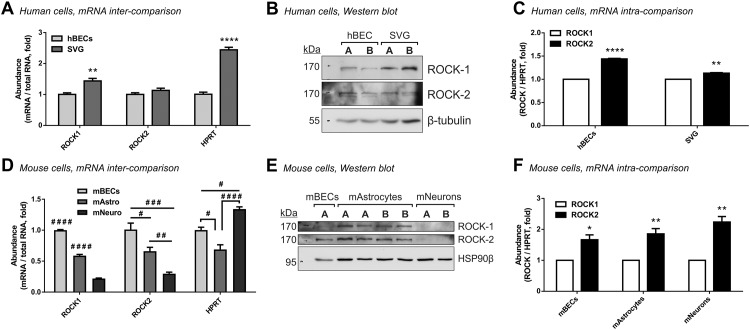
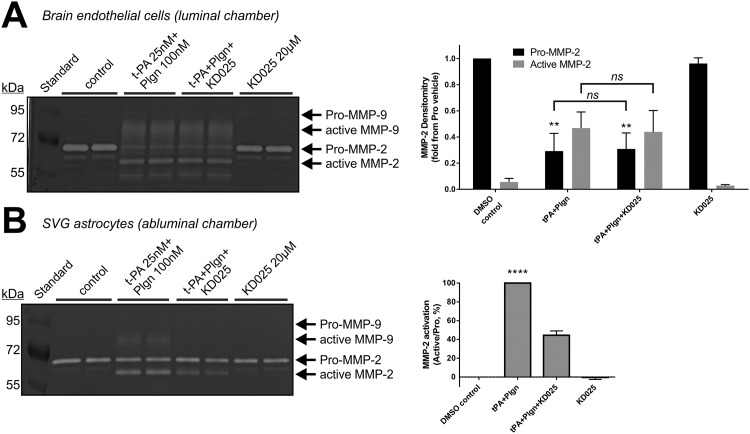
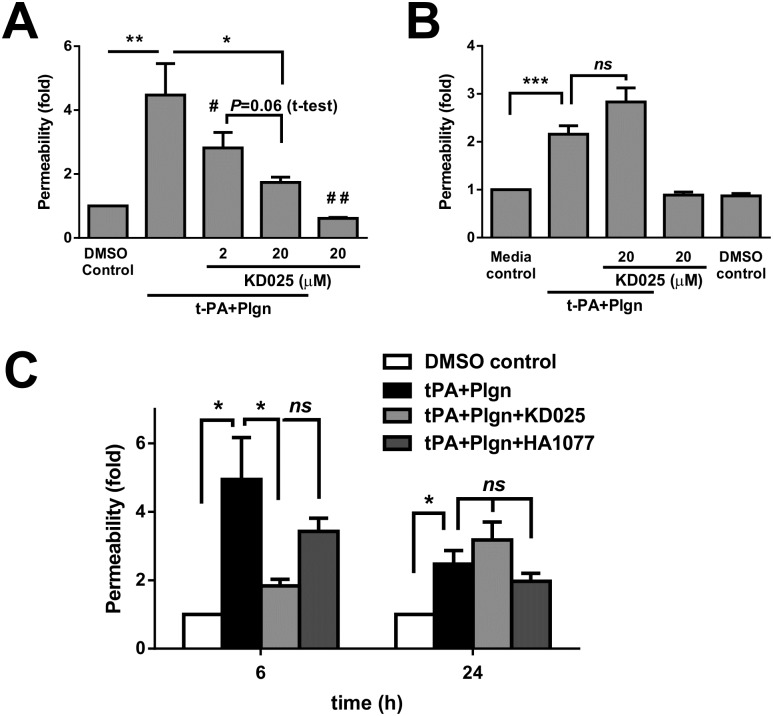
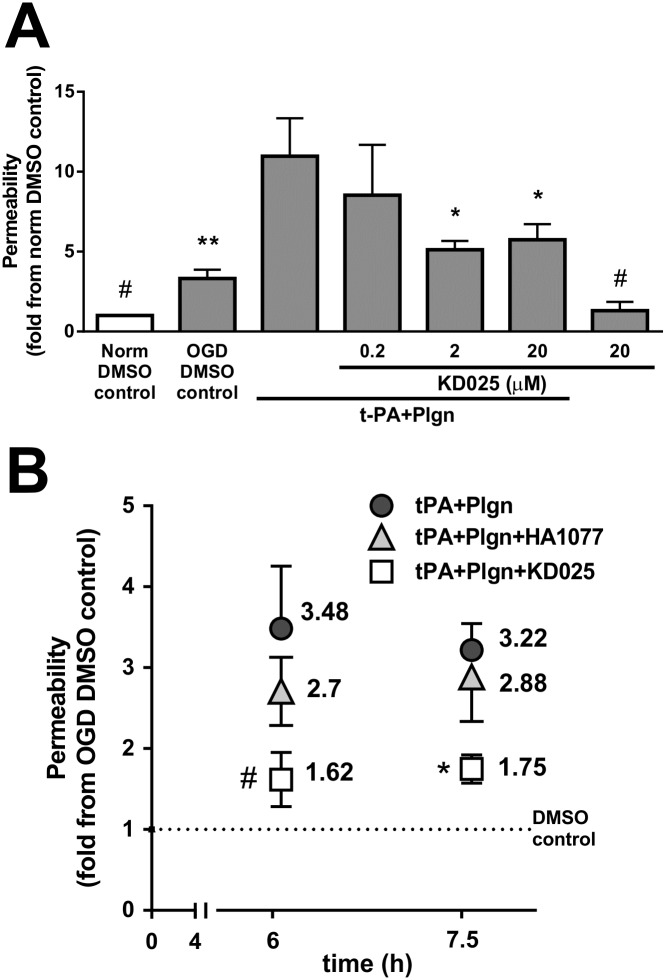
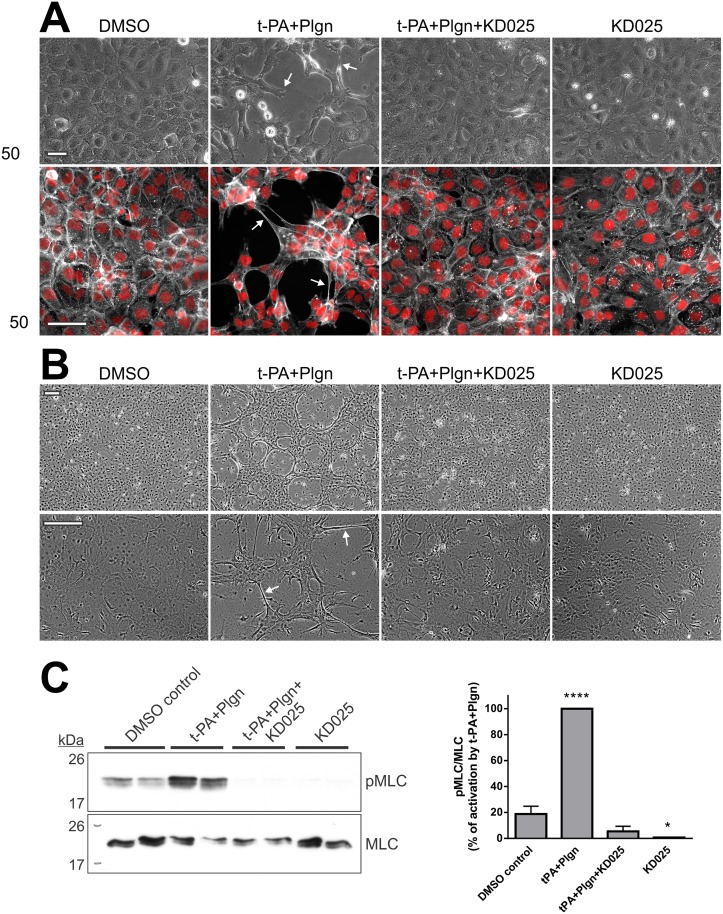
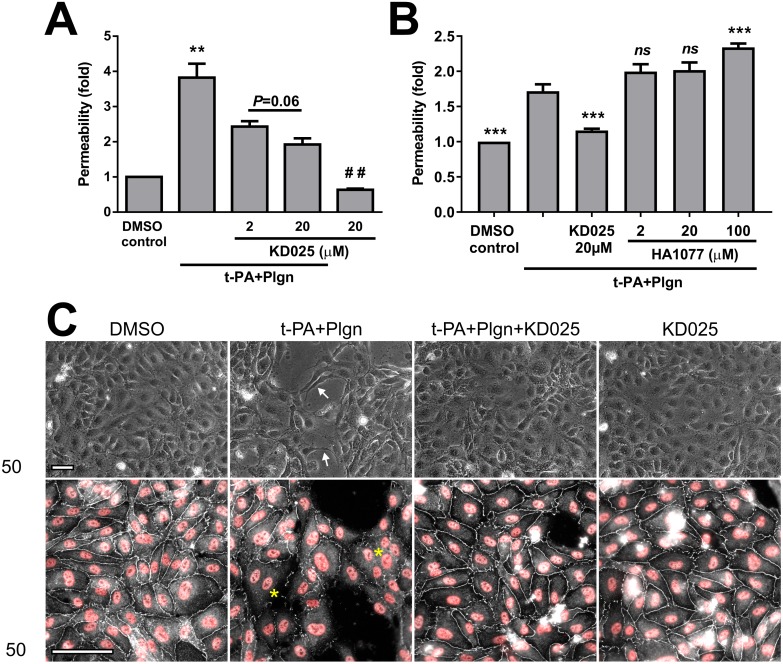
Rho-kinase (ROCK) inhibition, broadly utilised in cardiovascular disease, may protect the blood-brain barrier (BBB) during thrombolysis from rt-PA-induced damage. While the use of nonselective ROCK inhibitors like fasudil together with rt-PA may be hindered by possible hypotensive side-effects and inadequate capacity to block detrimental rt-PA activity in brain endothelial cells (BECs), selective ROCK-2 inhibition may overcome these limitations. Here, we examined ROCK-2 expression in major brain cells and compared the ability of fasudil and KD025, a selective ROCK-2 inhibitor, to attenuate rt-PA-induced BBB impairment in an in vitro human model. ROCK-2 was highly expressed relative to ROCK-1 in all human and mouse brain cell types and particularly enriched in rodent brain endothelial cells and astrocytes compared to neurons. KD025 was more potent than fasudil in attenuation of rt-PA- and plasminogen-induced BBB permeation under normoxia, but especially under stroke-like conditions. Importantly, only KD025, but not fasudil, was able to block rt-PA-dependent permeability increases, morphology changes and tight junction degradation in isolated BECs. Selective ROCK-2 inhibition further diminished rt-PA-triggered myosin phosphorylation, shape alterations and matrix metalloprotease activation in astrocytes. These findings highlight ROCK-2 as the key isoform driving BBB impairment and brain endothelial damage by rt-PA and the potential of KD025 to optimally protect the BBB during thrombolysis.
Rho激酶(ROCK)抑制在心血管疾病中广泛应用,可能在溶栓过程中保护血脑屏障(BBB)免受rt-PA诱导的损伤。虽然使用如法舒地尔等非选择性ROCK抑制剂与rt-PA联合使用可能会受到潜在的低血压副作用以及阻断脑内皮细胞(BECs)中有害rt-PA活性能力不足的阻碍,但选择性ROCK-2抑制可能会克服这些限制。在此,我们检测了主要脑细胞中ROCK-2的表达,并比较了法舒地尔和选择性ROCK-2抑制剂KD025在体外人模型中减轻rt-PA诱导的BBB损伤的能力。相对于ROCK-1,ROCK-2在所有人类和小鼠脑细胞类型中均高表达,与神经元相比,在啮齿动物脑内皮细胞和星形胶质细胞中尤其富集。在常氧条件下,尤其是在类中风条件下,KD025在减轻rt-PA和纤溶酶原诱导的BBB通透性方面比法舒地尔更有效。重要的是,只有KD025,而非法舒地尔,能够阻断分离的BECs中rt-PA依赖性的通透性增加、形态变化和紧密连接降解。选择性ROCK-2抑制进一步减少了rt-PA触发的星形胶质细胞中肌球蛋白磷酸化、形态改变和基质金属蛋白酶激活。这些发现突出了ROCK-2作为驱动BBB损伤和rt-PA引起的脑内皮损伤的关键亚型,以及KD025在溶栓过程中最佳保护BBB的潜力。