Fan Huai-Fu, Ding Ling, Du Chang-Xia, Wu Xue
School of Agriculture and Food Science, Zhejiang Agriculture & Forestry University, Lin'an, 311300, Zhejiang, China.
The Key Laboratory for Quality Improvement of Agricultural Products of Zhejiang Province, Zhejiang Agriculture & Forestry University, Lin'an, 311300, Zhejiang, China.
Bot Stud. 2014 Dec;55(1):46. doi: 10.1186/s40529-014-0046-6. Epub 2014 May 23.
Cucumber is one of the most popular vegetables, and have little tolerance for water stress. The antioxidant defense system is one of major drought defense and adaptive mechanisms in plants, however, relatively few data are available regarding antioxidant systems in responses of cucumber to water deficit. The effect of short-term drought stress on the antioxidant system, lipid peroxidation and water content in cucumber seedlings roots was investigated.
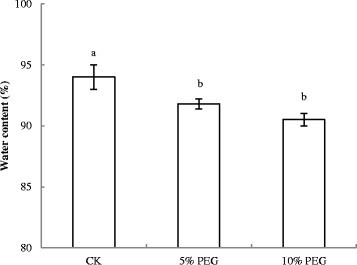
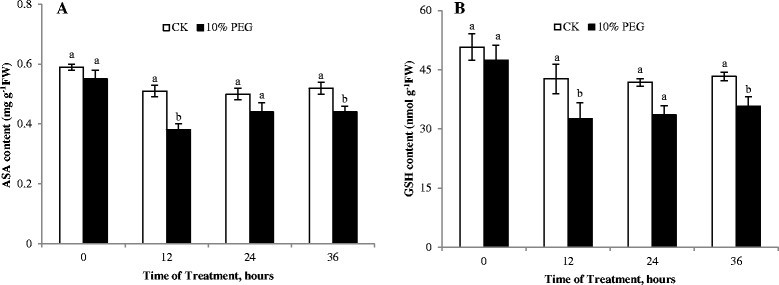
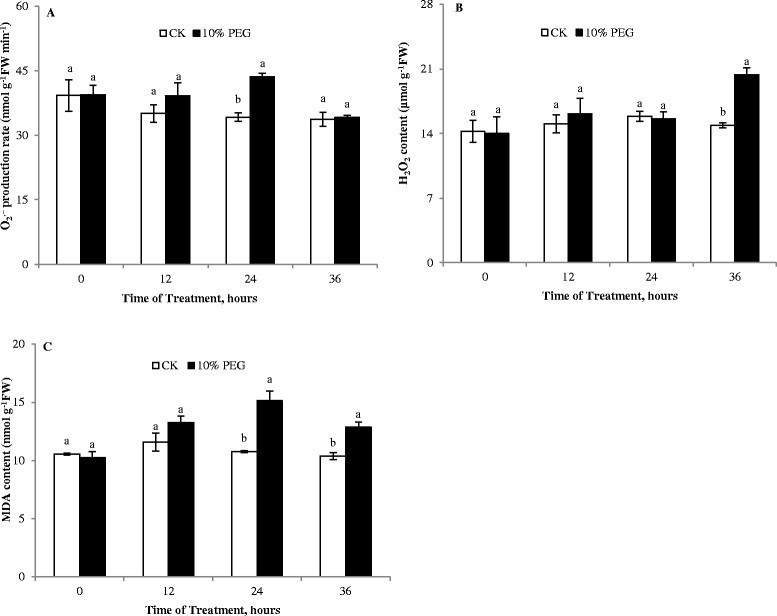
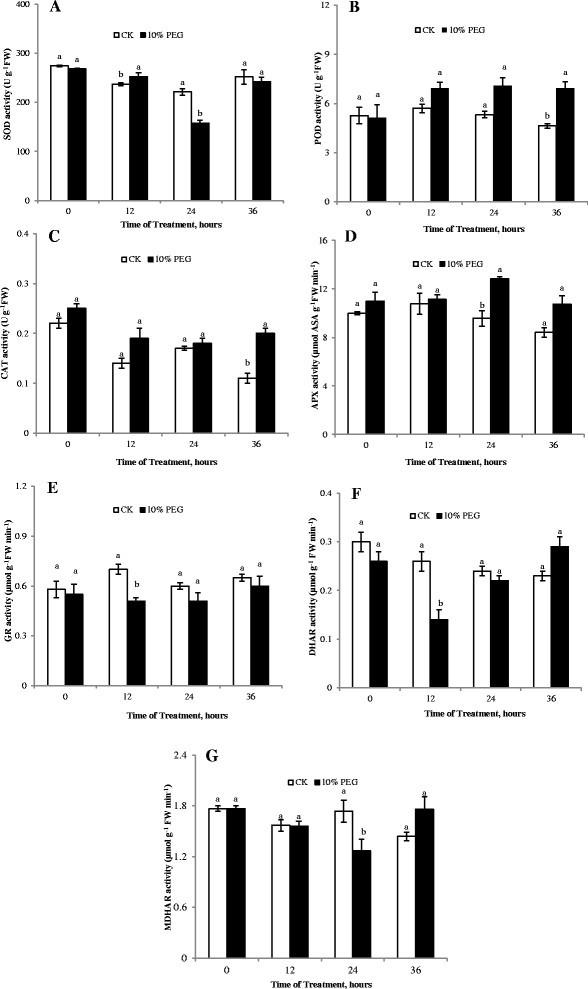
The results showed that polyethylene glycol (PEG) induced water stress markedly decreased water content of cucumber seedling roots after treatment of 36 h, and caused excessive generation of reactive oxygen species (ROS) including superoxide (O), hydrogen peroxide (HO). Meanwhile, malondialdehyde (MDA) content increased. Antioxidant enzymes including superoxide dismutases (SOD), peroxidases (POD), catalase (CAT) and ascorbate peroxidase (APX) activities increased in different time and different extent under water stress, while ascorbate (AsA) and glutathione (GSH) content, glutathione reductase (GR), dehydroascorbate reductase (DHAR) and monodehydroascorbate reductase (MDHAR) activities all decreased when compared to control.
Therefore, it can be concluded that water stress strongly disrupted the normal metabolism of roots and restrained water absorption, and seemingly enzymatic system played more important roles in protecting cucumber seedling roots against oxidative damage than non-enzymatic system in short-term water deficit stress.
黄瓜是最受欢迎的蔬菜之一,对水分胁迫耐受性较差。抗氧化防御系统是植物主要的干旱防御和适应机制之一,然而,关于黄瓜对水分亏缺响应中抗氧化系统的数据相对较少。研究了短期干旱胁迫对黄瓜幼苗根系抗氧化系统、脂质过氧化和水分含量的影响。
结果表明,聚乙二醇(PEG)诱导的水分胁迫在处理36小时后显著降低了黄瓜幼苗根系的水分含量,并导致包括超氧阴离子(O)、过氧化氢(HO)在内的活性氧(ROS)过量产生。同时,丙二醛(MDA)含量增加。水分胁迫下,超氧化物歧化酶(SOD)、过氧化物酶(POD)、过氧化氢酶(CAT)和抗坏血酸过氧化物酶(APX)等抗氧化酶活性在不同时间和不同程度上增加,而与对照相比,抗坏血酸(AsA)和谷胱甘肽(GSH)含量、谷胱甘肽还原酶(GR)、脱氢抗坏血酸还原酶(DHAR)和单脱氢抗坏血酸还原酶(MDHAR)活性均降低。
因此,可以得出结论,水分胁迫强烈扰乱了根系的正常代谢并抑制了水分吸收,在短期水分亏缺胁迫下,酶系统在保护黄瓜幼苗根系免受氧化损伤方面似乎比非酶系统发挥更重要的作用。